

WASHINGTON–The Consumer Price Index for All Urban Consumers (CPI-U) was unchanged in January on a seasonally adjusted basis, according to new data released by the U.S. Bureau of Labor Statistics.
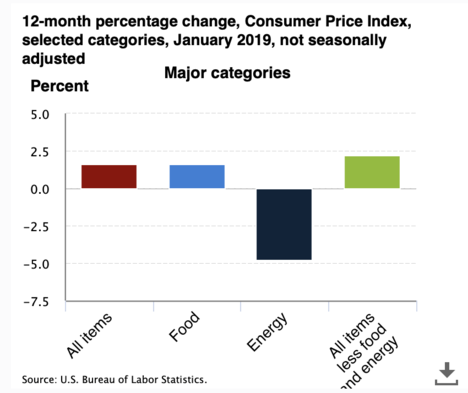
Over the last 12 months, all index items increased1.6% before seasonal adjustment, the Bureau said.
An economist at Navy Federal Credit Union described the latest numbers as a “Goldilocks” report given how it indicates wages are rising while inflation remains below the Fed’s goal of an annual inflation rate of 2%.
For the third consecutive month the energy index declined, offsetting increases in the indexes for all items less food and energy and for food. All the major energy component indexes declined in January, with the gasoline index falling
5.5%. The food index increased 0.2%, with the index for food at home rising 0.1% and the food away from home index increasing 0.3%, the Bureau said.
What Was Up, Down
The index for all items less food and energy increased 0.2% in January for the fourth consecutive month. The indexes for shelter, apparel, medical care, recreation, and household furnishings and operations were among the indexes that rose in January, while the indexes for airline fares and for motor vehicle insurance declined.
The Bureau reported the all items index increased 1.6% for the 12 months ending January, the smallest increase since the period ending June 2017. The index for all items less food and energy rose 2.2% over the last 12 months, the same increase as the 12 months ending November and December 2018. The food index rose 1.6% over the past year, while the energy index declined 4.8%.
‘Goldilocks’ Report
"Goldilocks wrote today's CPI report for U.S. workers,” said Robert Frick, corporate economist for Navy Federal Credit Union. “The overall index was unchanged for January, and all items were up just 1.6% over the last year. Just as important, wages again ticked up, rising 0.1% in January. No increase in inflation combined with a rise in wages means American workers' real wages (nominal wages minus inflation), increased for another month. While we have not yet seen real wages rise to the levels of other late-stage expansions, we're heading in the right direction and we could see the current 1-plus percent increase rise to 2-plus percent by the end of the year, or higher.
"This also argues against the Fed raising rates soon, at least, keeping the expansion rolling to the benefit of workers,” Frick added. “They should expect a continued strong jobs market together with rising real wages for the foreseeable future."