

ST. LOUIS– What are the factors that have led so many people to quit their jobs? A new survey of workers who have quit and contributed to the “Great Resignation” offers some answers.
The flux in the job market and the increasing pressure on employers has certainly been felt by credit unions, which have had to improve their pay packages and other benefits in order to recruit and retain employees.
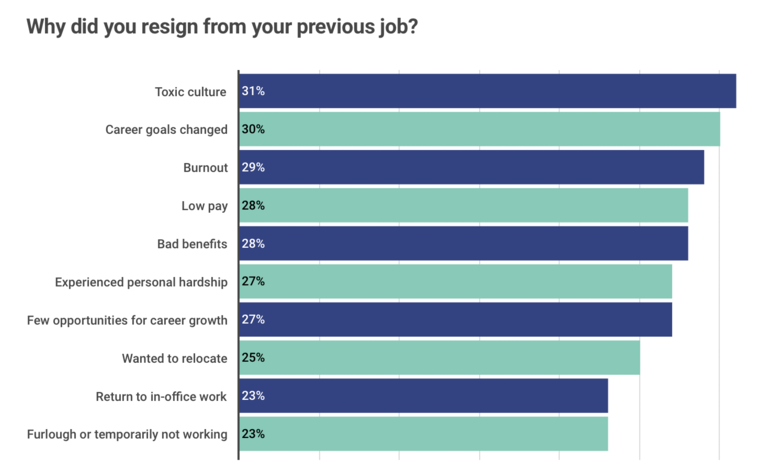
A new survey released by Real Estate Witch has found that among workers who quit during the Great Resignation, the most common reasons were toxic company culture (31%), poor company response to the COVID-19 pandemic (30%), and changing career goals (30%).
As the company noted in releasing its findings, more than 47 million Americans resigned from their jobs in 2021, many in the leisure, hospitality, and food services industries — most likely to be interrupted by the COVID-19 pandemic.
One Week—Or Less—Notice
According to Real Estate Witch, it found 60% of employees considered leaving their job for just one month before resigning, while nearly one in four considered leaving for one week or less. Additionally, 60% weren’t alone in their resignations, with other employees at their company quitting within a six-month time frame.
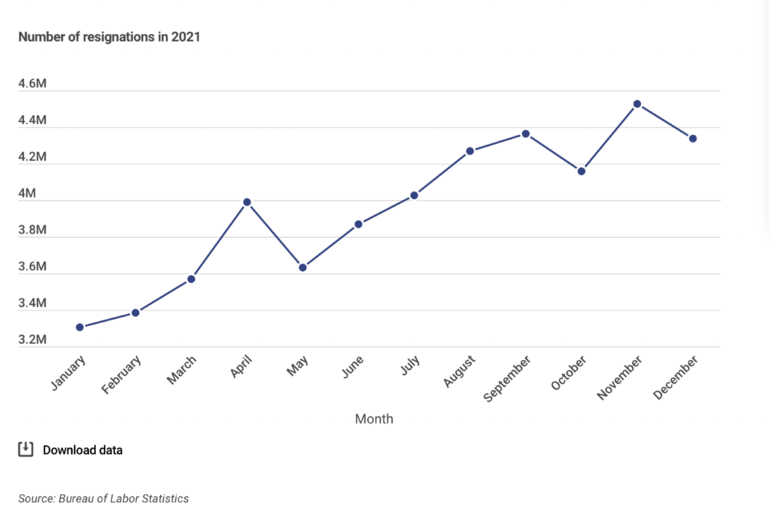
“Employers took notice when a record four million people resigned in April 2021. Workers then continued quitting at an increasing rate for five of the next seven months — reaching a new all-time high in the latter part of the year,” the company said. “With resignation rates still hovering near record highs, economists expect employees to continue quitting in waves in 2022.”
In its survey of 1,000 people who have resigned from a job since January 2021, the company has learned that “today’s employees prioritize respect and meaningful work over traditional incentives such as higher wages and better benefits — indicating a shift in values that’s likely here to stay, even when resignations begin to wane.”
The Findings
Among the findings in the survey:
- The most common reason workers quit during the Great Resignation was toxic company culture (31%).
- 80% of respondents said the pandemic influenced their decision to resign. Of employees who quit because of the pandemic, 41% did so because their employer didn’t enforce enough health and safety protocols, while 28% didn’t want to follow their organization’s protocols.
- Nearly one in four people resigned after considering it for just one week or less.
- About half (49%) of respondents gave one-week notice or less when they resigned, while one in four gave no notice at all. One in eight employees ghosted their company completely. “However, being ghosted by companies is the second-most frustrating situation when workers look for jobs (30%),” the survey found.
- 80% of people received a counteroffer from their employer when they resigned but still decided to leave.
- 55% of employees had a job lined up before they resigned. Of those, a surprising 53% reported a salary decrease, compared to 42% who reported an increase.
- Respondents reported an average pay cut of $8,000 in their new role, but many would accept a greater pay reduction. Employees who quit but are still looking for jobs would accept an average pay cut of $23,000.
- Workers who changed jobs during the Great Resignation were 47% more likely to be very satisfied in their new job compared to their old one.
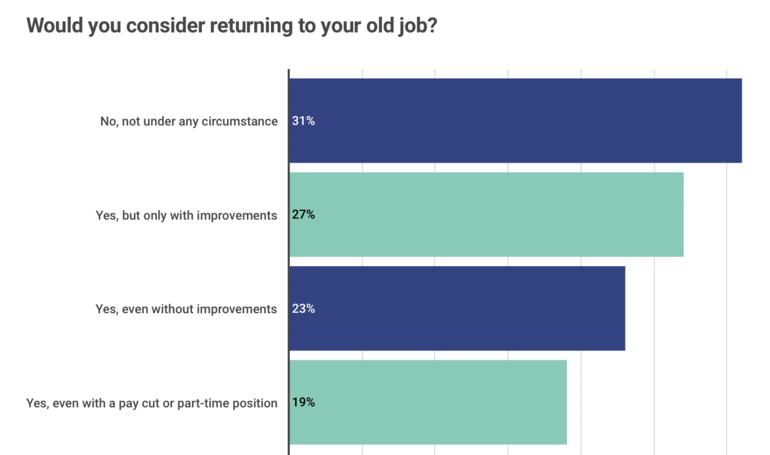
- 56% of respondents expressed some regret about resigning, but if given the option, 58% wouldn’t return to their old jobs or wouldn’t return without major improvements.
- A majority (56%) of workers who quit without a job lined up didn’t regret it.
- Among workers who resigned during the Great Resignation, 35% still do not have jobs, and 50% of those have been unemployed for six months or more.
- 44% of people who changed jobs in the past year have considered resigning again in the next six months.
Toxic Cultures
Specifically on the issue of workers who quit their jobs citing a tox culture, one in three “did so to escape a toxic company culture, characterized by discrimination, sexual harassment, verbal abuse, and poor work-life boundaries.”
Horrible bosses, tight deadlines, overtime work, and harmful office practices are just as likely to contribute to a hostile work environment. Work is the most common cause of stress among employed adults, and it was an accepted part of any job — until the pandemic.
“That’s when many employees reached a breaking point and decided to reevaluate the place of work in their lives,” the analysis stated.
Don’t Forget to Check the Spam Folder!
Don’t forget to check your Spam/Junk email folder if you didn’t receive your free, popular and daily CUToday.info news headlines on Monday.
And if you haven’t yet signed up for the new email solution on which CUToday.info has partnered with ResponseGenius, you can do so here. Signing up requires less than one minute of your time.
CUToday.info has received very positive response from readers following the move to an improved provider of the daily headlines, but many also noted they did need to go to their Spam/Junk folder and mark it as safe.
The new email solution has not only improved every reader’s delivery experience, but it also features a fresh, new format that is easy to read, especially on mobile devices.
Please note and/or make your IT department or email administrator aware the emails will be coming from the domains CUTodayinfo.com and CUTodayinfoReply.com.