

WASHINGTON—Federal Reserve Chair Jerome Powell says "with appropriate monetary policy, the job market will remain strong and inflation will stay near 2% over the next several years." But Powell added that trade policy, including tariffs being imposed by the Trump Administration, could cast a shadow over that forecast.
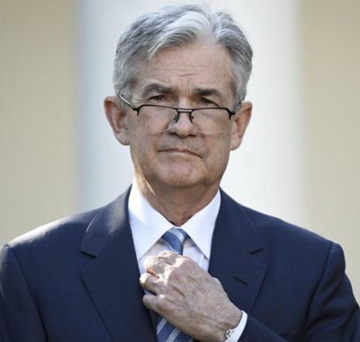
Jerome Powell
Powell's remarks came as he testified before the Senate Banking Committee this week at which he also took some hard questions from Democrats over stagnant wage growth and bank stress tests.
"Chairman Powell's positive account of the state of the economy shows he is not overly concerned that issues like tariffs or a flattening yield curve are poised to derail the expansion," said NAFCU Chief Economist and Vice President of Research Curt Long after Powell's testimony. "The odds are strengthening that the [Federal Open Market Committee (FOMC)] will proceed with two additional rate hikes this year."
Powell is on Capitol Hill this week presenting the Fed's semiannual monetary policy report. He testified before the House Financial Services Committee Wednesday.
Gradual Rate Increases
Powell told the Senate Banking Committee the FOMC sees gradual raises to the federal funds rate as the best path forward considering the current environment "with a strong job market, inflation close to our objective, and the risks to the outlook roughly balanced."
"Overall, we see the risk of the economy unexpectedly weakening as roughly balanced with the possibility of the economy growing faster than we currently anticipate," Powell testified.
Powell acknowledged there remains a disparity between low unemployment and weak wage gains, but also said he has no quick fix. When pressed by Democrats about what the Fed could do to accelerate wage growth, Powell said a strong economy and low unemployment would ultimately lift wages. He said it was too soon to say if the tax cut would play any role in lifting wages.
Tough Questions
Sen. Elizabeth Warren (D-MA) had several tough questions for Powell around recent stress tests for large banks, saying “The Fed looked the other way. The Fed let these banks off with a conditional non-objection. It looks like, to me, the Fed is heading in the wrong direction here.”
Powell responded by saying the Fed had not changed policy governing stress tests nor treated banks differently than it has in years past.
Separately, the Senate voted to confirm Randal Quarles to a 14-year term on the Federal Reserve Board of Governors. Quarles was already serving on the board under a term that expired in January; he was approved to serve a five-year term as vice chairman of supervision in October.