

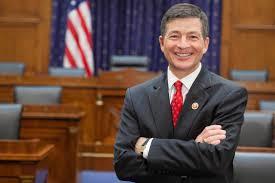
Jeb Hensarling
WASHINGTON–The reworked Financial CHOICE Act, which has the backing of credit unions, includes numerous provisions that would gut much of 2010’s Dodd-Frank Act, including weakening the CFPB and eliminating rules put in place to limit the amount of risk banks can take.
It also does away with the CFPB’s authority over payday lenders. A hearing on the bill, which has the backing of the credit union trade groups, is scheduled for Wednesday.
In its analysis, the Washington Post called it is “more generous than even the banks asked for.” A copy of the proposed bill can be found here: https://financialservices.house.gov/uploadedfiles/choice_2.0_discussion_draft.pdf
The 600-page legislation, which is being championed by House Financial Services Committee Chairman Rep. Jeb Hensarling (R-TX), was originally submitted in the previous Congress before stalling, and then reworked in its current form.
“Dodd-Frank failed to keep its promises to the American people, but we will work with President Trump to follow through on his promise to dismantle Dodd-Frank,” Hensarling said in a statement.
The Washington Post forecast that it has a good chance of being approved in the House, but faces long odds in the Senate, where Democrats will oppose it.
In his own statement, Sen. Sherrod Brown (D-OH), the ranking Democrat on the Senate Banking Committee, said, “The American people believe that Congress should do more to rein in Wall Street, but Chairman Hensarling’s new bill shows House Republicans are not listening. The special interests and their lobbyists, who are hell-bent on rewriting the rules in Wall Street’s favor, couldn’t have drafted a better bill themselves, if indeed they didn’t.”
The Washington Post noted that “at its core, the proposed legislation offers the country’s nearly 6,000 banks a choice: If they want to avoid many of the regulatory burdens imposed by Dodd-Frank, they must significantly increase their emergency financial cushion. That way even if they run into financial trouble, the banks will have enough money to survive without taxpayers’ help, Hensarling has said.”
But most big banks are likely to forego that option, the Post reported.
The legislation would also:
- Repeal the “Volcker rule,” which restricts big banks’ ability to make risky financial bets. The Post noted the banking industry has largely been asking that the rules governing that trading be simplified, but the new legislation does away with the rules all together.
- Strip the CFPB of many powers, including the ability to write major rules regulating consumer financial companies without getting approval from Congress. It would also no longer be able to levy hefty fines against financial institutions for “unfair” or “deceptive” practices.
- Remove the authority of the CFPB to regulate small-dollar credit. In section 733 of the proposed legislation, the bill reads that the CFPB is not to “exercise any rulemaking, enforcement, or other authority with respect to payday loans, vehicle title loans, or other similar loans.”
In a statement, CUNA CEO Jim Nussle said, “CUNA appreciates Chairman Hensarling’s efforts to bring meaningful regulatory relief for the country’s financial institutions, including credit unions. Unnecessary, overly burdensome and duplicative regulations have significant impact on credit unions’ ability to provide safe and affordable financial services to their members.”
Nussle added, ““While no bill of this size and complexity is perfect, the legislation includes a number of provisions that we believe would reduce credit unions regulatory burden allowing them to more fully provide their members with safe and affordable financial services. We are encouraged that the Chairman intends to take the legislation through the Financial Services Committee, and we look forward to seeing this process progress.”