WASHINGTON – Many Americans have started to develop an affinity for working from home, and hope to continue to be able to do so, according to a new Gallup Poll.
While many workers have expressed frustration with stay-at-home orders and Zoom meetings, a large number are also saying they believe the good outweighs the bad when it comes to not having to go to the office.
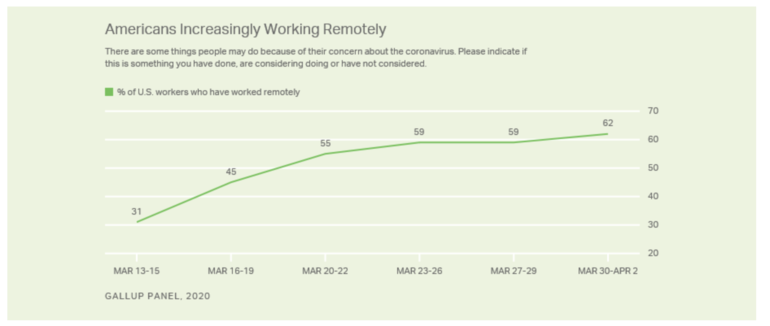
“Employers have had to become agile in response to the pandemic,” said Gallup in releasing its findings. “Since mid-March, Gallup has been tracking how U.S. workers have been dealing with the disruptions to their lives and their jobs. The percentage of workers who say their employer is offering them flex time or remote work options has grown from 39% at that time to 57% in the latest polling, conducted March 30-April 2.”
According to Gallup, 62% of employed Americans currently say they have worked from home during the crisis, a number that has doubled since mid-March.
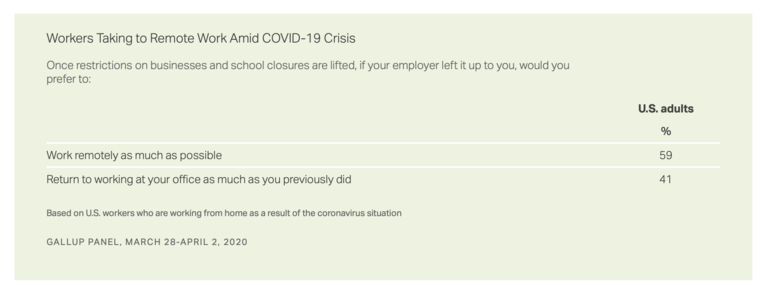
“Three in five U.S. workers who have been doing their jobs from home during the coronavirus pandemic would prefer to continue to work remotely as much as possible, once public health restrictions are lifted,” Gallup said. “In contrast, 41% would prefer to return to their workplace or office to work, as they did before the crisis.”
Separately, the New York Times interviewed numerous people and noted that many expressed sadness and anxiety over returning to work, and not just due to fears over becoming sick from the coronavirus.
‘Never Liked Schmoozing’
“These fans of online work worry that they — and the country itself — will lose important benefits discovered during this unprecedented experiment in mass remote work,” the Times reported. “People who have never liked schmoozing with colleagues have found new heights of productivity away from meetings and office chitchat. People worried about climate change are eager to reduce their carbon footprints by avoiding commutes by car. And while many parents are desperate for schools and day care centers to reopen, some working parents are appreciating more time with their children.”
There are some negatives, according to researchers, noted the Times, including that the option isn’t available to many blue collar workers, that problem-solving and creativity suffer when workers are isolated, and many people feel bored and lonely.