

WASHINGTON–CUNA said it has “serious reservations” over the “troublesome recommendations” made in a new GAO report.
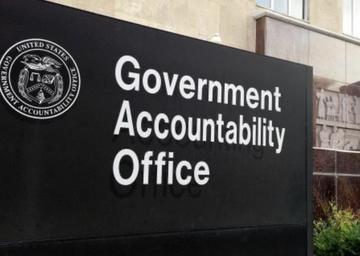
At issue is the GAO report on regulation of federal depository institutions, “High-Risk Series Efforts Made to Achieve Progress Need to Be Maintained and Expanded to Fully Address All Areas” (GAO-23-106203).
Among its specific concerns, CUNA said, is page 68 of the report, which recommends Congress “consider whether additional changes to the financial regulatory structure are needed to reduce or better manage fragmentation and overlap,” in the oversight of financial institutions.
In a letter to GAO in response to the recommendation, CUNA said, “Should they be enacted into law, the recommendations put forth in this report regarding the consolidation of federal financial regulatory bodies would result in the elimination of the independent National Credit Union Administration, as well as the National Credit Union Share Insurance Fund. This would be devastating to credit unions as it would almost certainly diminish the viability of the credit union charter.”
‘Critically Important’
CUNA said it does not believe NCUA should be eliminated and its functions consolidated into a larger federal banking regulator.
“Maintaining a separate, independent federal credit union regulator and insurer is critically important to the credit union system, and the structural and mission-driven differences between credit unions and banks necessitate such a regulatory scheme: credit unions' not-for-profit structure and their mission to promote thrift and provide access to credit for provident purposes are fundamentally different than other financial services providers,” the letter states. “Further, credit unions – not taxpayers – are called on to provide NCUA additional funds if the agency or the share insurance fund require additional funding.”
“There is no compelling reason to change that arrangement,” it adds.
Unique Arrangement
CUNA’s letter goes on to further argue that NCUA—and state financial regulators—provide “thorough oversight, examination, and supervision” of America’s credit unions, and NCUA is unique because it is the only financial regulator that is both an insurer and primary functional regulator.
“To reflect this dual function, its overall funding is derived from both a transfer from the share insurance fund and operating fees charged to credit unions,” the letter reads. “NCUA is funded by credit unions and their members, not by taxpayers. Credit unions and their members remain willing to pay for their own regulator provided there is sufficient transparency with respect to the agency’s budget and the overhead transfer rate.
“Under its current leadership, NCUA has made great progress in bringing about greater budget and operational transparency,” the letter says.

Alex Catanese
CUNA Names Director of Advocacy
Separately, CUNA has named Alex Catanese as its new director of advocacy. Catanese will help manage the association’s relationships with Democrats on a variety of key advocacy issues in his role, the trade group said.
Catanese previously served as CUNA’s associate director for political outreach, “strengthening the CUNA-league system’s political engagement efforts with members of the Democratic Caucus,” CUNA said.
“As a member of the award-winning team that manages the Credit Union Legislative Action Council (CULAC), Catanese played an integral role in helping CULAC achieve a 96% success rate in the 2022 mid-term elections when 382 credit union supported candidates won their elections to the U.S. House and Senate,” CUNA said.
‘Lasting Influence’
Added Jason Stverak, CUNA’s deputy chief advocacy officer for federal government affairs, “We’re very excited to have Alex join the federal advocacy team as CUNA, leagues, and credit unions look to make a lasting impact in the 118th Congress. Since joining CUNA in August 2021, Alex has proven himself to be an effective political strategist and is ready to hit the ground running as we look to advance credit union priorities on Capitol Hill.”
Prior to joining CUNA, Catanese managed the political programs of the Independent Community Bankers of America (ICBA) and advocated on behalf of a variety of non-profit and higher education clients at The Normandy Group, a bipartisan government affairs firm.
Buckeye Background
He received his Bachelor of Arts in Political Science and Government from Miami University in Oxford, Ohio, and is a “proud native” of Mentor, Ohio.
Feeling the FOMO Fever? CUToday.info Has a Prescription
Are you missing out on the latest news in credit unions? Missing the trends and developments you need to be aware of? We can help. Each morning CUToday.info delivers its daily Fresh Today news update offering the latest headlines and breaking news right to your email, with the easy-to-read headlines format allowing you to click on the stories that interest you most in order to learn more.
And it’s free!
If you haven’t yet signed up for the new email solution on which CUToday.info has partnered with ResponseGenius, you can do so here. Signing up requires less than one minute of your time—and it’s free!
Please note that after signing up you may need to go to your Spam/Junk folder and mark the morning headlines email as safe. CUToday.info does not provide its list of readers and emails to outside parties, and we will not be contacting you to sell you an extended warranty or sending you any links so you may cash in on an inheritance you didn’t know was coming.
And did we mention it’s free?
Please note and/or make your IT department or email administrator aware the emails will be coming from the domains CUTodayinfo.com and CUTodayinfoReply.com