

WASHINGTON–Sometimes the best strategy is just to “put your head down and execute,” according to a well-known national journalist.
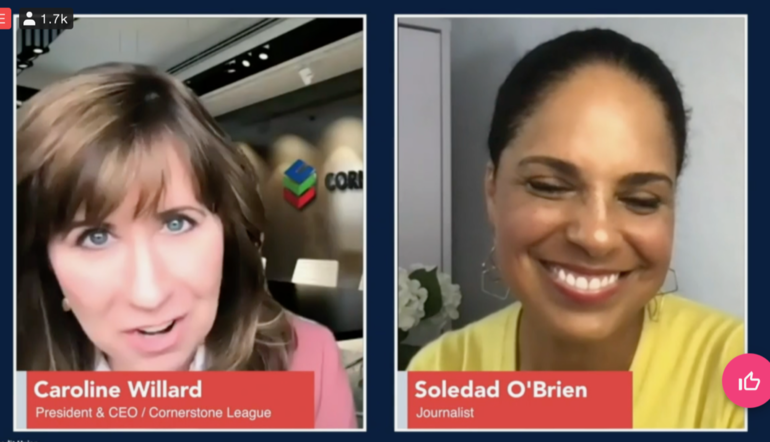
Soledad O’Brien, known for her work on CNN and other networks and who now hosts a national news program, shared her insights on a variety of issues, including the media, during a Q&A as part of CUNA’s GAC.
Posing the questions was Caroline Willard, president of the Cornerstone Credit Union League. Here’s a look at what was discussed:
Willard: I have to imagine when you look back at Hurricane Katrina, you had some takeaways. What can you say 16 years later?
O’Brien: There were so many lessons from that. When Katrina happened, my executive producer was from New Orleans. When we came in to do the morning show we started this debate over whether people from New Orleans were refugees. It just felt so important that that word mattered.
It was such a lesson in some many ways. People who have no education or are poor or who are often overlooked are often the most poetic speakers. I learned how to shut up and listen to people rather than here is my take on your story. Journalism is about serving people. We’re supposed to provide factual accurate information and listen to people. I felt like I learned a lot from that experience.
Willard: You’ve paved the way in journalism for women and people of color. How did you come to do that?
O’Brien: I think I always understood my success or my failure would affect other people. If you’re the only Black person or only woman or working mom on the team and you’re not able to manage, they will never have another person like you.
When I was at CNN we were covering the (Asian) tsunami and I had just had twins and I had four kids under four. I remember thinking if I failed it would not just reflect badly on me, it would reflect badly on moms. I was told by a producer if you can’t handle this I will put you on a plane home. I was 38 years old; I was so upset I literally started crying.
I called my husband and he offered some helpful advice: “There’s not anything you can do. You just have to go and execute.” I put my head down and went on. I tell that story a lot. I think the strategy is often just about executing. I have made mistakes in the past and I internalized it and wasted a lot of energy on that.
I have found just to focus on the thing, the goal, even if that is unfair.
Willard: What message would you have for younger people, such as those in credit unions, who are passionate?
O’Brien: Lean into the passionate part and then figure out why are you passionate. What is the purpose and the meaning you are finding in your job? And then how do you connect to the stuff you are doing outside of work that leverage that same type of passion in your community?
When people are working in organizations they are connected to and building the community, lean into those.
Willard: The current political environment is pretty polarized, and I think that is reflected in where Americans get their news. We have been bought into these echo chambers where you only hear like-minded people speak. What are your thoughts on how Americans can get a more balanced view of current events?
O’Brien: I think a lot of it is in the format of how we get our news. It’s the classic, ‘If you’re a hammer, everything looks like a nail. Not everything is partisan. One of the biggest downsides of losing print journalism is you lose this idea of ‘We are in the community.’
I think the framing of stories as left vs. right is frequently not right. If you want to create drama, it’s cheap and not as expensive as going out into the field. And if you choose not to take a side, and not to argue with each other, they will find someone who can.
We started 195,000 households (for the O’Brien-hosted public affairs TV spot “Matter of Fact”) and now we’re at two-million. We are not live. We can’t respond to the news that maybe President Trump tweeted and this is how people responded. We found there’s a lot of value in standing back. If it’s about the First amendment, what is the First Amendment? One producer called us the ‘teaching hospital of news.’ I think it’s one of the reasons our show ended up being very successful. When you take the oath of office, what exactly are you swearing to? It’s actually quite straightforward and simple, and I think a lot of it is we can’t compete on the daily drama live.
The high cost of insulin, for example, or the high cost of housing—those are not left or right issues. They affect everybody. You can educate people and not have it be a screaming match.
Willard: What are your thoughts on the latest credit union industrywide discussion on financial well-being and how it fits into the context of America today?
O’Brien: People are financially very worried, concerned and fearful. A conversation about financial well-being is a conversation about honesty and helping someone in the macro. It’s asking the question: How do we help you for the long haul?