

WASHINGTON—Two NCUA board members are saying not enough new credit unions are being chartered, and they are placing the blame squarely on–NCUA.
During CUNA’s virtual GAC, NCUA Board Member Rodney Hood and Vice Chairman Kyle Hauptman both expressed concerns over the lack of new credit unions being formed and said the agency hopes to correct the matter.
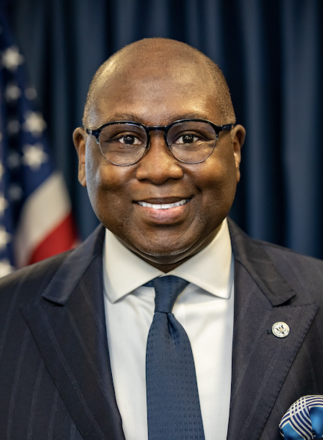
Rodney Hood
Noting credit unions have faced many challenges during the pandemic and there are certainly more ahead, Hood said chartering a new CU should not be one of them.
“The NCUA had one new charter last year. Only two are planned for this year. These data are, quite frankly, unacceptable,” said the former NCUA chairman. “The agency can make it incredibly difficult to get a new charter. We aren’t saying chartering a credit union should be easy, but it shouldn’t feel impossible for many organizing groups. I look forward to working with my board colleagues to make sure the NCUA does our part to significantly streamline and simplify the process of chartering.”
Reexamining the ‘Old Ways’
Hauptman, in his first public address as a member of the NCUA board, stressed the “old ways of doing things” should be reexamined.
“In government, we are usually a monopoly provider of our services, not subject to the market forces that demand constant improvement,” Hauptman said. “You all know you can’t treat every problem. We shouldn’t need a pandemic to make us look for better processes. But one area I’d like to focus on at the NCUA is why it is so hard to start a new credit union.”
Hauptman said there must be an easier path for de novo CUs.
“I’m from Maine, and I was pleased to hear about a new credit union chartered in my home state just last year—until I learned it took nine years to accomplish. Nine,” said Hauptman. “Things may move a bit slowly in Maine, sure—but not that slowly. Self-reliant, accountable people who want to work cooperatively with others to charter a new credit union that they will own, deserve a clear path to make that a reality.”
Hauptman pointed to how there is now a great deal of talk about inclusion, diversity, and the underserved.
“Fixing the de novo process is a way to actually help the underserved, not just talk about it,” he said. “The NCUA is already aware of CUSOs, vendors, and other credit unions that want to help. So, I’ll be talking to those who recently started a credit union and those who want to start one, with the goal of working with NCUA staff on a new, easier path. Making it easier to start a credit union means having more financial services options in places that have few, and for everyone else, it means more competition for your business.”
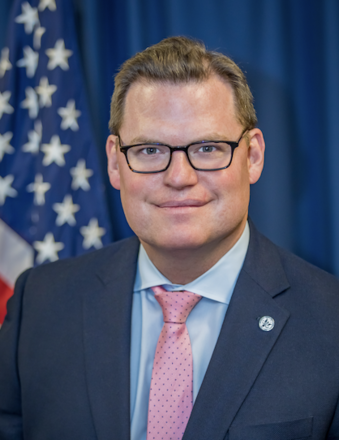
Kyle Hauptman
Pandemic Lessons
Turning to the how the health crisis has affected credit unions, Hood said there are other lessons the pandemic has taught the agency and CUs.
“A critical lesson we should take from the events of last year is that humility and resilience are vital to surviving and thriving in today’s world,” stated Hood. “When I say ‘humility,’ I mean the importance of admitting that our knowledge and perspective are limited, and that we usually do not predict the future with clarity. By that standard, 2020 was a profoundly humbling year for all of us.”
When he speaks about resilience, Hood said he is talking about being prepared to respond effectively to any eventuality.
“Our entire system faced a monumental ‘stress test’ last year: our government was tested; our healthcare system was tested; the private sector and your institutions were tested; our communities and families were tested,” he said.
Hood said those tests revealed a great many weaknesses in the CU system, but the pandemic also revealed strengths.
“I certainly saw those strengths, that sense of resilience, in the credit union industry’s response to the COVID-19 challenge,” he told GAC. “Your institutions stepped up, assessed the changed situation, and adapted to an extraordinary and unprecedented situation with purpose, resilience and creativity. When the CARES Act was enacted and credit unions were called upon to distribute funds under the Small Business Administration’s Paycheck Protection Program, this industry delivered, making more than 171,000 loans to entrepreneurs and small businesses that were in urgent need of credit to keep their doors open.”
As a result, the initial economic damage from the pandemic, though severe, was at least blunted, said Hood, as members were able to maintain access to credit and the financial services they need.
“And there may be promising signs that the economy is on the road to recovery, but we should not be complacent – we’re still assessing the damage and much of the economic damage could be forthcoming so we’re not out of the woods yet,” he said.
Looking Forward
What should credit unions expect going forward?
“First, while we’ve taken steps to provide relief to help your institutions weather the pandemic storm, we certainly will look to other forms of relief that may be needed,” Hood said. “We’re also watching closely to determine what additional support may be needed for smaller credit unions and minority depository institutions in the months to come. The credit union industry responded well to the stresses of the last year, but many institutions were left more vulnerable than they would otherwise have been, and so closures of financial institutions, with the attendant systemic risks, are always a possibility. Should that occur, we need to be prepared to respond appropriately to ensure the safety and soundness of the larger system—again, a lesson in resilience. In responding, it will always be my preference to save institutions rather than merging them.”
Cryptocurrency and CUs
Meanwhile, Hauptman said he would be “remiss” in his comments if he didn’t mention blockchain technology and digital assets, like cryptocurrencies.
“Credit unions have always been innovators, and we know that if it serves members better, credit unions will want to do it. To that end, the NCUA may want to look at the actions of another regulator, the OCC.”
Hauptman noted the OCC recently provided guidance around the custody of digital assets and the use of Stablecoins for payments.
“Stablecoins, as you may know, are cryptocurrencies designed to minimize price volatility, and the OCC’s guidance moves the U.S. closer to the real-time payment systems already used in other countries,” said Hauptman. “Now, not everything the OCC did may apply to the NCUA, but I look forward to working with Chairman (Todd) Harper to see what we can take from the OCC’s experience to let you all innovate as you’ve always done."