

WASHINGTON–It’s the question on the minds of many: who will be sworn in as the next president of the United States. One person here offered a prediction, along with thoughts on the future of third parties, overhauling the primaries, and more.
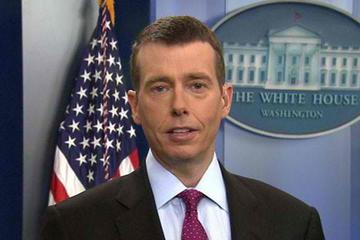
David Plouffe
Political consultant and Obama strategist David Plouffe offered some predictions on how the 2020 race might play out in remarks before CUNA’s GAC here.
“The last election came down to 70,000 votes in three states. This one might be closer,” said Plouffe.
Plouffe said the Trump campaign has undertaken a massive effort to identify everyone who fits the profile of a Trump voter as part of an effort to get out the vote. He anticipates that could lead to 150,000 to 200,000 more votes in some states, such as Michigan.
“The Democrats always have a hard time winning battleground states. Why? In battleground states there are always more Republicans than Democrats,” he told the meeting. “I don’t see a first round pick on that Democratic stage. Incumbents have an enormous advantage: Time. Donald Trump’s team is ready, they are spending hundreds of millions of dollars in social media. They are ready to decapitate whomever the Democrats run.”
Trump’s one disadvantage, said Plouffe, is his personal popularity is in “the danger zone.”
What Rules Today
Another advantage for Trump, according to Plouffe, is memes, gifs and images “rule today,” and Trump is a master of using those media.
“I have spent a lot of time in politics and business. If you have something important to announce, it wasn’t too long ago you thought about who to give the first interview to, what email to send, who to give the speech to,” said Plouffe. “That doesn’t work anymore. Now you have to think about the Instagram post and the Snapchat strategy. This is one of Donald Trump’s strengths. He understands blunt force communicating.
“If you’re not thinking in this way—what is the picture, and ideally a picture that doesn’t require much language?—you need to be. It must be emotional, simple, it can’t bore people. I think this is a challenge for all of us thinking about communicating in one way when the ground is shifting beneath us so dramatically.”
Following his prepared remarks, Plouffe participated in a Q&A with CUNA’s chief advocacy officer, Ryan Donovan. Here’s the Q&A:
Donovan: I am often asked questions with a tone of hope that everything is going to be OK in Washington. Can you tell us it’s going to be OK?
Plouffe: There was not an insignificant number of people during Barack Obama’s terms who thought we were going to turn the country over to Islam. I think it shows the resilience of our system. But I also think our system is fundamentally broken. There are 15% of people on either side and the 70% are the exhausted middle. What gives me hope is you see in city councils and state governments where people do work together. But not in Washington.
I have confidence in the people and in the younger generation, left, right and center, who will not put up with this. My question isn’t whether we’ll have a third party or multiple third parties, the question is when. It’s hard to argue people aren’t getting what they want, especially in Washington. It’s all about maximum positioning today.
And we have a role to play. If (an elected position) steps out and takes a position, even if you don’t agree, send them a contribution.
Donovan: Can a third party candidate win the White House?
Plouffe: Right now, there is not a pathway for a third party candidate to get enough electoral votes. Even the best third party candidate can only get a maximum of 20 electoral votes. Now, can they govern? I think at some point is has to be not just a person, but a movement. Right now a third party could not get to the White House. My feeling is in 10-12 years that could be different.
Donovan: If we can’t change the presidential election process in the short term, is there more opportunity in the primary process? Is the nominating process broken, and could it be improved?
Plouffe: I think you will see big changes now. I doubt we’ll ever see a caucus again. I think we’ll still start with a number of states going first to give a long-shot some momentum. The best idea I’ve heard is change the order each year, so the closest states in the last election go first. If not, what about the four most representative states?
Donovan: You have had opportunity to work for a number of presidential candidates. What are some characteristics you think make a good presidential candidate?
Plouffe: Before qualities, timing is important for a variety of reasons. I’m not sure I’ve ever seen anyone run too early. What if Obama listens to everyone’s advice in 2007 and doesn’t run at all? A lot of people wait for the perfect moment, and I think you should run if you think you have something meaningful to say. Obama, Trump, Clinton, good or bad, they were very authentic people. It’s the ability to be authentic and to inspire people.
Now, there’s a difference between being a good candidate and a good president. Being president isn’t about your agenda, it’s about stuff coming into the building.
Donovan: What about the Electoral College?
Plouffe: I believe we should go to a national popular vote. That’s not going to happen anytime soon. If I were running in a national popular vote I’d spend all my time in Los Angeles, New York, Houston, Miami, all the places where you want to drive turnout. More of the country would see the candidates.
Donovan: Which state will flip its electoral votes in the next election?
Plouffe: It will be Pennsylvania to the Democrats and Minnesota to Trump.
Donovan: Who will standing opposite the chief justice on Jan 20?
Plouffe: Probably an old white dude.