

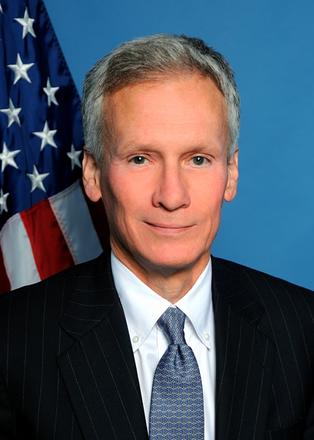
ALEXANDRIA, Va.–The auction announced this week by NCUA of the furniture that had been used by former Chairman J. Mark McWatters resurrected a number of news reports from 2018 that alleged the purchase of that furniture–as well as other expenses incurred by McWatters—were in violation of NCUA policy.
But in the wake of the report, sources have pointed out NCUA’s general counsel and Office of the Executive Director (OED) subsequently stated there were no violations of the agency’s reimbursement policy.
At issue, in addition to the cost of the furniture, were expense reimbursements that included a $250 Uber ride and the purchase of alcohol, as well as travel expenses related to a World Council of Credit Unions’ conference in Vienna. The expenses drew national media attention, including in the Washington Post.
NCUA ‘Most Frugal’
A 2019 report by the Office of Executive Director, “Report on the Review of the NCUA Board Travel and Representation Expense Policies,” compared NCUA’s policies against the standards in the Federal Travel Regulation (FTR) but also noted NCUA is not subject to the FTR.
The report, which describes NCUA as the “most frugal federal agency reviewed in terms of expenses incurred for travel and representation expenses by political appointees and their staff,” is in follow up to a 2018 report from NCUA’s Office of Inspector General (OIG) that scrutinized McWatters’ expenses, as well as those of his chief of staff, Sarah Vega.
“The report did not benchmark the NCUA’s travel and representation expense policies against general federal practices or banking agencies,” stated the summary from the Office of Inspector General. “Additionally, the report lacked context or explanatory information about the individual expenses listed in the report.”
Specific Responses
Specifically, the OED report stated:
- The $265 Uber expense for a trip from Washington, D.C., to Alexandria, Va., did not note the trip took place during a snowstorm when the 12-mile trip that typically takes 30 minutes turned into an hours-long trip due to traffic, and was also subject to Uber’s surge pricing.
- The OED report notes the OIG found inconsistencies in NCUA policies allowing for the reimbursement of alcohol-related expenses, with one policy allowing reimbursement, and another prohibiting it.
The OED added, “As recent events have shown, the sensitivity to alcohol reimbursement for federal officials is a lightning rod for divisive positions. It produces unwarranted, but nonetheless real, public scrutiny. As such, the most prudent course of action is to eliminate it as a reimbursable item under the representation expense policy.”
- On the issue of business class and first class airfares, the OED said NCUA’s policy at the time “overwhelmingly conforms” to the FTR established by the General Services Administration, and that the policy for board offices is the same one applicable to all NCUA employees. The OED said NCUA policy allows business class travel if traveling outside the continental United States and if travel status is more than 14 hours.
Letter to Congress
The OED report and a letter from then Executive Director Mark Treichel to the then chairman of the Senate Committee on Banking, Housing and Urban Affairs can be found here.