

WASHINGTON — A group of former Federal Reserve chairs, Treasury secretaries, and top economic advisers from both parties warned that a reported criminal inquiry into Federal Reserve Chair Jerome Powell represents an unprecedented threat to the central bank’s independence, sharply escalating concerns following the Justice Department’s subpoena of the Fed.
In a joint statement, the officials — including former Fed chairs Ben Bernanke and Alan Greenspan, along with former Treasury secretaries Janet Yellen, Henry Paulson, Timothy Geithner, and Robert Rubin — said the inquiry risks undermining public confidence in U.S. monetary policy and could have serious consequences for inflation, employment, and long-term interest rates.
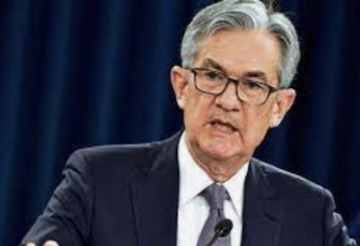
Jerome Powell
“The Federal Reserve’s independence and the public’s perception of that independence are critical for economic performance,” the group said. “The reported criminal inquiry into Federal Reserve Chair Jay Powell is an unprecedented attempt to use prosecutorial attacks to undermine that independence.”
The statement followed Powell’s disclosure Sunday that the Justice Department has subpoenaed the central bank and threatened a potential criminal indictment related to his June testimony before the Senate Banking Committee about the Fed’s $2.5 billion headquarters renovation project. President Donald Trump has repeatedly criticized the renovation as excessive and has intensified attacks on Powell for not cutting interest rates more aggressively.
Breaking from his typically restrained public posture, Powell accused the administration of using criminal threats to pressure the Fed, warning that such actions strike at the heart of central bank independence.
“The threat of criminal charges is a consequence of the Federal Reserve setting interest rates based on our best assessment of what will serve the public, rather than following the preferences of the President,” Powell said in a video statement, according to the Associated Press.
The former officials’ statement went further, drawing a stark comparison to countries with weaker institutions.’
“This is how monetary policy is made in emerging markets with weak institutions, with highly negative consequences for inflation and the functioning of their economies more broadly,” they said. “It has no place in the United States, whose greatest strength is the rule of law.”
Signatories to the statement span multiple administrations and political affiliations, including former Senate Banking Committee Chairman Phil Gramm and former Council of Economic Advisers chairs Jared Bernstein, Jason Furman, Glenn Hubbard, N. Gregory Mankiw, and Christina Romer, as well as former IMF chief economist Kenneth Rogoff.
Financial markets are closely watching the standoff, as sustained pressure on the Fed could unsettle investor confidence and ultimately influence borrowing costs across the economy, from mortgages and auto loans to business credit.