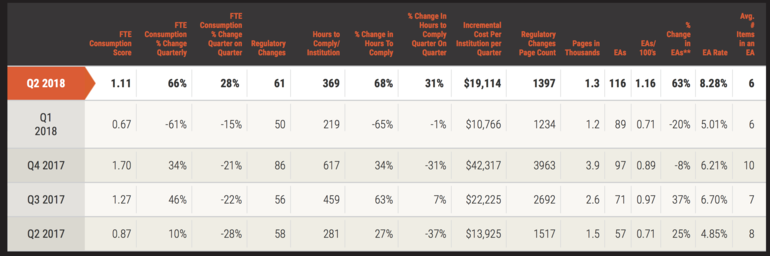
NEW HAVEN, Conn.–The Banking Compliance Index (BCI), which measures regulatory burden, nearly doubled from Q1 2018 to Q2 2018–but for an ironic reason.
According to Continuity, which publishes the Banking Compliance Index, the findings show the significant impact of regulatory relief bill S.2155, which contained over 50 separate regulatory changes.
“This BCI increase reinforces that any change, whether adding or reducing regulations, translates to extra work for institutions,” the company said.
Continuity further noted that regulatory agencies have now filled their vacant leadership positions, which reduced some of the regulatory uncertainty experienced last quarter and may have contributed to a warmer enforcement climate.
“It’s not unusual to experience an uptick in regulatory activity from Q1 to Q2, but this is a more substantial jump than we’ve seen in years past,” stated Donna Cameron, Continuity’s director of regulatory I/O. “We’re just starting to see the impact of the regulatory relief bill on banks, credit unions and lenders. The bill added a significant number of pages and material that organizations had to read, interpret and decide on appropriate action forward. This increase in activity is only expected to continue as the agencies issue implementing regulations and guidance documents.”
What BCI Does
The Banking Compliance Index, published quarterly by Continuity’s Regulatory Operations Center (ROC), quantifies the incremental burden on financial institutions in keeping up with regulatory changes.
The typical community financial institution needed more than one full-time employee (1.11) just to keep pace with regulatory changes. This score doesn’t include the resources institutions are already dedicating to regulatory and compliance efforts, Continuity said.
According to Continuity, were 61 issuances delivered between April 1 and June 30, 2018, up from 50 issuances the previous quarter. Compliance costs increased from $10,776 in Q1 2018 to $19,114 in Q2 2018, and hours required to comply per institution went from 219 hours in Q1 2018 to 369 hours in Q2 2018, a 68% increase, the company reported.
“When any change occurs, institutions must make significant modifications such as retraining staff, upgrading technology, reevaluating risk and tweaking operational procedures,” said Cameron. “This is why it’s critical for institutions to have a strong, comprehensive change management system in place to help them quickly and efficiently navigate the impact of regulatory activity, especially now in the wake of regulatory relief.
What to Expect
“We can expect to see a more active second half of the year in regard to regulatory activity and issuances,” Cameron continued. “Agencies have made it clear that they plan to accelerate regulatory relief activity and provide guidance as soon as possible. Financial service organizations must proactively work with their regtech partners to help them automate compliance processes, interpret regulations and centralize efforts to prepare for the upcoming changes.”
The BCI is calculated each quarter using a multivariate analysis that can be weighted across different contexts and is calibrated to determine the regulatory impact on financial institutions of varying sizes, product mixes and regulatory oversight. Key indicators include volume, velocity and complexity of regulatory change; time expended to meet regulatory requirement(s); and supervision and the enforcement climate. The BCI data sources include CFPB, FDIC, FED, NCUA and OCC.
Continuity said the BCI is calculated using the statistically average size of a domestic financial institution, currently $350 million according to publicly reported data available from the FDIC.