

ATLANTA–The first African American to ever serve as president of a Federal Reserve Bank is calling racism a danger to the health of the American economy.
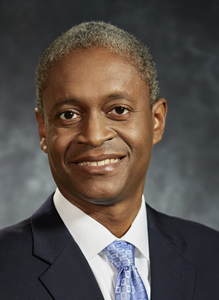
Raphael Bostic
In a recent opinion piece, Raphael Bostic, president and CEO of the Atlanta Federal Reserve Bank wrote that "By limiting economic and educational opportunities for a large number of Americans, institutionalized racism constrains this country's economic potential. A commitment to an inclusive society also means a commitment to an inclusive economy."
In a separate interview with NPR, Bostic said to get to an inclusive economy will require tough conversations that address and raise awareness about racial inequities, as well as the nature of those inequities.
‘Really Important’
"What I think is going to be really important is that those sorts of conversations continue so that people start to become much more sensitive about when their approaches to decision-making or allocating capital or hiring workers is being shaded by things that are inadvertently, in many instances, disadvantaging African Americans and other minorities," Bostic told NPR.
As the first African American to become president of a Federal Reserve bank, Bostic sees his leadership role as less of a burden and more of a "joy and satisfaction," knowing that his work at a high-level position "is really changing how people think about what's possible,” NPR reported.
Other Views Expressed
Among the points made by Bostic during an interview on NPR’s “All Things Considered” were:
- In response to a question on what the Fed can do to help disadvantaged communities own their homes, Bostic said. “Well, I'm glad you talked about housing and it really does speak to the point that this is a multidimensional problem. We do have relationships with a lot of banking institutions that provide the financing that families take advantage of to buy homes. So, we've been working with them for a long time, we will continue to do that to try to make sure that they don't have biases in things that they do.”
- Asked about a proposed rule change by the Trump Administration that would make it harder to file discrimination cases with the Fair Housing Authority, Bostic said, “It is a problem, and I think it is important that we create real opportunities for those who have been mistreated to find recourse. I was pleased to see that the banking institutions and some pretty major organizations like the National Association of Realtors all have the same view. And I'm hopeful that even if this rule does go through, that they will continue to manage their business and activities in a way that's consistent with trying to stamp out fair housing violations wherever they occur.”
- Asked whether he feels added pressure as the first African American to lead a Federal Reserve Bank, Bostic responded, “I've tried really hard in this role to not focus on that. I have to be the president and CEO of the Federal Reserve Bank of Atlanta first. And I'm an African American president second. But at the same time, I do recognize that, for many, this is something that they never would've imagined. I've gotten so many emails from people saying, ‘I never thought that the Fed was a place that an African American could lead. And I'm thinking about my career in a different way.’”