

SAN MATEO, Calif.–A start-up fintech seeking to become the first bank account and spending card for teenagers has now raised $22.5 million in funds, including from some well-known and celebrity investors.
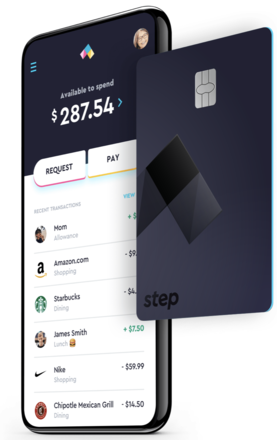
Called Step, the mobile-based banking service for teenagers, said it is seeking to fill a void in the market.
“Schools don’t teach kids about money,” CJ MacDonald, the CEO and co-founder of the company told TechCrunch. “We want to be their first bank accounts with spending cards, but we also want to teach financial literacy and responsibility. Banks don’t tailor to this, and we want to be a solution teaching the next generation of adults to be more responsible with money in the cashless era. It was easy with cash to go to the mall but now everyone is using their phone for Uber and more.”
MacDonald had earlier founded another startup, mobile loyalty card app Gyft, which was acquired by First Data.
Step is now seeking to penetrate the 50-million teenage market in the U.S.
MacDonald said the aim of its latest funding will be to use it to bring Step’s first product — banking accounts with payment cards attached — to market, in partnership with Mastercard and Evolve.
500,000 Names on Waiting List
As CUToday.info reported earlier when the company rolled out its soft launch earlier this year it had already amassed 500,000 names of interested would-be users.
In addition to Stripe, other investors in its latest funding round include Will Smith’s Dreamers fund, Nas, Jeffrey Katzenberg’s Wndrco, Ronnie Lott, Matt Rutler, Kevin Gould, and Moat founders Noah and Jonah Goodhart. Previous investors included Crosslink capital, Collaborative Fund and Sesame Ventures also participated. The company has raised just under $30 million to date.
What Makes Step Different
MacDonald told TechCrunch there are differences between what Step and other fintechs with similar-sounding offerings are doing, including, first and foremost, its primary point of engagement is the teenager him/herself, with the aim being to give the account holder full autonomy (or at least the feeling of it: parents can still monitor and put controls on an under-18 account, as well as pay funds into it).
“To that end, Step has been marketing directly to its future users, doing viral things like incentivizing sign-ups by giving users a dollar towards their bank accounts (when they come online) for each person that gets referred and also signs up using a person’s code,” TechCrunch said. “Teenagers under 18 will even be able to sign up for accounts without parental or guardian consent — although these accounts with be very limited in their functionality.”
No-Fee Model
In addition, while Step gets a cut from card transactions, but unlike others in this space (and unlike most banks), Step is launching with a no-fee model for the basic account. “This is because the idea will be to grow with the users, and over time to offer them services that will collect fees, when they are needed,” TechCrunch reported.
“As teens grow up we want to grow with them,” MacDonald told the publication. “We will start offering products when they go to college, for example lending money to get books or computers.”