

LAS VEGAS–One of the best-known names in Silicon Valley when it comes to venture capital and fintech M&A transactions has some thoughts on what is going on and what’s ahead for fintech following the failure of one bank and a general downturn in tech stocks.
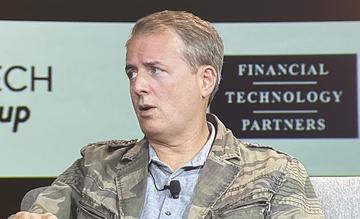
Steve McLaughlin
Steve McLaughlin, the founder, CEO and managing partner of Financial Technology Partners, which reportedly has $600 million in revenue in 2021 and which is valued at more than $2 billion, offered his insights during the Fintech Meetup event here, which has drawn more than 3,000 people from across the fintech space, with representatives of some 1,400 companies on hand, according to organizers.
McLaughlin has seen booms and busts before over the 20 years his company has existed after he launched the business out of his own apartment in San Francisco, and he offered his perspective during a Q&A with Jon Lear, president and cofounder of Fintech Meetup. Here is what was discussed:
Lear: You started Financial Technology Partners in 2001. Why?
McLaughlin: The market then reminds me of the market now. Quite frankly, the market was in a really rough spot. Everyone my age, plus or minus, probably remembers the dot.com boom and bust…The big banks during this point in time were really only taking on fairly large deals. So, if you’re at Goldman Sachs or whatever right now you're probably working on very large bank problems; things like that. They kind of ignored a little bit the smaller, high-growth tech companies.
I just saw a huge opportunity to go out and work with some of those companies that needed the top-class advice and we were turning them down because we didn't have the capacity. We were laying off people left and right. I said if I could go out and start a business like this it just might be successful. I didn't know it was going to be this successful, but I thought it might be. But I got my first business cards at Kinkos and we incorporated for $99.
Lear: One of the topics on everybody’s lips is Silicon Valley Bank. Is SVB the canary in the mine, the sign of a potential crisis?
McLaughlin: The Silicon Valley bank collapse, Signature Bank Collapse, Silvergate, all within a week or two didn't really help matters (in Silicon Valley). I do think each of those failed for their own reasons, and the Credit Suisse crisis you could have seen coming for two years.
Silicon Valley Bank is a tough one. I think had people really looked hard at it you probably could have seen it and predicted the problems they were going to have.
I personally don’t think it is going to unravel the whole banking industry. I don't think we're going to see a global bank run. But I do think that had Silicon Valley Bank not been rescued by the FDIC, certainly there would have been more going down the tubes.
Lear: SVB banked 50% or more of the startups in the U.S. What is the effect on fintech startups?
McLaughlin: Had they not been rescued there would have been a lot of problems. I was getting 50-75 calls if not more, and every single e-mail in my inbox was asking about SVB.
I don’t think for the fintech community it means anything material long term. Of all the fintech entrepreneurs I know, and I’ve been on the phone with a hundred of them since this happened, if not more, clients and non-clients, they’re calling me up and saying ‘Do you guys know anybody who knows what they're doing?’
We scrambled, had all the VCs on the phone all weekend long. The thing we figured out very quickly, even before the rescue, was each and every company had a plan. They had their VC's helping them, we were helping them, other banks were helping them.
I think I the tech community is just so incredibly resilient. Yes, there’s an issue here and there, there are going to be problems, but there are a ton of other great financial institutions, including SVB, still around operating that can help these companies.
‘Extremely Resilient’
I think the financial technology market is extremely resilient, it’s tough as nails. Let's face it: there are a lot of statistics out there that say X percentage of VC startups just don't work. So, that's going to happen no matter what. There’s going to be a lot of businesses that go out of business. We're seeing it today, right? There's bankruptcy after bankruptcy of fintech companies; not the big ones that we've all heard of, but a lot of guys that never got there. That was going to happen.
Not every business model is meant to win and succeed. Let’s not blame that on the market coming down or the lack of capital or SVB. What are we looking for now is who are the strong, the survivors?
I don't think it's as bad as this, but somebody said online that it's a little bit like Noah's Ark. There’s a big storm coming and you know one or two of each is going to get on the ark and everyone else is going to get wiped out. I don't think that's the case either; that's extreme, because there's many, many more than one or two great companies per sector.
But I do think there are probably too many companies per sliver of fintech competing for talent, competing for customers, competing for ads and I just think that's a tough way to live. There’s going to be some consolidation, which is good, and some folks aren’t going to make it, which is what it is.
Lear: What about lack of trust? How big is this issue for some of the fintechs?
McLaughlin: Maybe it’s a good thing for fintechs. I don’t think a lot of people trust a lot of the big banks, anyway. As I said before, I think fintechs are very resilient. I'm not too worried about it.
I said on TV the other day that Resolut, one of our clients in Europe; we were able to raise $1.25 billion for them. They're growing like a weed; they're super profitable, they have a higher market cap than SVB and many banks and they continue to crank and have massive customer trust.
I think my other comment is that most people who are banking at Chime or Varo are not necessarily watching CNBC and Bloomberg all day long. It's the people who are sort of not in the bank system who are maybe in the bottom end or the middle; those who are underserved by the banks and those are the ones that are probably not that. They trust these fintechs more.
Lear: What will fintech look like in the next 5-10 years?
McLaughlin: It seems like every five to 10 years everybody says everything is played out in fintech. The world is more and more and more digitized and more and more international and more and more and more speed is going to be a big thing. Risk management is going to be a big thing. Compliance. AML.
I just think there's so much going on. We're raising money right now for an identity company that's got an incredible business. I wake up every day and I'm meeting with people who are doing some really interesting things.
There are definitely points in time where you get a little bit depressed about the news or about deal flow or whatever, but I think you have to kind of dust yourself off, put your fatigues on, get out there and battle.
I am incredibly optimistic about the future of fintechs. There is absolutely zero reason not to be. As much money as has been plowed into fintech, I don’t feel like any of the big problems have been solved at all. Just slivers. We haven’t solved the underbanked. Or payments. I think there is a crazy amount of opportunity.
It’s Called Fresh for a Reason. And We Offer Home Delivery. For Free!
The biggest, best and freshest news reporting in credit unions remains free in ’23! Each morning CUToday.info delivers its daily Fresh Today news update offering the latest headlines and breaking news right to your email, with the easy-to-read headlines format allowing you to click on the stories that interest you most in order to learn more.
If you haven’t yet signed up for the new email solution on which CUToday.info has partnered with ResponseGenius, you can do so here. Signing up requires less than one minute of your time—and it’s free!
Please note that after signing up you may need to go to your Spam/Junk folder and mark the morning headlines email as safe. CUToday.info does not provide its list of readers and emails to outside parties, and we will not be contacting you to sell you an extended warranty or sending you any links so you may cash in on an inheritance you didn’t know was coming.
And did we mention it’s free?
Please note and/or make your IT department or email administrator aware the emails will be coming from the domains CUTodayinfo.com and CUTodayinfoReply.com