

LAS VEGAS–Credit union leaders may not be completely familiar with the concept of open banking and what it will mean, but one financial executive who has experience in the area believes it will go a long way toward resolving some issues that “suck” right now. But first, certain things will need to happen.
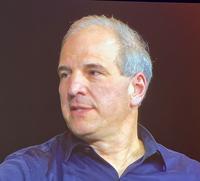
Jim Magats
Jim Magats is CEO of MX, a position he has held since mid-2022. MX is a SaaS company that works with financial institutions including credit unions on the member experience. Prior to joining MX, he spent nearly two decades with PayPal, including a stint in Europe where open banking is ahead of the United States and where government rules have been put in place.
During the Fintech Meetup in Las Vegas, Magats explained what he believes open banking will mean in the United States, as well as what his experiences have been. He shared his thoughts during a Q&A with Alex Johnson of Fintech Takes.
Here's what he had to say:
Johnson: Open banking is a really broad concept. What is your definition?
Magats: Open banking is about what we can do collectively. What we do with open banking is really solving a problem. The money experience from my point of view sucks right now (for the end user). We have created a monster, which is the fragmented money experience that a lot of us face when we're trying to pay bills, when we're trying to figure out how much money we have in different bank accounts, when we're just trying to figure out where to invest our money. Do we have FDIC insurance or not?
The experience of the end user in other industries has gotten better. It's easier to shop, it's easier to travel, it's easier to stream videos. But it's harder to use, manage and receive money than it was 20 years ago.
What open banking provides is a set of capabilities that reduces the fragmentation of the money experience today. In essence, what open banking does is it allows open access to data about your financial lives that allows you as a consumer to see all of your financial information. It allows financial service providers, whether they're a fintech or a bank, to get a 360 view into my financial life.
When we talk to different customers, the number-one thing they say about their financial lives is managing it is overwhelming, and it’s because there are so many pieces.
Johnson: You were at PayPal for 18 years in a number of roles, one of which was working in Europe at nearly the same time Payment Service Directive 2 (PSD2) was being integrated. How do you think about the next chapter of open banking being more regulatory driven and what lessons did you take away?

Alex Johnson
Magats: PSD2 is called the Magna Carta or the Constitution of open banking. What it did was create a framework for banks and data recipients to really work together under a technological framework of what data would be made available, how they would receive it and how they could then use that data in a way that would hopefully stimulate innovation.
We're now 10 years into PSD2. As we look to Europe I think there has been decent innovation, but one of the things that I found at the time and I still find is that it's extremely prescriptive in terms of what data fields you're supposed to provide, what the limitations are and so on. It really creates specificity around what we should do and not the art of the possible.
When I was at PayPal I really viewed it as we're going to do the minimum amount to be quote ‘compliant,’ but we never really got to the idea of how we could be innovative around it. I think as we look to the U.S. we have to be very much thinking not that the government is going to solve the problem—the government cannot solve every problem—but the government can provide a framework.
The problem as I see it is not necessarily that there are rules, but that we are working together to collaborate on financial data and making it permissible, making it actionable, making it something that you can actually take the data and do things with it.
Not a Very Good Job
We don't do a very good job of sharing financial data and we suffer from something that I call financial blindness. We are unable today as customers to actually see all of our financial information in a very cogent manner. It's very difficult for financial service providers to see all my information in the way that can better serve them.
I've had a Citibank account for nearly 25 years and Citi has no idea that I have a mortgage at Wells Fargo. Wells Fargo has no idea that I have a credit card with Bank of America and Bank of America has no idea I have a Venmo account and Venmo has no idea that I have a Charles Schwab account.
Framework Needed, But…
I really think this needs to have the government putting regulatory frameworks in place, but the frameworks alone will not solve the problem. We have to work together as an industry. There's all this concern that you have closed banking and open banking. This will clearly be a case where rising tide raises all ships and will be a huge boon going forward.
It’s Called Fresh for a Reason. And We Offer Home Delivery. For Free!
The biggest, best and freshest news reporting in credit unions remains free in ’23! Each morning CUToday.info delivers its daily Fresh Today news update offering the latest headlines and breaking news right to your email, with the easy-to-read headlines format allowing you to click on the stories that interest you most in order to learn more.
If you haven’t yet signed up for the new email solution on which CUToday.info has partnered with ResponseGenius, you can do so here. Signing up requires less than one minute of your time—and it’s free!
Please note that after signing up you may need to go to your Spam/Junk folder and mark the morning headlines email as safe. CUToday.info does not provide its list of readers and emails to outside parties, and we will not be contacting you to sell you an extended warranty or sending you any links so you may cash in on an inheritance you didn’t know was coming.
And did we mention it’s free?
Please note and/or make your IT department or email administrator aware the emails will be coming from the domains CUTodayinfo.com and CUTodayinfoReply.com