

ORLANDO, Fla.–Credit union leaders gathered here were offered some perspectives on what’s going on with mergers and acquisitions in credit unions. As a show of hands indicated, more than half had already been through a merger.
Offering his perspective on the issue was Steve Langley, who recently retired as chief retail officer at SchoolsFirst FCU in California. Langley, a veteran of credit union operations positions, said he had gone through four mergers himself, three while with Schools Financial CU in Sacramento, Calif., and a fourth when SFCU merged into Schools First.
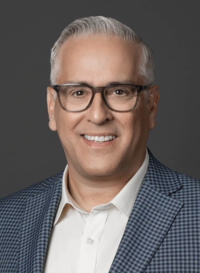
Steve Langley
At the time of that merger in 1999 it was the largest combination in credit union history, as Schools Financial had approximately $2 billion in assets and SchoolsFirst had approximately $19 billion. Today, SchoolsFirst has $30.6-billion in assets.
From a high of more than 23,000 credit unions in 1969 to approximately 4,800 today, Langley told America’s Credit Unions’ Finance Council meeting here the issue of mergers isn’t going away, observing that most larger CUs have a list of other credit unions they would like to merge in.
Trends Impacting the Industry
According to Langley, some of the trends affecting credit unions are:
Employee engagement. “When you are a lean mean organization, one person really makes a difference,” he said. “Some credit unions are looking at merger opportunities because they are having a hard time maintaining a viable workforce. They are hiring a lot of people and just hoping they work out.”
He shared a Gallup survey showing 52% of employees are quietly quitting: “But not your employees, right?” he asked, drawing some laughs. He noted the same survey found 18% of employees are “actively angry.”
What does this have to do with mergers? A lot. If you don’t have an engaged workforce, you are in trouble?” he said.
Accelerating the Relentless Pursuit of Scale. “Credit unions are looking at mergers because they are looking for scale,” said Langley. He pointed out JPMorgan Chase has 50,000 people earmarked for technology, 7,000 of whom are charged with AI and machine learning responsibilities.
Changes in consumer behaviors, attitudes and expectations. “Consumer demand greater convenience, simplicity, speed, empathy and personalization.”
Demographic Shifts and Changes in the Nature of Work. Langley said the U.S. is in the midst of unprecedented demographic shifts, with significant implications. A show of hands in the audience found most said they were having trouble finding the talent they really need. “And the smaller you are, the more painful it is when someone leaves.”
New Pressures on Net Interest Income. “Potential regulatory changes may have serious consequences on net income generation through non-interest sources.” Langley said if regulators reduce NII, particularly ODs/NSF income, it will hit many CUs hard.
Unprecedented advances in technology and adoption.
New Waves of Competition from Large-Scale Incumbents and New Entrants. The fintechs are worth watching, said Langley, but what really “scares” him are the Amazons of the world entering financial services.
Trends Impacting Growth
More than half of attendees in the room said they are considering mergers as part of their strategic plan.
“I am not an advocate. I am not opposed. I am agnostic on mergers and acquisitions,” he said. “I will tell you mergers can be painful. There is nothing simple about a merger.”
Langley shared the graphic shown here and called it “so concerning.”
“I was in the industry for 30 years and it was the same story all along,” he said. “I spent years working with CUNA on a brand awareness effort. It’s still a struggle to create awareness.”
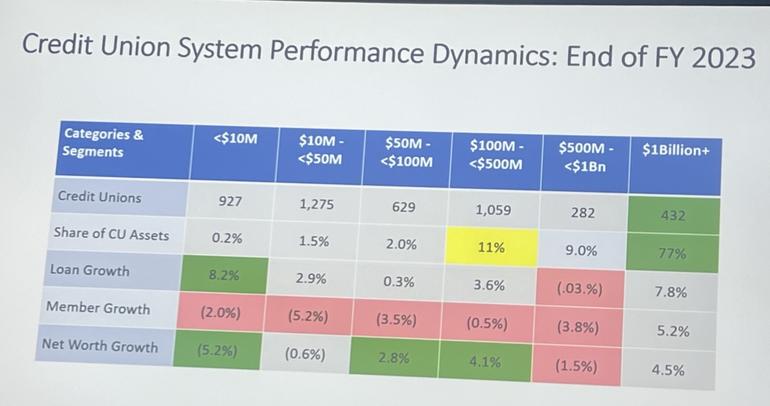
Adding to the challenge, Langley shared this graphic, below, showing credit union performance by asset category.
“It speaks to me. It’s a struggle out there,” Langley said.
Bank Acquisitions
Even though the pace of acquisitions of banks by credit unions has been growing, Langley said many of the people he has spoken to in finance say that “bank acquisitions financially don’t make sense.”
But he said credit unions considering buying a bank need to consider:
- Price. What is the tangible value of the acquisition?
- Culture. Do both organizations have similar goals and values?
- Expertise. Does the acquiring organization bring certain talent, such as commercial lending?
- Balance sheet. Does the combination diversity risk?
How to Sign Up For the Best Daily News Email in Credit Unions? (It’s Free!)
Every workday CUToday.info delivers the most comprehensive, freshest daily newsletter with the day’s news headlines, including links to the related articles. The Fresh Today newsletter is the most timely, relevant and widely-read source of news and information in the CU community. And it’s free!
If you haven’t yet signed up for the new email solution on which CUToday.info has partnered with ResponseGenius, you can do so here. Signing up requires less than one minute of your time—and it’s free!
Please note that after signing up you may need to go to your Spam/Junk folder and mark the morning headlines email as safe. CUToday.info does not provide its list of readers and emails to outside parties,
And did we mention it’s free?