IRVINE, Calif.–For many CU members, “financial precarity” is the new normal, according to one expert, who called on credit unions to understand just how stressed out many people are—including their own employees—over the uncertainty in their lives.
Dr. Lisa Servon, who leads Filene’s Center of Excellence for Consumer Financial Lives in Transition, and who is also the Kevin and Erica Penn Presidential Professor and chair of City and Regional Planning at the University of Pennsylvania Stuart Weitzman School of Design, told Filene’s big.bright.minds Conference that the traditional concept of financial transitions has changed, and that both members and credit unions alike are unprepared.
“We all know about many of the moments in which people's financial situations changes; these are the things I'm going to call the normal transitions: marriage, having children, retirements,” said Servon. “But the increase in financial precarity that I'm talking about does two things. One, it means that these normal transitions have become more fraught. Whereas people may have earlier been able to move smoothly from work to retirement, the elimination or deterioration of those safety nets, for example, and declining wages mean that that is a much more difficult transition than it used to be.
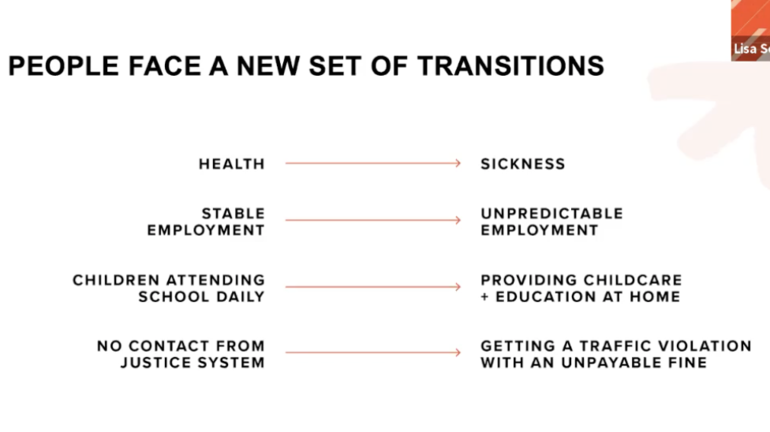
“In addition, we're seeing a new set of transitions that are affecting a much larger group of people and those are the transitions that this Center for Consumer Financial lives in Transition is really focused on,” Servon told the meeting. “The kind of transitions that the Center looks at are the transitions that are layered on top of those transitions that we think of as being more natural or more normal. Historically, financial institutions haven't paid that much attention to the transitions we're focusing on, like moving from health to sickness, moving from stable employment to more unpredictable employment or maybe having to add a second job in order to get that stability that's so important to people.”
A recent example of a new type of transition, said Servon, is having to work from home while also trying to provide childcare.
Another transition on which the Center is focused includes people moving from having no contact with the justice system to becoming a part of it.
Think Different
Servon suggested credit unions think of themselves in a different way.
“What if instead of shoehorning in what you already do, you started with members who need safe and affordable financial services?” she asked, noting the financial services model has changed much in the past century and there is a “desperate need” for a new kind of entrepreneurial services for those in a state of financial precarity.
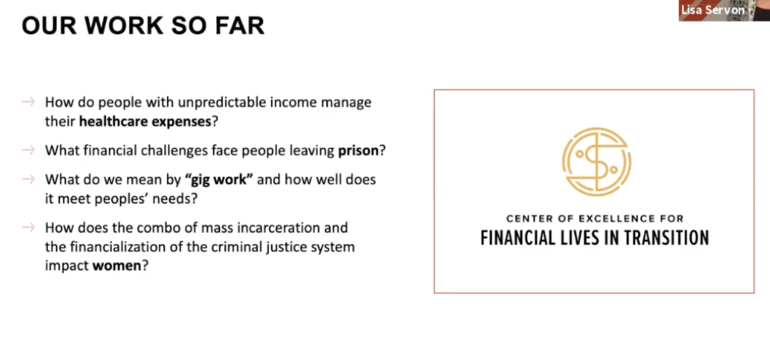
To date, Servon said the Center for Consumer Financial Lives in Transition has focused on three areas:
- The changing nature of work
- Medical and healthcare issues
- Involvement with the justice system
Lessons in Service
“Why these three transitions specifically? My take is that work, health and justice are by themselves insightful case studies for us to better understand how transition shapes needs and expectations of behavior,” said Servon. “Better serving vulnerable populations allows organizations to better serve all people. These are not niche populations and even if they were, here's my big argument or proposition to you: even if these were small populations, serving them would mean that you could serve everybody else better. While they may seem specific to certain populations they are at the heart of our changing economy as a whole. They illustrate the future of consumers financial lives.
“So, if you're looking to see what consumer challenges are just coming over the horizon here are three critical ones,” Servon continued.
“The takeaway is that they don't exist in silos,” Servon continued. “Many of the people we've talked to for one piece of work are also experiencing transitions in another area. So, for example, a person who's hit with a medical expense that they did not expect can't pay for it and is also trying to manage two jobs to pay just their cost of living. These are the people who fall into the overlapping areas--or are even in the middle in that in that Nexus of all three.”
‘Really Big Numbers’
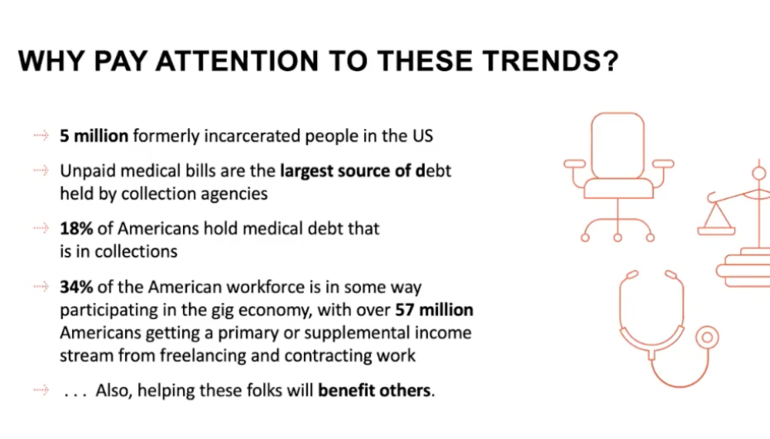
Servon stressed that the number of people caught up in such transitions represent “really big numbers” and she encouraged credit unions to “pay attention to them.”
“These are issues people feel ashamed about. They face stigma. You may not be able to guess that they're facing some of these issues, but they are no doubt in your member population and maybe among your staff, as well,” said Servon. “I can't tell you how many times when I've given large talks about payday loans, for example, or about justice involvement, how many people come up to me and talk to me about someone in their family or themselves who's dealing with these issues but they don't feel like they have a place to talk about it or to get good information. So, here is a huge opportunity for you when we talk about growth.”
Other Areas of Interest
The Center is now two years into its projected lifespan, but it has other issues it may consider, as well.
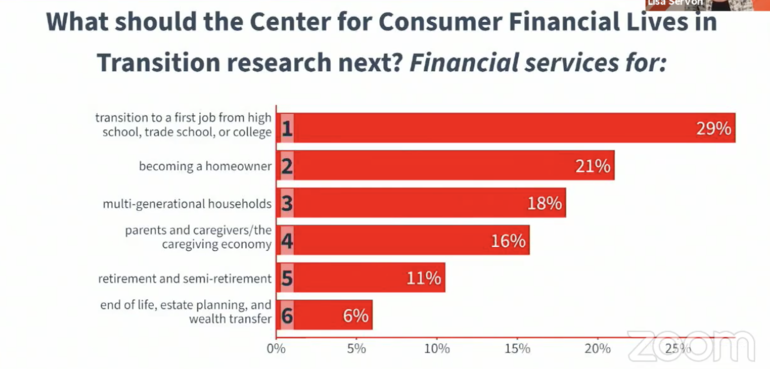
Prior to Servon’s remarks, Filene polled both in-person and virtual attendees of the event for where the Center should next conduct research, with a plurality (29%) saying it should be on transitions to a first job from high school, trade school or college.