

MADISON, Wis.–Is your job preventing you from doing your job? It’s an irony that isn’t unique to any organizations, but “organizational friction” is a challenge that can be effectively reduced, according to insights shared during Filene’s “The Art + Science of Organization” event.

Brent Dixon
Brent Dixon, Filene advisor who also oversees its i3 teams, drew upon the “Friction: A Manifesto” pamphlet authored by Huggy Rao, the Atholl McBean professor of organizational behavior and human resources and Stanford.
Observing he had once heard someone observe that a “well-intentioned idiot can do more damage than any evil mastermind,” Dixon focused most of his comments on “bad friction,” but said friction can at times be a good thing within an organization when it creates a necessary pause during periods of uncertainty.
Bad friction, said Dixon, occurs in an organization when three kinds of work are disregarded:
- Failure to value maintenance labor
- Poorly maintained social relationships
- Failure to care for shared organizational resources, in particular, employees’ time and attention
Failure To Value Maintenance Labor
Failure to value maintenance is a reference to all the work that goes into work and workplaces, but it is often “disappeared” when organizations begin thinking about performance and how people show up as employees.
“This is the kind of labor that often is facilitated by women, and it needs to be acknowledged,” said Dixon. “Healthy workplace cultures are only self-sustaining when selves do the sustaining. It’s important to open your eyes and pay attention to the areas where the value of this kind of maintenance labor can be cultivated.”
Social Relationships
The neglect of social relationships, the obligations that sustain the organization commons, often go unnoticed until they collapse, said Dixon.
“Now in a post-COVID world we see them,” Dixon said. “The architecture we’ve had, the grease that allows idea exchange, it’s a little harder to wrap our arms around what that means in this new context.”
What is Friction?
To understand how and why friction shows up, leaders must think with both their rational and emotional brains.
“A balance is required between organizational design and very often therapy,” observed Dixon.
Friction is found in how all the individuals within an organization unintentionally impact the use of time, he said, as each individual has individual incentives.
“Too often, these situations feel, as one executive said, as if they are ‘walking through the muck.’ In short, it makes your organization a more difficult place to work,” said Dixon. “We often find the opposite of what we need is true in terms of how individuals are motivated. People are often motivated and even rewarded for adding new rules and procedures. The net effect is a massive overload. Very often, we don’t recognize that we are a participant in this.”
Friction Blindness
Credit union leaders must be aware of their own friction blindness, said Dixon. In short, this is about how bosses accidentally waste their employees’ time. They give orders without recognizing how much time that work entails, or make comments that employees interpret as commands, he said.
When those viewing the webcast were asked about how they might waste time within their organizations, one person shared she sends emails about great ideas or things to consider. Another person said with the goal of holding short meetings he often cuts off meaningful conversation.
A Few Culprits
According to the Filene pamphlet, the types of people within organizations who create friction include:
- The Cookie Licker. This person marks his/her territory, “spreading your spittle all over, perhaps with the best intentions.”
- The Hippopotamus Boss. This boss has an enormous mouth and tiny ears. He/she loves to talk and pontificate and seldom listens.
- The Demons Who Guard the Entrance to Meeting Hell. These are people who ensure meetings become so process driven it can become difficult to achieve the goals of the meeting. This is about “over-agendaing.”
The Cures
It’s corny, said Dixon, but the “cure starts with each of us.”
“This is something that can’t be delegated. Be the change,” he said.
The cures include:
- Attention to its causes and rewards for alleviators
- Increased appreciation for and valuation of those who build and maintain infrastructure
- Pay attention to what frustrates your employees and declare war on it. “This is the notion of really being a guardian of your employees’ time.”
How To Take Action
- Share the Manifesto (available on the Filene website)
- Recognize that combating friction cannot be delegated
- Learn from people who manage and organize processes and systems. Make sure to listen and understand first before acting, advised Dixon.
- Don’t add, subtract. “Fight the impulse to add responsibilities and think about how you can subtract again,” Dixon said. As an example, he cited the approach taken by Dropbox when it comes to meetings: Be conservative with meeting invites and limit them to three to five people; every meeting must have an owner; and cancel a meeting if other forms of communication will work.
Not So Light
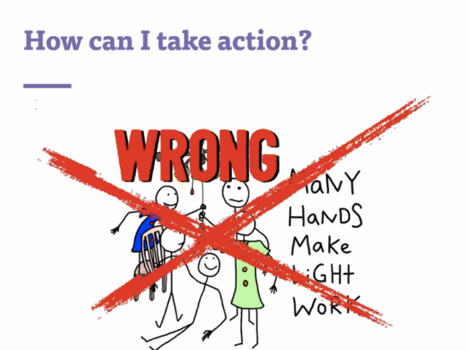
The old observation that “many hands make light work” is “wrong” when it comes to reducing friction, said Dixon, cautioning CU leaders to “be aware of any system that encourages more direct reports.”
“You will be fighting friction forever,” said Dixon. “Rest up and embrace the structure. Incorporate it into your policies and procedures and create ownership over friction.”
A Call to Action.
Drawing upon the words shared in the Friction Manifesto, Dixon said friction becomes harmful when it impedes employees’ ability to do their jobs well.
And when does it become dangerous?
“When employees are stressed out, burned out and emotionally checked out, and when passion turns to frustration that hardens into cynicism and settles into exhaustion,” the Manifesto warns.