

CHICAGO–October marks the official restart of payments on federal student loans, which began accruing interest again effective Sept. 1.
As CUToday.info has been reporting, the resumption of payments is expected to put a crimp on many individuals and households who have not had to make payments since the federal government put a pause in place several years ago during the pandemic.
As CUToday.info also reported earlier, the average consumer with a student loan carries about $35,000 in debt, according to a new TransUnion study, with the company suggesting that as student loan payments many borrowers may “find themselves facing the challenge of having to manage these payments for the first time amidst a more expensive monthly debt portfolio.”
Growing Cross-Wallet Payments
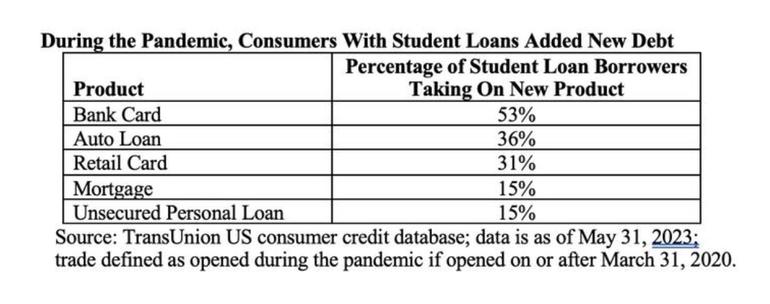
According to TransUnion, the study, “Implications of the End of Pandemic-Era Student Loan Forbearance,” many of these consumers have also acquired new credit products over the course of the past three years, growing their debt level and “cross wallet” monthly payments since student loan forbearance started.
TransUnion noted the Department of Education has directed that student loan delinquencies not be reported to the credit bureaus for 12 months until Sept. 30, 2024, helping to protect consumers’ credit as they manage these new payments.
TransUnion said its study looked at the anticipated impacts of these restarted payments on consumers’ wallets.
The Data Points
“TransUnion’s study found that as of May 31, 2023, 40.6 million consumers possessed student loans, totaling $1.6 trillion in balances,” the company said. “From this group, approximately 26.8 million consumers with federal student loan debt totaling $1.1 trillion are expected to be faced with a resumption of payments for the first time since the beginning of pandemic-related payment moratorium, or for the first time ever if they were not in repayment prior to the moratorium.”
Many students with private student loans did not have a payment holiday, the company reminded.
Payment Shock
While current Department of Education plans for student loan forgiveness could alleviate payment requirements for some borrowers once finalized, most of this group will be facing monthly student loan payments for the first time in years, TransUnion stated, adding that these borrowers will “experience a payment shock” as they attempt to recalibrate their monthly budgets to accommodate this new payment.
ne of the key reasons why student loan borrowers may be particularly vulnerable to payment shock can be found in the number of borrowers who have opened new credit products since the beginning of the pandemic, according to TransUnion.
“While the Department of Education has offered a 12-month runway before student loan delinquencies will have an impact on consumer credit files, interest will begin to accrue immediately so it is in the best interest of consumers to resume payments right away,” the company said.
Range of Dimensions
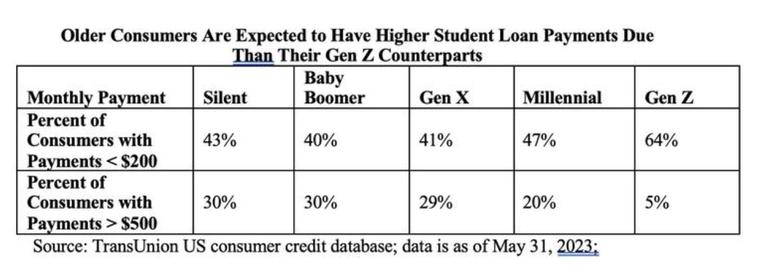
TransUnion reported the study analyzed consumers who will experience a payment shock across a range of dimensions, including generational breakdowns and credit risk ranges to determine how large their expected student loan payments will be once they are restarted.
“The study showed that about 50% of consumers who will experience a payment shock are expected to have a payment of more than $200 a month and about one in five will see payments of more than $500,” TransUnion said.
Little Variance Among Credit Risk Tiers
In addition, the study further found these figures did not vary significantly when viewed across credit risk tiers.
“For instance, between 18% and 20% of borrowers had payments of more than $500 over each risk tier,” TransUnion said. “There was, however, some divergence when looking at the data across generations, as the Silent Generation, Baby Boomers and Gen Xers were more likely to have payments of $500 or more, while Gen Z borrowers were significantly less likely, with only 5% expected to have payments of more than $500.”
Just Because It’s Autumn Doesn’t Mean Falling for Schemes to Overcharge You for CU Industry News. Instead, Try This Crisp Offer
The biggest, best and freshest news reporting in credit unions remains free! Each morning CUToday.info delivers its daily Fresh Today news update offering the latest headlines and breaking news right to your email, with the easy-to-read headlines format allowing you to click on the stories that interest you most in order to learn more. So stop paying those bank-fee-like subscription prices from other so-called “news”” publications!
If you haven’t yet signed up for the new email solution on which CUToday.info has partnered with ResponseGenius, you can do so here. Signing up requires less than one minute of your time—and it’s free!
Please note that after signing up you may need to go to your Spam/Junk folder and mark the morning headlines email as safe. CUToday.info does not provide its list of readers and emails to outside parties, and we will not be contacting you to sell you an extended warranty or sending you any links so you may cash in on an inheritance you didn’t know was coming.
And did we mention it’s free?