

WASHINGTON—Largely echoing what he had told the Senate one day earlier, Federal Reserve Chairman Jerome Powell told a House committee the Fed sees indications a “patient approach” is now necessary when it comes to any movement on rates, while he also responded to questions about CECL.
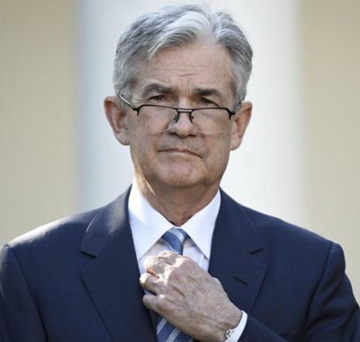
Jerome Powell
Powell’s testimony was largely consistent with the Fed stated when it released minutes from its most recent meeting, as CUToday.info reported here.
While credit unions may be most interested in future rate direction, the markets are particularly interested in the Fed’s plans for its $4-trillion bond portfolio. Powell told the House Financial Services Committee the Fed is going to be in a position to “stop runoff later this year,” and that it will be announcing a plan “fairly soon.”
The Fed has since 2017 been winding down its holdings of Treasury and mortgage securities acquired following the financial crisis.
Analysts have noted that as the Fed reduces reserves, the fewer dollars on hand could result in banks charging more in interbank lending markets, which would raise the Fed’s benchmark interest rate.
During the Q&A following his remarks Powell was asked several questions regarding what effect the Current Expected Credit Loss (CECL) standard, set to begin phasing in over three years later this year, standard will have on financial institutions and consumers. Specifically, Rep. Nydia Valazquez (D-NY) pressed Powell for how it will effect low-income borrowers and small business. Powell responded, "We're aware of those concerns and will be watching to see if there is such an effect. We don't expect there will be."
Rep. Brad Sherman (D-CA) wanted to know if the Fed had considered conducting a "qualitative impact study: on the CECL standard, especially on its potential effects during any downturn in the economy. Powell said the Fed does not believe it will have such an effect, but should that be the case, it would take "appropriate action."
Senate Remarks
Meanwhile, in the Senate one day earlier, Powell’s testimony was most noteworthy for questions he took regarding pressure from the White House on the Fed regarding rates. Traditionally, the White House does not seek to influence decisions at the Fed when it comes to rate setting, and Powell largely deflected the questions.
In his remarks, Powell noted that the economy grew at a strong pace in 2018 due to increases in consumer spending and business investment, as well as employment and wages. Despite the partial government shutdown, Powell said negative economic effects would be modest and still expected to see spending gains in the first quarter.
Some of the economic challenges noted by Powell include slowed growth in China and Europe, uncertainty around trade, federal government debt and stagnant incomes. On rate hikes, Powell reiterated that the Federal Open Market Committee would take a "patient approach."
Strong Growth, But…
In his opening remarks, Powell noted that the economy grew at a strong pace last year due to increases in consumer spending and business investment, as well as employment and wages. Despite the partial government shutdown, Powell said negative economic effects would be modest and still expected to see spending gains in the first quarter.
Some of the economic challenges noted by Powell include slowed growth in China and Europe, uncertainty around trade, federal government debt and stagnant incomes. On rate hikes, Powell reiterated that the Federal Open Market Committee would take a "patient approach."
On Tuesday, Sen. Bob Menendez (D-NJ) raised concerns about the regulatory issues banks and credit unions face when trying to serve marijuana-related businesses. Powell said he believes clarity at the federal level is needed and that cash as the marijuana industry's only option is unsustainable.
‘Highest Priority’
Responding to a question from Sen. Pat Toomey (R-PA), Powell said implementing provisions of S. 2155, the Economic Growth, Regulatory Relief, and Consumer Protection Act that was passed in the prior Congress, is the Fed's "highest priority." The Fed has already been working to implement certain provisions, including those related to exam cycles for small banks and the Electronic Funds Availability Act, Powell said.
NAFCU noted it has available an S. 2155 summary guide detailing credit union-related provisions within the law, including their effective dates and actions by agencies.