

WASHINGTON– The Federal Reserve Wednesday approved its first interest rate increase in more than three years.
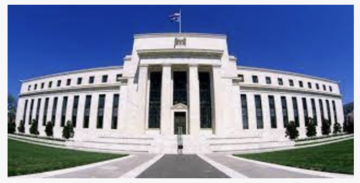
The 25 BP hike of the benchmark interest is considered to be the Fed’s first of several rate increases this year and next to stop runaway inflation, made worse by the Russian attack on Ukraine.
The benchmark interest rate, which has been near zero since the start of the pandemic, now falls in the range of 0.25%-0.5%.
The rate hike was approved with only one dissent. St. Louis Fed President James Bullard wanted a 50-basis-point increase, CNBC reported.
Fed policy-makers also raised the discount rate from 3.25% to 3.50%.
In its post meeting comment, the Federal Reserve emphasized the impact of the Ukraine invasion.
“The invasion of Ukraine by Russia is causing tremendous human and economic hardship. The implications for the U.S. economy are highly uncertain, but in the near term the invasion and related events are likely to create additional upward pressure on inflation and weigh on economic activity,” the Fed stated.
The Committee added that it “seeks to achieve maximum employment and inflation at the rate of 2% over the longer run. With appropriate firming in the stance of monetary policy, the Committee expects inflation to return to its 2% objective and the labor market to remain strong. In support of these goals, the Committee decided to raise the target range for the federal funds rate to ¼% to ½% and anticipates that ongoing increases in the target range will be appropriate. In addition, the Committee expects to begin reducing its holdings of Treasury securities and agency debt and agency mortgage-backed securities at a coming meeting.”
CUNA Analysis
“As expected, the Federal Reserve increased the federal funds rate by a quarter basis point today,” said CUNA Senior Economist Dr. Dawit Kebede, “It also revised its projection for year-end Personal Consumption Expenditure (PCE) inflation from 2.6% in December to 4.3%. Strong demand, enduring supply bottlenecks, and the surge in energy prices due to the war in Ukraine are contributing to inflationary pressure.
“As a result, The Federal Reserve signaled multiple hikes to federal funds rate throughout the year projecting it to reach 1.9% by the end of 2022 - revising its December projection by a full percentage point. This will raise consumers' cost of borrowing and slow down spending. Consumer spending contributes to two-thirds of the gross domestic product (GDP) - the value of all goods and services in the economy. The GDP growth projections will also decrease with the rising federal funds rate.”
'Little Room to Have Impact'
Meridian Economics’ Brian Turner said that with economic growth already poised to slow over the next few quarters “but inflation exploding both at the producer and consumer levels, the Federal Reserve’s monetary policy has little room to have a more immediate impact on inflation. Raising rates too little will continue to spur higher inflation. Raising rates too much will block what little growth is already experiencing…. Economic growth is expected to rise at a 3.5% to 4.0% while consumer inflation will advance over 6% for the rest of 2022… In February, year-over-year wages increased 5.1% while consumer inflation advanced 7.9%.”