

WASHINGTON–As expected, the Federal Open Market Committee has moved to bump up interest rates. At the conclusion of its meeting here, the FOMC said that in view of realized and expected labor market conditions and inflation, it was raising the target range for the federal funds rate to 2% to 2.25%.
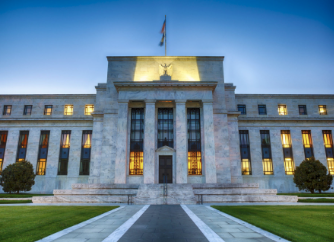
“Information received since the Federal Open Market Committee met in August indicates that the labor market has continued to strengthen and that economic activity has been rising at a strong rate,” the Fed said. “Job gains have been strong, on average, in recent months, and the unemployment rate has stayed low. Household spending and business fixed investment have grown strongly. On a 12-month basis, both overall inflation and inflation for items other than food and energy remain near 2%. Indicators of longer-term inflation expectations are little changed, on balance.”
The FOMC said that consistent with its statutory mandate, it is seeking to foster maximum employment and price stability.
Looking Forward
“The Committee expects that further gradual increases in the target range for the federal funds rate will be consistent with sustained expansion of economic activity, strong labor market conditions, and inflation near the Committee's symmetric 2% objective over the medium term,” the FOMC said. “Risks to the economic outlook appear roughly balanced.”
As CUToday.info has reported, many analysts expect the Fed to again raise rates in December.
Following the Fed announcement, NAFCU Chief Economist Curt Long issued a statement saying, "The Fed’s decision was widely expected, and barring a major meltdown between now and December, another hike is nearly assured. Despite a number of risks, the economy is on fairly solid footing, and inflation is ticking upward. As a result, NAFCU expects quarterly rate increases to continue at least through mid-2019."
Voting for the FOMC monetary policy action were: Jerome H. Powell, Chairman; John C. Williams, Vice Chairman; Thomas I. Barkin; Raphael W. Bostic; Lael Brainard; Richard H. Clarida; Esther L. George; Loretta J. Mester; and Randal K. Quarles.
For additional information on its economic projections, go here.