

WASHINGTON—As was widely expected, the Federal Reserve has again moved to raise interest rates, this time by 75 basis points.
As a result, the benchmark federal-funds rate is now range between 2.25% and 2.5%. The move follows a full one-point increase announced during the Federal Open Market Committee’s June meeting.
All 12 members of the FOMC voted in favor of the increase as the Fed scrambles to tame inflation, which was up 9.1% in June, according to federal government data.
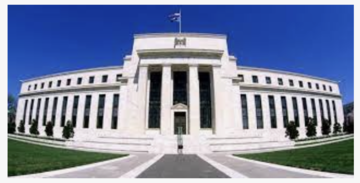
In a policy statement after the conclusion of the two-day meeting, the Fed stated, "Recent indicators of spending and production have softened. Nonetheless, job gains have been robust in recent months, and the unemployment rate has remained low. Inflation remains elevated, reflecting supply and demand imbalances related to the pandemic, higher food and energy prices, and broader price pressures.”
Following the increase at the Wednesday meeting, the Federal Reserve has increased rates since March at a pace that it had over the three-year period from 2015-2018.
The broader markets and credit union economists are predicting additional rate increases lie ahead.
NAFCU Analysis
From AFCU Chief Economist and VP of Research Curt Long: "This was a widely-expected outcome and serves as the back half of a two-part 150-basis point salvo from the Fed to address the hottest inflation numbers in 40 years. It also comes on the heels of July CPI data that topped expectations. That was a repeat of the prior month, which prompted the Committee to increase its pace of rate hikes six weeks ago. That the July data did not move the needle in the same manner is likely a nod to the fact that certain areas of the economy are showing signs of a slowdown. Housing is an obvious area, but real consumer spending also declined as of its most recent reading in May, and unemployment claims have begun to rise modestly."Looking ahead, the next moves for the committee will be more dependent on incoming data than this one, which seems to have been fairly well settled once the June CPI data came out. Chair Powell said that another big hike is on the table if data supports it, but he also acknowledged that as rates rise, the standard for another 75-basis point hike will be more stringent. NAFCU expects a 50-basis point hike in September as the FOMC grapples with conflicting economic signals."
CUNA Analysis
From CUNA Senior Economist Dawit Kebede: “The Federal Reserve Open Market Committee (FOMC) increased the federal funds rate by 75 basis points, in line with consensus expectation, as inflation remains a challenge to the economy. This raises the target range to 2.25% to 2.50%, which is considered neutral, from its near zero stimulative level in March. The FOMC also announces that it anticipates more increases in future meetings to bring inflation down to its 2% goal.
“This indicates that the Fed is committed to bringing price increases under control despite slowing spending and production. The war in Ukraine and pandemic-induced supply constraints are two major reasons behind the record inflation rate whose influence on the economy cannot be altered by monetary policy.
“However, further rate increases and quantitative tightening will be restrictive and affect consumer demand because it raises the cost of borrowing. This reduction in consumer demand increases the likelihood of a recession in the next year as it accounts for two-thirds of the economy.”
TransUnion Analysis
From Michele Raneri, vice president of U.S. research and consulting at TransUnion: "Interest rates have slowly been rising the last several months and the Federal Reserve’s .75% rate hike today will likely most impact consumers with mortgages and credit cards. Interest rates on new fixed rate mortgages, which are a majority of mortgages, often increase after a Fed interest rate increase, which will make buying new homes or refinancing more expensive. Often, when people buy a home, the amount they are willing to spend aligns with how much they can afford for a monthly payment. In order to buy the same house that one could have afforded just six months ago, consumers may select an adjustable rate mortgage because their initial monthly payments will be less than a fixed rate mortgage.
"When it comes to credit cards -- with the average consumer credit card balance of about $5,200 – today’s interest rate hike for consumers who do not pay off their balances in full will raise minimum monthly payments by less than $4, or about $40 per year. We expect that BNPL or Point-of-Sale loans with deferred or no interest installment loans may become increasingly attractive choices as consumers look to avoid paying interest. A higher interest rate environment also adds more pressure to consumer wallets, especially as fears of a recession rise. To alleviate some of that pressure, consumers can pay down outstanding debt balances as much as they can, particularly high-interest credit card debt. They also can look to consolidate credit card balances onto a single lower-interest card or a personal loan to lower monthly payments, enabling them to pay down balances faster. It also is beneficial to have an emergency fund of savings available for unforeseen expenses.
"Three to six months of expenses is a good rule of thumb, but even a much smaller amount – a few hundred dollars – can make a big difference if emergencies occur."