

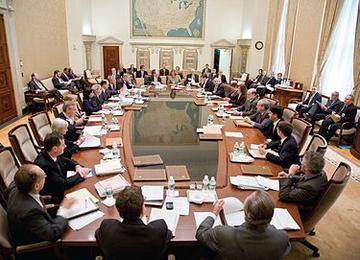
WASHINGTON–As expected, the Federal Open Market Committee has chosen to leave rates unchanged.
Nearly every market forecaster has predicted the Fed would not move with the presidential election just a week away.
In a released statement, the Fed said the Committee had judged “that the case for an increase in the federal funds rate has continued to strengthen but decided, for the time being, to wait for some further evidence of continued progress toward its objectives. The stance of monetary policy remains accommodative, thereby supporting further improvement in labor market conditions and a return to 2% inflation.”
In the statement the Fed added that activity has picked up “from the modest pace seen in the first half of this year. Although the unemployment rate is little changed in recent months, job gains have been solid. Household spending has been rising moderately but business fixed investment has remained soft. Inflation has increased somewhat since earlier this year but is still below the Committee's 2% longer-run objective, partly reflecting earlier declines in energy prices and in prices of non-energy imports. Market-based measures of inflation compensation have moved up but remain low; most survey-based measures of longer-term inflation expectations are little changed, on balance, in recent months.”
The FOMC projected that inflation will rise to 2% over the medium term.
“As expected, the Fed put off a rate hike until next month,” said NAFCU’s Chief Economist, Curt Long. “Given the growing amount of uncertainty over the election, it makes sense for the Fed to take a wait-and-see approach. Nevertheless, positive job data and strengthening inflation mean that a rate hike is more likely than not in December.”
CUNA Senior Economist Per Perc Pineda said the Fed’s decision has a “strong signaling effect on credit union operations. One positive take away—as the FOMC acknowledged that the case for a rate hike has strengthened—is that U.S. economy continues to improve and the next rate hike is closer. CUNA economists view is one modest rate hike this year – in December. Credit union loan and savings growth will stay in the positive territory moving forward as the Fed continues to gradually raise rates higher than the current lows by historical standards.”
Pineda noted that the labor markets continue to strengthen.
“However, there is room for further improvement. Inflation pressures are more evident today with wages and commodity prices, particularly oil, higher than last year,” he said. “Additional positive jobs and higher inflation data before the December FOMC meeting will provide stronger case for a rate hike. With the 2.9% third quarter GDP growth, a modest rate hike in December will keep the U.S. economy on track.”
The FOMC’s next two-day policy meeting is set for Dec. 13-14.