

WASHINGTON—Several Federal Reserve Board governors have recently provided their own economic updates, providing insights into the central bank's view of the economy and its policy-setting efforts.
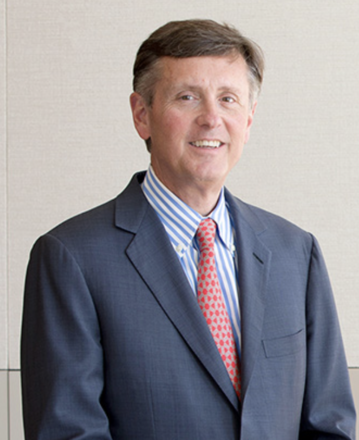
Richard Clarida
Fed Chairman Jerome Powell spoke to Princeton University's Bendheim Center for Finance, quelling speculation about its asset purchase program. NAFCU's Curt Long provided some additional context to the Fed's efforts.
"The economic recovery clearly stalled in the fourth quarter, which played a role in the relief package passed in December," said Long, NAFCU's chief economist and vice president of research. "The Fed wants to reassure markets that both fiscal and monetary channels are working in tandem, and that further spending from Congress alone will not cause the Fed to ease off the throttle. It remains to be seen how much of the $1.9 billion spending plans unveiled by the incoming administration will come to pass, but the pieces are in place for a steady acceleration in growth until the summer, when hopefully the virus will be well under control."
Increased Holdings
The Fed last year increased its holdings of Treasury securities and agency mortgage-backed securities in efforts to "sustain smooth market functioning and help foster accommodative financial conditions," and support the flow of credit to households and businesses. The Federal Open Market Committee (FOMC) has discussed the critical role these asset purchases have played in supporting economic recovery amid the coronavirus pandemic, Long noted.
Some Federal Reserve Bank presidents have recently signaled support for the Fed reducing its purchases later this year. However, Powell cautioned against exiting too early and said they will clearly communicate plans well before beginning to taper purchases. For example, during the FOMC's December meeting, the committee did not provide additional insights to the duration of its asset purchases.
Powell also indicated the Fed does not plan to raise interest rates, which are currently at 0 to 0.25%, anytime soon. If inflation were to start rising as post-pandemic spending increased, the Fed will use its available tools to address it, Powell said.
Update on Framework
In addition to Powell's speech, Fed Vice Chair Richard Clarida and Governor Lael Brainard provided updates on the Fed's new framework adopted in August to better reflect economic changes and monetary policy approaches..
Clarida recently discussed the framework's impact on price stability and maximum employment, noting that the framework "represents an evolution, not a revolution" to how the Fed approaches its policy setting.
Brainard also discussed maximum employment objectives under the framework and the so-far “uneven recovery” from the coronavirus pandemic.
"We remain far from our goals, with core PCE inflation only at 1.4% and payroll employment nearly 10 million below its pre-pandemic level," Brainard said. "The Committee's forward guidance will help keep borrowing costs low along the yield curve for households and businesses, improve inflation outcomes, and enable the labor market to heal, leading to a broader-based and stronger recovery. The strong support from monetary policy, together with fiscal stimulus, should turn the K-shaped recovery into a broad-based and inclusive recovery that delivers full employment."