

WASHINGTON–While much of the attention given to Federal Reserve Chairman Jerome Powell’s appearances before Congress this week focused on any signals related to inflation and rates, he also spoke to the issue of a central bank digital currency (CBDC).
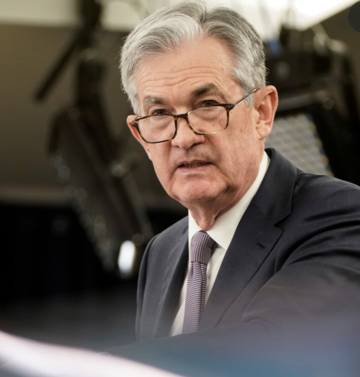
Federal Reserve Chairman Jay Powell.
Asked during a congressional hearing if having a digital currency issued by the Fed would be a more viable alternative than having multiple cryptocurrencies or stablecoins emerge in the payments system, Powell said he agreed. (A stablecoin is a cryptocurrency that attempts to peg its value to a conventional currency such as the U.S. dollar.)
“I think that may be the case and I think that’s one of the arguments that are offered in favor of digital currency,” Powell said during a hearing before the House Financial Services Committee. “That, in particular, you wouldn’t need stablecoins, you wouldn’t need cryptocurrencies if you had a digital U.S. currency. I think that’s one of the stronger arguments in its favor.”
As CUToday.info has reported, the Federal Reserve has previously said it is broadly examining the digital payments universe and will release a discussion paper in early September. He described the discussion paper as a key step that accelerates the Fed’s efforts to determine if it should issue a central bank digital currency.
Skepticism Remains
Powell told the committee he remains skeptical that crypto-assets will ever become a main payments vehicle in the United States, but said stablecoins might gain more traction, although more regulation is needed before stablecoins could take on a bigger role in the financial system.
“We have a pretty strong regulatory framework around bank deposits, for example, or money market funds,” Powell said. “That doesn’t exist currently for stablecoins, and if they’re going to be a significant part of the payments universe - which we don’t think crypto assets will be but stablecoins might be - then we need an appropriate regulatory framework.”
Powell also repeated his earlier comments that if the Fed were to move forward with developing a CBDC, it would consult with Congress and the public. He repeated his view that as the holder of the world’s reserve currency, it would be more important for the United States to “get it right” than to move quickly.