

JACKSON HOLE, Wyo.–The Federal Reserve has announced a significant policy shift in its approach to inflation and in how it will consider other economic metrics.
Practically speaking, the shift indicates the Fed moving forward will be less inclined to increase interest rates when the unemployment rate falls, as long as inflation isn’t on the rise.
In remarks delivered virtually from the Fed's annual retreat in Jackson Hole, Wyo., Federal Reserve Chairman Jerome Powell said “Many find it counterintuitive that the Fed would want to push up inflation. However, inflation that is persistently too low can pose serious risks to the economy.”
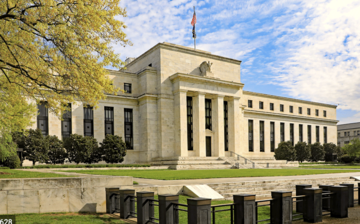
Analysts noted that over the years, fundamental changes in the economy, such as demographics and technology, have shifted the Fed’s focus to inflation that has run too low.
The situation, Powell said during his remarks “can lead to an unwelcome fall in longer-term inflation expectations, which, in turn, can pull actual inflation even lower, resulting in an adverse cycle of ever-lower inflation and inflation expectations.”
Policymakers, consequently, are left with little room to lower rates during times of economic stress, he said.
‘Extensive Review’
The announcement follows what the Federal Reserve called an “extensive review,” including numerous public events across the country and are reflected in updates to its Statement on Longer-Run Goals and Monetary Policy Strategy. That strategy articulates its approach to monetary policy and serves as the foundation for the policy actions of the FOMC, which sets rates in the U.S.
According to the Fed, the updates reflect changes in the economy over the past decade and how policymakers are taking these changes into account in conducting monetary policy. The updated statement is also intended to enhance the transparency, accountability and effectiveness of monetary policy, the Fed said.
"The economy is always evolving, and the FOMC's strategy for achieving its goals must adapt to meet the new challenges that arise," said Powell in a statement. "Our revised statement reflects our appreciation for the benefits of a strong labor market, particularly for many in low- and moderate-income communities, and that a robust job market can be sustained without causing an unwelcome increase in inflation."
‘Significant Changes’
The more significant changes according to the framework document are:
- On maximum employment, the FOMC emphasized that maximum employment is a broad-based and inclusive goal and reports that its policy decision will be informed by its "assessments of the shortfalls of employment from its maximum level." The original document referred to "deviations from its maximum level."
- On price stability, the FOMC adjusted its strategy for achieving its longer-run inflation goal of 2% by noting that it "seeks to achieve inflation that averages 2% over time." To this end, the revised statement states that "following periods when inflation has been running persistently below 2%, appropriate monetary policy will likely aim to achieve inflation moderately above 2% for some time."
- According to the Fed, the updates to the strategy statement “explicitly acknowledge the challenges for monetary policy posed by a persistently low interest rate environment. Here in the United States and around the world, monetary policy interest rates are more likely to be constrained by their effective lower-bound than in the past.”
The Committee first adopted a framework statement in 2012.
The FOMC reported it would continue its practice of considering the Statement of Longer-Run Goals and Policy each January and that it intends to undertake a public review of its monetary policy strategy, tools, and communication practices roughly every five years.