WASHINGTON–Credit union credit card call centers are likely fielding a big increase in complaints over online purchases, if new data from the Federal Trade Commission are any indication.
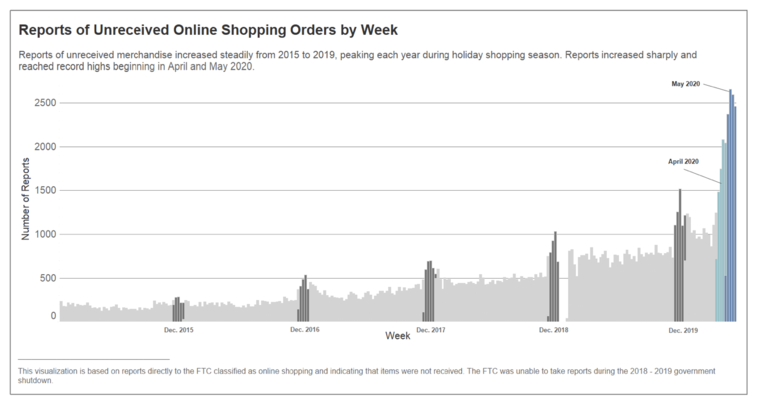
According to the FTC, calls to its Consumer Sentinel Network about sellers failing to deliver on promises — or just failing to deliver, period. “During April and May of 2020, more people reported problems with online shopping than in any other months on record,” the FTC reported. “More than half said they never got the items they ordered.”
The FTC noted that with COVID-19, scammers quickly launched opportunistic websites.
“People reported online shops claiming to sell the things they desperately needed but could not get. By the week of April 5, reports of unreceived merchandise were almost on par with previous peak numbers from the December 2019 holiday shopping season,” the FTC said. “In the following weeks, as people scoured the internet for scarce items, reports of unreceived orders continued to climb. Reports in May were nearly double the December 2019 numbers. Of course, many sellers have had legitimate supply chain problems, but these reports are about no-show orders, not just shipping delays.”
According to the FTC, during April and May many people began reporting unreceived orders of facemasks in far more often than any other item, while reports of undelivered sanitizer, toilet paper, thermometers, and gloves were also reported.
Not the ‘Whole Story’
“But that’s not the whole story,” the FTC said. “Reports show that scammers shirked their promises to shoppers on everything from clothes to electronics – and even puppies, which people had bought online. Scammers often used pandemic-related pretexts for supposed shipping delays, sometimes – in the puppy scam – even charging extra fees for COVID-related ‘regulations.’ Then they just stopped responding. This stalled people who might otherwise have posted negative reviews.”
The FTC further noted reports show scammers have honed their “ability to put up remarkably polished looking websites in recent years. They’ve learned to work social media and online advertising to their advantage, and to peel off negative reviews by simply disappearing and popping back up under a new name. This is a global problem, since the web gives scammers cheap access to consumers worldwide.”
Four-Fold Increase
The FTC noted consumers have reported losing nearly $420 million dollars since 2015, and the numbers have been on the rise for years. The agency said it took in more than 86,000 online shopping reports in 2019, which is a 38% increase over 2018, and the largest annual increase in recent years. The number of consumers who reported they simply did not get the items they ordered increased more than fourfold from 2015 to 2019.
The FTC said credit cards were the top way people reported paying for their online shopping, including unreceived orders.