

WASHINGTON—The Federal Trade Commission has joined the Consumer Financial Protection Bureau in an amicus brief filed with the United States Court of Appeals for the Second Circuit in the case of Sessa v. TransUnion.
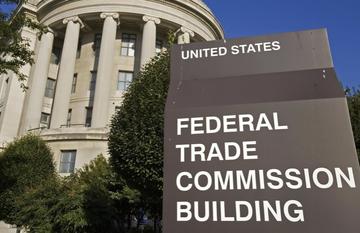
The brief asks the court to overturn a lower court decision, which held that TransUnion was not liable for failing to investigate a wrongfully reported debt because the inaccuracy was “legal” and not “factual,” the FTC said.
“The lower court’s decision not only disregards the plain language enacted by Congress, but also is a gift to data brokers that already exercise a largely unfettered, invisible power over consumers’ lives,” said Samuel Levine, director of the FTC’s Bureau of Consumer Protection. “Consumers can’t vote with their feet when consumer reporting agencies get it wrong. Enforcers and consumers need to be able to hold these companies accountable.”
The FTC noted the lower court held that legal inaccuracies are exempt from the requirement under the Fair Credit Reporting Act that consumer reporting agencies “follow reasonable procedures to assure maximum possible accuracy” of consumer reports.
Being Held Accountable
“Since this law was enacted, it has allowed enforcers and consumers to hold consumer reporting agencies accountable for the incorrect information they place on consumers’ credit reports,” the FTC said. “This authority is especially critical in the credit reporting market, where consumers have no options for avoiding credit reporting agencies in order to participate in the economy and there are few incentives to fix sloppy mistakes. This holding, if adopted elsewhere, would make it easier for consumer reporting agencies to escape accountability for sloppy reports that harm consumers.
“The joint brief argues that the lower court’s legal inaccuracy exemption is neither based on any textual language in the law, nor is it workable. The invented defense invites consumer reporting agencies and furnishers to skirt their legal obligations by arguing that inaccurate information is only legally, and not factually, inaccurate,” the FTC continued. “For any number of obviously inaccurate factual mistakes that might appear on a consumer’s credit report, consumer reporting agencies might be able to manufacture some supposed legal interpretation to insulate itself from liability.
“The lower court’s unsupported reading could increase the number of inaccurate credit reports and result in inaccurate information about consumers being conveyed to lenders, landlords, employers, and other entities that purchase consumer reports.”
Yes, FOMO is Very Real in this Case!
Don’t forget to check your Spam/Junk email folder if you haven’t been receiving your free, popular and daily CUToday.info news headlines.
And if you haven’t yet signed up for the new email solution on which CUToday.info has partnered with ResponseGenius, you can do so here. Signing up requires less than one minute of your time.
CUToday.info has received very positive response from readers following the move to an improved provider of the daily headlines, but many also noted they did need to go to their Spam/Junk folder and mark it as safe.
The new email solution has not only improved every reader’s delivery experience, but it also features a fresh, new format that is easy to read, especially on mobile devices.
Please note and/or make your IT department or email administrator aware the emails will be coming from the domains CUTodayinfo.com and CUTodayinfoReply.com