

WASHINGTON—The Federal Trade Commission is urging the Federal Reserve System to clarify and strengthen the implementation of debit card fee and routing reforms to the Electronic Fund Transfer Act (EFTA).
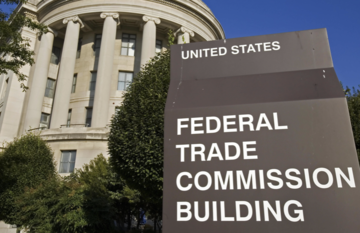
In its comment to the Fed, the FTC said a 2019 study shows Americans use debit cards almost twice as often as credit cards. Merchants typically cannot select low-fee networks unless the issuer enables those networks, the FTC said, adding that when merchants pay high fees to accept payments, this can lead to price hikes for customers, the FTC said.
“In the Dodd-Frank Act, Congress amended EFTA to promote competition among debit card networks by requiring debit card issuers to enable at least two networks so that merchants have a choice for routing electronic debit transactions. The Fed has rulemaking authority to implement these provisions, and the FTC enforces these rules with respect to card networks,” the FTC stated in a release.
Insufficient Options
While mobile and electronic payments have been on the rise since 2010, the COVID-19 pandemic has accelerated that growth, with merchants and consumers shifting increasingly to ecommerce and digital marketplaces, the FTC added.
As the Fed’s proposed rule recognizes, issuers do not provide sufficient options to merchants for these types of payments, the FTC said.
The FTC said it endorsed the proposed rulemaking by the Fed which clarifies that a 2011 regulation applies both to transactions in which a physical debit card is used, and to “card-not-present transactions” that occur without use of a physical card, such as pay-by-phone or other electronic payments.
The FTC also called for rules that would prohibit debit card networks from exploiting an issuer’s position by paying incentives to that issuer based on how electronic debit transactions are routed by merchants using that issuer’s debit cards.
Revisions Urged
The FTC called on the Fed to “adopt revisions that ensure that debit card networks do not create incentives for issuers to evade Regulation II’s clear mandate that there be two unaffiliated networks available for each type of debit transaction, with each network a commercially reasonable alternative for merchants.”
This addition would ensure that networks do not overburden merchants or consumers, the FTC stated.