

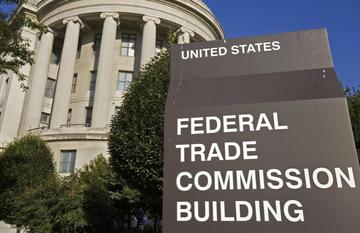
WASHINGTON—The Federal Trade Commission is exploring a rule to crack down on “junk fees proliferating throughout the economy.”
The announcement comes at the same time the CFPB said it is investigating “junk data.”
According to the FTC, “junk fees are unnecessary, unavoidable, or surprise charges that inflate costs while adding little to no value. Consumers can get hit with junk fees at any stage of the purchase or payment process. Companies often harvest junk fees by imposing them on captive consumers or by deploying digital dark patterns and other tricks to hide or mask them.”
The agency is seeking public comment on the harms caused by junk fees and the unfair or deceptive tactics companies use to impose them.
“It’s beyond frustrating to end up spending more than you budgeted because of random, arbitrary fees,” said FTC Chair Lina M. Khan. “No one has ever felt that a ‘convenience fee’ was convenient. Companies should compete to provide the best quality at the best price, not to see who can squeeze the most added expenses out of consumers. That’s especially true at a time when families are struggling with the effects of inflation.”
‘Cramming In Hidden Fees’
The FTC said companies charge junk fees in a wide range of contexts, including cramming in hidden fees to which consumers did not consent, misrepresenting optional services or upgrades as mandatory, and charging for products or services with little or no value.
“For example, consumers purchasing tickets or booking a hotel room may find a surprise junk fee tacked on at checkout,” the FTC said. “These junk fees – which add up to tens of billions of dollars each year – can drive up prices, make comparison shopping difficult, and leave consumers feeling powerless and cheated.”
Types of Junk Fees
The FTC outlined the types of junk fees upon which it is seeking comment”
- Unnecessary charges for worthless, free, or fake products or services. “Consumers may be slammed with charges for products or services that cost companies nothing to provide, are available for free, or should be included as part of the purchase price. Companies might also upsell consumers on fake products or services that either have no value or never materialize.”
- Unavoidable charges imposed on captive consumers. “Consumers may be forced to pay junk fees because they have no way to avoid or opt out of them. They might be dealing with a company with a monopoly or exclusive rights that can extract fees because there is no competing option. Or consumers might get hit with fees after they have already sunk costs into a product or service, and they can’t easily walk away.”
- Surprise charges that secretly push up the purchase price. “Consumers can experience junk fee shock when companies unexpectedly tack on mystery charges they did not know about, consent to, or factor into the purchase. Companies might hide these fees in the fine print, cram them on at the end of a purchase process, or use digital dark patterns or other deception to collect on them. Some companies might claim that they do not charge any fees and then add on fees after the purchase or sign up.”
The Very Best in CU Reporting. Every Morning. To Your Inbox. At a Total Cost of ‘Free!’
Don’t forget to check your Spam/Junk email folder if you haven’t been receiving your free, popular and daily CUToday.info news headlines.
And if you haven’t yet signed up for the new email solution on which CUToday.info has partnered with ResponseGenius, you can do so here. Signing up requires less than one minute of your time.
CUToday.info has received very positive response from readers following the move to an improved provider of the daily headlines, but many also noted they did need to go to their Spam/Junk folder and mark it as safe.
The new email solution has not only improved every reader’s delivery experience, but it also features a fresh, new format that is easy to read, especially on mobile devices.
Please note and/or make your IT department or email administrator aware the emails will be coming from the domains CUTodayinfo.com and CUTodayinfoReply.com.