

NEW YORK–The FICO credit score, long the foundation for making consumer credit decisions, including at credit unions, is losing some of its dominance, according to a new analysis. But the company that sells FICO says that’s not the case.
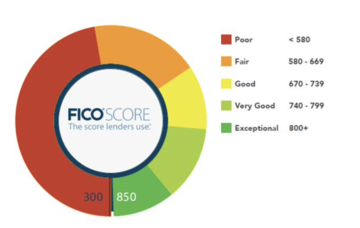
Big lenders are moving away from FICO, people familiar with the matter told the Wall Street Journal, which noted companies that include Capital One Financial and Synchrony Financial no longer use the three-digit FICO score for most of their consumer-lending decisions. Similarly, FICO has become a “smaller factor” in some underwriting decisions at JPMorgan Chase and Bank of America, according to the report.
FICO is an abbreviation of the name of the company that provides the score, Fair, Issac.
“A key financial regulator, meanwhile, is encouraging banks to de-emphasize credit scores in an effort to expand access to affordable credit,” the Journal reported. “And housing-finance giants Fannie Mae and Freddie Mac are considering allowing lenders to use other scores when evaluating mortgage applicants.”
Reasons for Shift
Among the reasons for the shift, according to the Journal:
- Many lenders now review a wealth of new data and use it to refine their own proprietary scores that they say are better able to predict who will repay and who won’t.
- Regulators are concerned that FICO leaves too many Americans behind, limiting them to payday loans and other costly forms of credit. Some 53 million U.S. adults lack traditional FICO scores because they have thin or nonexistent borrowing histories.
“FICO scores are good, but they’re not perfect,” said Hochschild, CEO of Discover Financial Services told the Journal.
Discover now relies less on FICO scores when evaluating existing or prior customers and more when applicants are brand-new to Discover, he said.
Fair, Isaac Responds
The Journal also noted Fair, Isaac has increased its price for traditional FICO scores significantly in recent years, to around 25 cents apiece for underwriting purposes from 15 cents to 18 cents, eliciting complaints from some big lenders. In recent months, it has offered lenders free access to two newer credit scores meant to boost loan approvals among applicants with slim credit histories, other people told the Journal.
Fair, Isaac disagreed with the suggestion the FICO score is being used less often.
“We see no evidence in our business to indicate the marketplace is using the FICO score less,” a FICO spokeswoman told the Journal. “We realize lenders use, and in fact encourage lenders to use, the FICO score in conjunction with proprietary data and models to make the best decision possible.”
The company said it sold more than 10 billion FICO scores in the past 12 months, a figure that has remained steady during the last few years.
The Pandemic’s Effect
Others told the Journal lenders’ efforts to rely less on FICO scores accelerated during the pandemic, as the scores don’t reflect deferment and forbearance programs, making it harder to arrive at an evaluation.
Some 48% of lenders feel less confident making consumer lending decisions based on traditional credit scores and reports compared with a year prior, according to a recent Aite Group survey of more than 20 lenders including banks, credit unions and financial-technology firms, the Journal reported.