

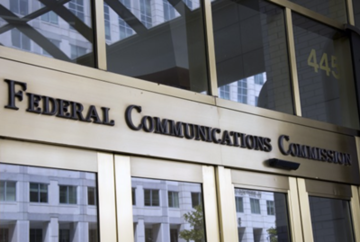
WASHINGTON—In response to the Federal Communications Commission's (FCC) recent order and fourth further notice of proposed rulemaking on methods to target and eliminate unlawful robocalls, NAFCU reiterated its call for the agency to protect legitimate callers and ensure consumers receive important information.
In the letter to the agency, Elizabeth LaBerge, NAFCU's senior regulatory counsel, shared the association's appreciation of the commission's recent orders, which include requirements for the publication of contact information for disputing erroneously blocked calls, provision of a single point of contact for disputes, and the prompt ceasing of blocking legal calls as conditions of obtaining a safe harbor.
LaBerge also offered NAFCU's support of the FCC's issuance of the FNPR to elicit more feedback. However, she noted the orders alone "are not sufficient to achieve the statutory directive in the Pallone-Thune Telephone Robocall Abuse Criminal Enforcement and Deterrence Act (TRACED Act) to provide ‘transparency and effective redress’ for legitimate callers."
LaBerge pointed out legitimate callers whose calls are erroneously blocked currently have no way to identify and discover that their calls are being blocked, highlighting the need for immediate notification.
Small Firms Disadvantaged
"Without clear notification from the service provider, only the largest organizations will be able to ensure their calls are going through," wrote LaBerge. "Large organizations might have the resources to implement in-house monitoring programs of busy signal rates or to pay a third-party vendor to determine whether their calls are being blocked."
In discussing whether increased transparency could benefit illegal callers, LaBerge acknowledged the FCC's concerns that "meaningful notification of call blocking might benefit illegal callers," but noted that those conducting illegal robocall schemes are aiming to be faster than the system.
"They will always have more familiarity with the workings of the system they are attempting to exploit than those who use the system to conduct legitimate business," said LaBerge. "Without transparency from the service providers, illegal callers will gain transparency into the system through illicit means, while legitimate callers will be left confused and forced to pay others for assistance."
Additionally, LaBerge urged the FCC to institute a 24-hour window for resolution of disputes.