

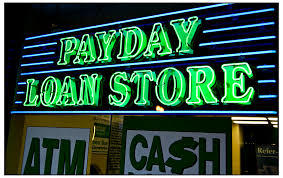
WASHINGTON—The Consumer Financial Protection Bureau has released a final version of its rule around short-term, small-dollar loans, which includes a cap of 36% on such loans, far below what many payday lenders charge.
Consumer groups issued statements supportive of the CFPB rule, while both CUNA and NAFCU said they are now analyzing the rule–it is 1,690 pages long–and its potential impact. NAFCU noted the final rule appears to exempt loans issued by credit unions in conformance with NCUA parameters for payday-alternative loans.
One analyst, meanwhile, called on state and federal regulators to move quickly to issue guidelines in response.
According to the CFPB, the rule is aimed at stopping payday debt traps by requiring lenders to determine upfront whether people can afford to repay their loans.
“These strong, common-sense protections cover loans that require consumers to repay all or most of the debt at once, including payday loans, auto title loans, deposit advance products, and longer-term loans with balloon payments,” the CFPB said. “The Bureau found that many people who take out these loans end up repeatedly paying expensive charges to roll over or refinance the same debt. The rule also curtails lenders’ repeated attempts to debit payments from a borrower’s bank account, a practice that racks up fees and can lead to account closure.”
CFPB's Target
In releasing its rule, CFPB said it is targeting small-dollar loans, often known as payday loans or auto title loans, that are typically due in full by the borrower’s next paycheck, usually two or four weeks. The APRs on such loans typically exceed 300%, and as a condition of the loan, the borrower writes a post-dated check for the full balance, including fees, or allows the lender to electronically debit funds from their checking account, the CFPB said. Auto title loans typically have similar terms, but a car or truck title is used as collateral.
“These loans are heavily marketed to financially vulnerable consumers who often cannot afford to pay back the full balance when it is due,” the CFPB said. “Faced with unaffordable payments, cash-strapped consumers must choose between defaulting, re-borrowing, or skipping other financial obligations like rent or basic living expenses such as buying food or obtaining medical care. Many borrowers end up repeatedly rolling over or refinancing their loans, each time racking up expensive new charges. More than four out of five payday loans are re-borrowed within a month, usually right when the loan is due or shortly thereafter. And nearly one-in-four initial payday loans are re-borrowed nine times or more, with the borrower paying far more in fees than they received in credit. As with payday loans, the CFPB found that the vast majority of auto title loans are re-borrowed on their due date or shortly thereafter.”
Under the CFPB’s final “Rule to Stop Debt Traps,” it said it has put in place strong ability-to-repay protections, including requiring lenders to conduct a “full-payment test” to determine upfront that borrowers can afford to repay their loans without re-borrowing. For certain short-term loans, the CFPB said lenders can skip the full-payment test if they offer a “principal-payoff option” that allows borrowers to pay off the debt more gradually. The rule requires lenders to use credit reporting systems registered by the Bureau to report and obtain information on certain loans covered by the proposal. The rule allows less risky loan options, including certain loans typically offered by community banks and credit unions, to forgo the full-payment test. The new rule also includes a “debit attempt cutoff” for any short-term loan, balloon-payment loan, or longer-term loan with an annual percentage rate higher than 36% that includes authorization for the lender to access the borrower’s checking or prepaid account.
The full CFPB rule can be found here http://files.consumerfinance.gov/f/documents/201710_cfpb_final-rule_payday-loans-rule.pdf
NAFCU's Assessment
NAFCU said its initial review indicates that the new rule “appears to address credit union industry concerns over potentially negative impacts on credit unions' ability to meet members' needs for short-term, small-dollar loans.
The final rule appears to exempt loans issued by credit unions in conformance with NCUA parameters for payday-alternative loans.”
"In a marketplace well-populated by abusive operators, NAFCU is looking for ways that credit unions – the good actors in the consumer lending space – can offer more payday alternatives to their members," said Carrie Hunt, NAFCU's executive vice president of government affairs and general counsel, in a statement. "What credit unions and consumers need is for the CFPB to focus on bad actors."
CUNA's Assessment
Meanwhile, in a statement following release of the final rule, CUNA noted it had numerous concerns with the rule as originally proposed, not least of which, it said, was that it could rob consumers of safe and affordable alternatives to predatory loans.
CUNA noted that it and many of its state leagues met with the CFPB to discuss concerns regarding the rule numerous times, most recently this week with top CFPB officials, and filed extensive comments outlining the problems with the original proposal. A number of individual credit unions and credit union members also expressed concerns to the CFPB about the proposed rule during the comment period, CUNA stated.
"The CFPB has indicated that they have heard the loud voices of America's credit unions and have made significant changes to its original proposal," said Ryan Donovan, CUNA's chief advocacy officer.
CUNA President and CEO Jim Nussle thanked CFPB Director Richard Cordray for directly addressing many concerns credit unions raised with the proposed rule.
“We are pleased the CFPB heeded our recommendations concerning a full exemption for the NCUA Payday Alternative Loan (PAL) program and the many other changes that were made to accommodate consumer-friendly small dollar loan programs at credit unions, including a more common-sense approach to which loans are covered,” said Nussle.
CUNA noted that its initial analysis finds positive improvements from the proposed version, including:
- A full exemption for the NCUA’s PAL program
- An exemption that applies to most loans that are over 45 days with no balloon payments
- An exemption for providers issuing fewer than 2,500 covered loans per year that represent no more than 10% of revenue
- Notice and debit requirements that apply to most loans do not apply to credit unions that make loans to their own members, as long as the payments do not trigger overdraft or non-sufficient funds fees
- The CFPB’s use of Regulation Z (which implements the Truth in Lending Act) to define the cost of credit, rather than its originally proposed definition of a new “all-in annual percentage rate"
- Exemption for certain salary advances
Other responses to the CFPB rule:
- Nick Bourke, director of The Pew Charitable Trusts’ consumer finance project, said, “The CFPB took a strong step today to protect consumers from harmful, single-payment payday and auto title loans. The final rule is a major improvement over the 2016 proposal because it opens the door to lower-cost installment loans from banks and credit unions. But federal regulators and states still have important work to do. Bank and credit union regulators must now create the clear guidelines these lenders need in order to make small installment loans safely and profitably. If they do, millions of consumers can save billions of dollars by gaining access to lower-cost credit. Banks and credit unions have shown a willingness to serve these customers with small installment loans, and they can do it at prices that are six times lower than payday loans. With strong safeguards in place, regulators should let them.”
- Mike Calhoun, president, Center for Responsible Lending, said, “This new rule is a step toward stopping payday lenders from harming families who are struggling to make ends meet. It will disrupt the abusive predatory payday lending business model, which thrives on trapping financially distressed customers in a cycle of unaffordable loans. Today's rule release was years in the making, and it wouldn't have been possible without the tireless effort of community and faith leaders, consumer and civil rights advocates, and countless people across the country who organized and worked hard to make their voices heard. We will continue to fight for safeguards that protect families from abusive long-term predatory loans and for state interest rate caps for all loans at reasonable levels of no more than 36%."
- Lisa Donner, executive director, Americans for Financial Reform, said "Payday and car title lenders profit from repeatedly dragging hard-pressed people deeper and deeper into debt, and taking advantage of families when they are financially vulnerable. Curbing the ability to push loans that borrowers clearly cannot repay is a key protection, and enshrining and enforcing this rule as federal policy should let Americans keep billions of hard-earned dollars. But more needs to be done to end lending abuses, and we will keep working alongside community leaders and advocates from around the country to fight for interest rate caps, and reforms for predatory longer-term loans.”