WASHINGTON–After several weeks of renewed debate over how it might act following the failure of several banks, the Federal Reserve has voted to raise interest rates another 25 basis points, essentially betting it can stabilize banks at risk by backstopping their deposits and that taming inflation is the priority. In its statement, the Fed indicated additional rate increases could follow.
Prior to the failures of Silicon Valley Bank and Signature Bank, spurred at least in the former’s case by a failure to hedge against rising rates, it had been widely expected the Fed’s Open Market Committee would boost rates by 50 basis points, as inflation has slowed somewhat but remains high.
In its statement Wednesday, the Fed emphasized the U.S. banking system is “sound and resilient. Recent developments are likely to result in tighter credit conditions for households and businesses and to weigh on economic activity, hiring, and inflation. The extent of these effects is uncertain. The Committee remains highly attentive to inflation risks.”
The Committee noted iit cotinues to support its long-term goals of supporting inflation while keeping inflation's growth to 2% over the longer run.
More Increasses May be Coming
“In support of these goals, the Committee decided to raise the target range for the federal funds rate to 4-3/4 to 5%,” the Fed stated. “The Committee will closely monitor incoming information and assess the implications for monetary policy. The Committee anticipates that some additional policy firming may be appropriate in order to attain a stance of monetary policy that is sufficiently restrictive to return inflation to 2% over time.”
In determining the extent of future increases in the target range, the Committee said it will take into account the cumulative tightening of monetary policy, the lags with which monetary policy affects economic activity and inflation, and economic and financial developments.
“In addition, the Committee will continue reducing its holdings of Treasury securities and agency debt and agency mortgage-backed securities, as described in its previously announced plans. The Committee is strongly committed to returning inflation to its 2% objective,” the Fed explained.
The FOMC added that it is prepared to adjust the stance of monetary policy “as appropriate” if risks emerge that could impede it reaching the Committee's goals.
CUNA: Fed 'Maintained the Course'
“The Federal Reserve Open Market Committee (FOMC) increased the federal funds rate by 25 basis points raising the target range to 4.75% - 5%," said CUNA Economist Dawit Kebede. "There was expectation for a pause in rate hikes considering the recent bank failures earlier this month which is partly caused by high rate increases in a short period of time. The FOMC states that the banking system is sound and resilient.

Dawit Kebede, CUNA
“Prior to the collapses, a 50-basis point increase in federal funds rate was expected as labor market report was stronger than expected and inflation not slowing down as expected. Consumer demand seems too strong for inflation to come down consistent with the Federal Reserve's target. Hence, the FOMC maintained the course and increased the rate by a quarter basis point.
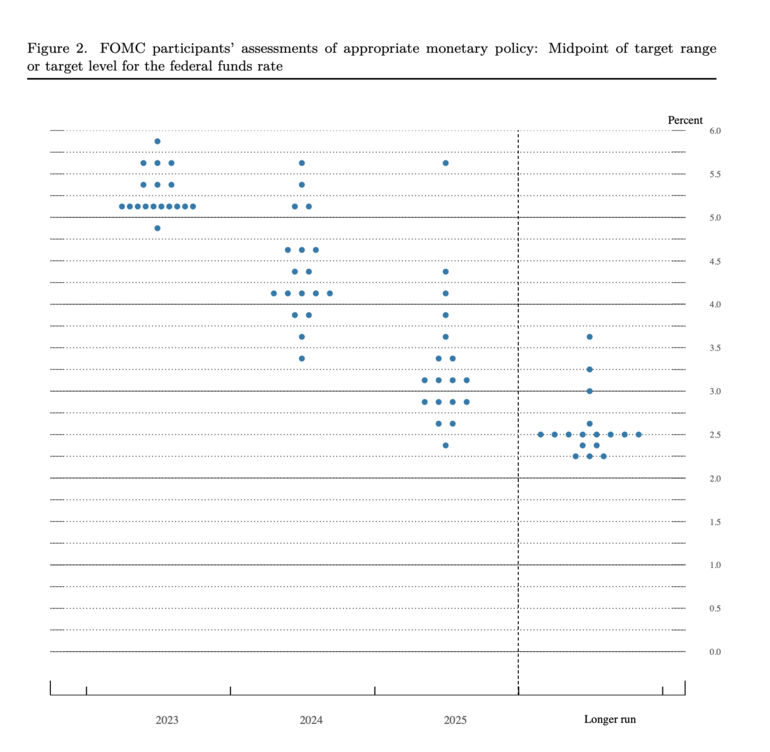
“The summary of projections by FOMC members remains largely the same as their December projections. Revisions changed by less than two-tenths of a percentage point showing slower economic growth, higher inflation, and lower unemployment.
“Recent bank failures will force other financial institutions to work towards improving their liquidity position. It could mean less borrowing for households and businesses. This coupled with the high cost of borrowing is expected to further slow economic activity, hiring, and inflation.”
NAFCU: A 'Softening' of Tone
"The FOMC opted for a hike despite recent turmoil in the banking sector. However, the committee did not raise its projected terminal fed funds rate and softened the tone of the statement regarding the likelihood of future rate hikes," said NAFCU Chief Economist and VP of Research Curt Long. "With so much pre-meeting speculation around the decision to hike versus stand pat, the committee essentially split the difference. Regardless of any further turbulence among small and regional banks, credit unions will remain a safe and reliable option for Main Street."
TransUnion: Consumers Urged to Pay Down Debt
“The fact that the Federal Reserve has decided to once again raise rates, albeit only 25-basis points, serves as further evidence that despite the consideration warranted to other real-time financial developments, and some positive signs in recent inflation reports, the Fed believes work remains to be done,” said Michele Raneri, vice president and head of U.S. research and consulting at TransUnion. “From a consumer credit perspective, the impact of further rate hikes will likely continue to be felt by borrowers, particularly in industries such as mortgage and credit cards. In this high interest rate environment, consumers are advised to continue paying down as much higher interest debt as they can, continue paying bills on time, and work to keep their personal financial and credit profiles as strong as they can be.”
Economic Projections Released
As part of the meeting, the released documents including tables and charts that summarize the economic projections made by Federal Open Market Committee participants in conjunction with the March 21-22 meeting. Those are available here.