

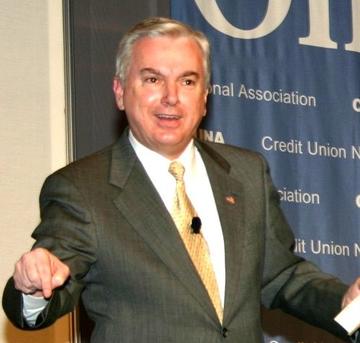
Dennis Dollar
BIRMINGHAM, Ala.—The approval of a rule by the NCUA board that will move community charter expansion requests to its Office of Consumer Protection and take it off the board’s future agenda is going to help CUs grow, says Dennis Dollar.
The former NCUA chairman, whose firm, Dollar Associates does a lot of FOM and community charter work for credit unions, applauded the decision.
"I think the NCUA board was spot on to take the approval of community charters out of the board's domain, where there is always an additional multiple month delay, and delegate the decision to the OCP, which will look at those applications from the point of view of whether the credit union met the standards of the FOM rules or not,” Dollar said.
Dollar emphasized that, essentially, the FOM decision is straightforward—either a community charter application meets the standard for approval or not.
“OCP is very efficient and thorough in evaluating and performing the analysis as to whether a community charter applications complies with the rule or if it does not,” he said. “They are quite timely in their analysis and rendering a decision on a community charter. Adding months to the process by requiring OCP to take their approval decision to the NCUA board for another level of approval is duplicative, unnecessary and makes the credit union wait to begin extending service to the community.”
Under the new rule, only appeals will go to the board.
“If OCP turns down a community charter application and the credit union feels they have done so in error, they can always appeal,” said Dollar. “This decision essentially makes the NCUA board what they should be—a source of appeal for a compliance-based decision that is best made by the folks at OCP who apply these FOM rules every day.”
The rule passed 3-0 Thursday, but Board Member Mark McWatters shared his concern for due process around any expansion request rejected by the OCP.
“If the OCP makes a decision the credit union disagrees with, there is an appeal to the board. And that comes to the board without the other party being represented before the board,” said McWatters, who is an attorney. “So it’s due process with a footnote. I do not want to have a chilling effect upon someone who wants to appeal and that they can advocate before the board.”
NCUA Chairman Debbie Matz said she agreed with McWatters and that it’s “probably time to take a look at our appeals process.”