

ALEXANDRIA, Va.–The slowdown in loan growth can be seen in the latest data released by NCUA, but perhaps the even more significant trend is what is revealed beneath the overall industry trend lines: Overall, almost half of federally insured credit unions had fewer members at the end of the third quarter of 2019 than one year earlier.
Credit unions with falling membership tend to be small, noted NCUA in releasing its latest Quarterly U.S. Map Review for the third quarter, with about 70% having less than $50 million in assets. In 18 states and Washington, D.C., the median membership growth rate for federally insured credit unions was negative.
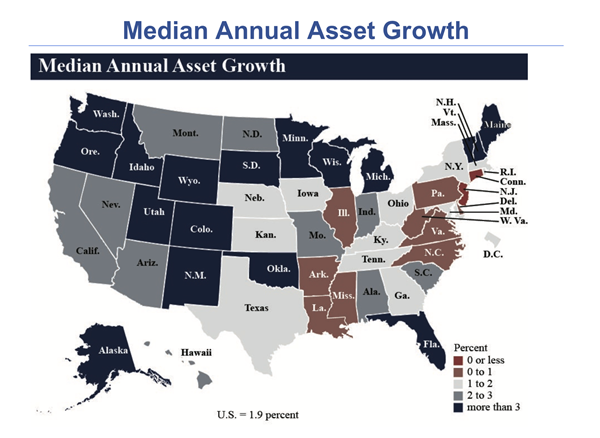
Meanwhile, nationally, credit union median asset growth over the year ending in the third quarter of 2019 was 1.9%, meaning half of all federally insured credit unions had asset growth at or above 1.9% and half had asset growth of 1.9% or less. In the year ending in the third quarter of 2018, the median growth rate in assets was 1.7%.
Nationally, NCUA said the median growth rate in loans outstanding was 3.8% over the year ending in the third quarter of 2019. The median loan growth rate during the previous year was 5.9%, NCUA said.
Nationally, 89% of federally insured credit unions had positive net income during the first three quarters of 2019, compared to 88% during the first three quarters of 2018, NCUA said.
Here’s how credit unions performed by category:
Asset Growth
- Over the year ending Sept. 30, median asset growth was highest in Idaho (7.8%), followed by Wyoming (5.9%). Median asset growth was negative in New Jersey (-1.2%) and Connecticut (-0.3%) over the year ending in the third quarter of 2019. Assets grew the least in Arkansas (0.1%) and Delaware and North Carolina (both 0.3%).
Shares and Deposits
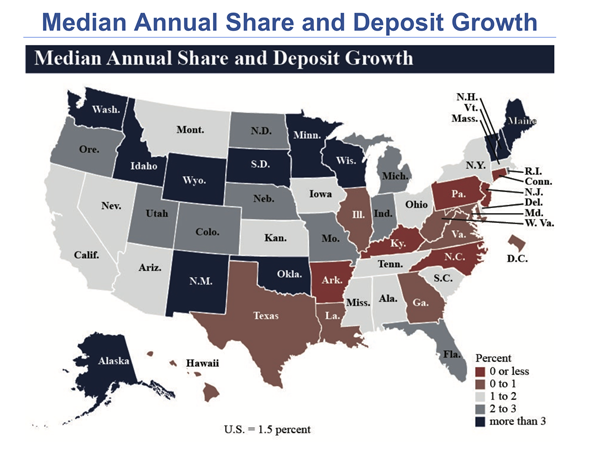
- Nationally, median growth in shares and deposits over the year ending in the third quarter of 2019 was 1.5%. In the year ending in the third quarter of 2018, the median growth rate in shares and deposits was 1.3%.
- Over the year ending in the third quarter of 2019, median growth in shares and deposits was highest in Idaho (8.9%) and Maine (5.5%).
- Median growth in shares and deposits was negative in New Jersey (-2.1%), Connecticut (-0.7%), Arkansas (-0.6%), and North Carolina (-0.3%) over the year ending in the third quarter of 2019. At the median, shares and deposits were unchanged in Kentucky and Pennsylvania, and grew the least in Washington, D.C. (0.2%) and Louisiana and Virginia (both 0.3%).
Membership Growth
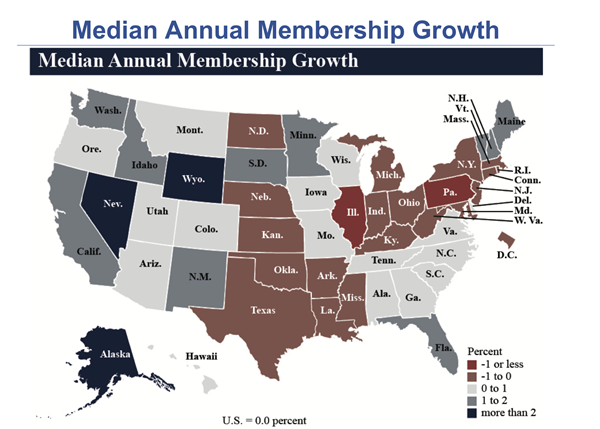
- While overall membership in federally insured credit unions continued to grow during the year ending in the third quarter of 2019, at the median, membership was unchanged, NCUA said.
- Membership increased 0.1% at the median over the year ending in the third quarter of 2018. Overall, almost half of federally insured credit unions had fewer members at the end of the third quarter of 2019 than a year earlier, NCUA said. Credit unions with falling membership tend to be small; about 70% had less than $50 million in assets.
- Over the year ending in the third quarter of 2019, credit unions headquartered in Alaska (2.4%) and Wyoming (2.2%) posted the highest median membership growth rates.
- In 18 states and Washington, D.C., the median membership growth rate for federally insured credit unions was negative. At the median, membership declined the most in Pennsylvania (-1.4%) and Illinois (-1.0%). Membership was unchanged in Louisiana, Maryland, and West Virginia.
Loan Growth
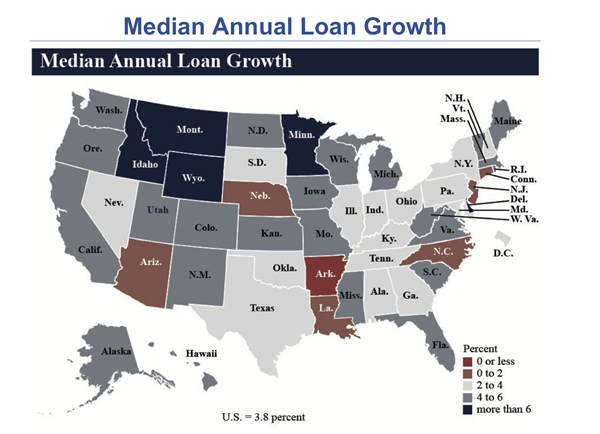
- Nationally, the median growth rate in loans outstanding was 3.8% over the year ending in the third quarter of 2019. The median loan growth rate during the previous year was 5.9%, NCUA said.
- Over the year ending in the third quarter of 2019, median loan growth was positive in Washington, D.C., and all but one state. At the median, loans outstanding declined in Arkansas (-0.4%) and grew the least in Arizona and New Jersey (both 0.2%).
- Median loan growth was strongest in Minnesota (7.4%) and Delaware and Wyoming (both 6.5%) over the year ending in the third quarter of 2019.
Delinquencies
- According to NCUA, at the end of the third quarter of 2019, the median total delinquency rate among federally insured credit unions was 60 basis points, compared to 66 basis points in the third quarter of 2018.
- At the end of the third quarter of 2019, the median delinquency rate was highest in New Jersey (152 basis points) and Louisiana (108 basis points).
- The median delinquency rate was lowest in North Dakota (21 basis points) and New Hampshire (22 basis points).
Loan-to-Share Ratio
- Nationally, the median ratio of total loans outstanding to total shares and deposits (the loans-to-shares ratio) was 71% at the end of the third quarter of 2019. At the end of the third quarter of 2018, the median loans-to-shares ratio was 69%.
- The median loans-to-shares ratio was highest in Vermont (91%) and Wisconsin (88%).
- The median loans-to-shares ratio was lowest in Delaware and New Jersey (both 53%), followed by Hawaii (54%).
Return on Assets
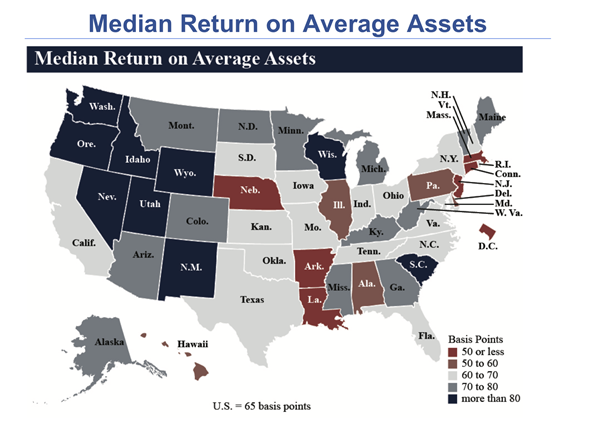
- Nationally, the median annualized return on average assets at federally insured credit unions was 65 basis points during the first three quarters of 2019, compared to 60 basis points during the first three quarters of 2018.
- New Mexico had the highest median annualized return on average assets during the first three quarters of 2019 (99 basis points), followed by South Carolina (94 basis points).
- New Jersey had the lowest median annualized return on average assets during that time (39 basis points), followed by Connecticut and Washington, D.C. (both 43 basis points).
Net Income
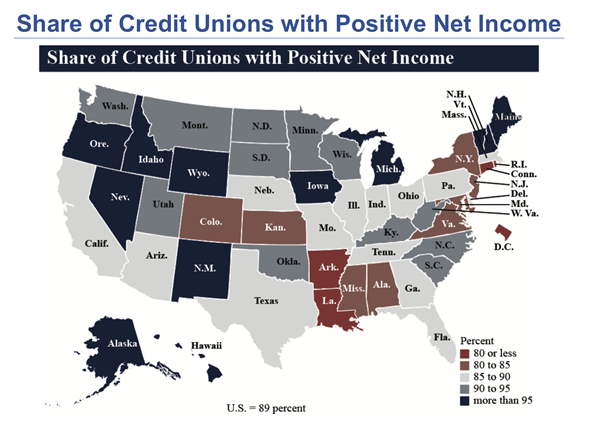
- Nationally, 89% of federally insured credit unions had positive net income during the first three quarters of 2019, compared to 88% during the first three quarters of 2018, NCUA said.
- At least 70% of credit unions in every state had positive net income during the first three quarters of 2019.
- The share of federally insured credit unions with positive net income was highest in Alaska, Maine, Nevada, New Hampshire, and Vermont (all 100%), followed by Hawaii, Iowa, and New Mexico (all 98%).
- The share was lowest in Arkansas (75%), followed by Washington, D.C. (78%).