

WASHINGTON—In a coordinated push to shape federal policy on multiple fronts, the Defense Credit Union Council recently submitted letters to Congress and regulators addressing four critical areas: combatting AI-enabled financial fraud, strengthening veteran mortgage protections, advancing digital asset regulation, and urging reform of NCUA’s fair lending oversight.
AI Fraud
The Defense Credit Union Council recently sent multiple letters to congressional subcommittees, addressing issues related to artificial intelligence fraud, rural lending access, and digital asset regulation.

Jason Stverak
In a letter to the House Judiciary Subcommittee on Crime and Federal Government Surveillance, DCUC noted the rising threat of AI-driven scams and detailed proactive steps defense credit unions are taking to safeguard members.
“Defense credit unions are not waiting for bad actors to strike – we are equipping ourselves with machine learning and real-time alert systems to stop scams as they happen,” said Jason Stverak, DCUC Chief Advocacy Officer.
In the letter, Stverak highlighted several examples of credit unions leveraging AI tools to combat fraud:
- Launch Credit Union (FL): Deployed RembrandtAi to stop check and card fraud, saving over $3.5 million in 2024.
- Affinity Federal Credit Union (NJ/NY): Partnered with Point Predictive to enhance fraud detection during auto loan processing.
- Digital Federal Credit Union (DCU) (MA): Using SnapLogic and AgentCreator to build an AI-powered fraud infrastructure.
VA Home Loan Program Reform Act
DCUC stated that it applauds the bipartisan passage of H.R. 1815, the VA Home Loan Program Reform Act, which will significantly strengthen protections for veterans facing mortgage hardship.
This legislation will enhance the VA Home Loan Program by establishing a permanent partial claims program and improving loss mitigation options for veterans struggling with mortgage payments. The bill also ensures that veterans have access to the same foreclosure-prevention tools available through other federal housing programs.
“This is a crucial step forward in protecting the financial well-being of those who have served our country,” said Anthony Hernandez, DCUC president/CEO. “We commend lawmakers on both sides of the aisle for recognizing the urgent need to modernize the VA Home Loan Program. These reforms will help prevent unnecessary foreclosures, provide a safety net during financial hardship, and uphold our nation’s promise to support our veterans.”
Key provisions of the bill include:
- A five-year partial claims program to help veterans catch up on delinquent mortgage payments
- Enhanced loss mitigation tools and VA authority to work with lenders to avoid foreclosure
- Permanent authorization allowing veterans to compensate real estate agents directly
- Additional funding for homeless veterans through the VA Grant and Per Diem Program
Modern Framework For Digital Assets
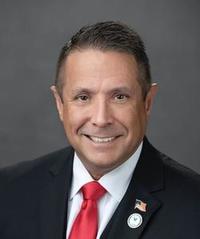
Anthony Hernandez
DCUC said it supports Congressional efforts to establish a clear and modern framework for digital assets and innovation within the U.S. financial system.
With recent votes on key legislation – including the GENIUS Act, H.R. 1919 – Anti-CBDC Surveillance State Act, and H.R. 3633 – Digital Asset Market Clarity Act of 2025 – Congress is taking critical steps to ensure the digital economy is structured, secure, and positioned for long-term success, DCUC noted.
“These measures aim to provide regulatory clarity, protect consumer privacy, and support responsible innovation in emerging financial technologies – while promoting U.S. leadership in the global digital asset space,” DCUC said.
“DCUC commends Congress for its forward-looking leadership in structuring a safe and fair digital asset ecosystem,” said Hernandez. “By advancing the GENIUS Act and key digital-asset framework, lawmakers are prioritizing both innovation and security, ensuring credit unions and financial institutions can operate with confidence and clarity in a rapidly evolving digital landscape. This is an essential step in strengthening the U.S. economy and protecting consumers — including our military and veteran communities.”
NCUA And Fair Lending Supervision Policies
DCUC recently wrote to NCUA in an effort to request it revise its fair lending supervision policies to align with recent federal regulatory direction—specifically, by removing disparate-impact analysis from examiner reviews.
In a letter to NCUA Chairman Kyle Hauptman, DCUC referenced the Office of the Comptroller of the Currency’s (OCC) July 14 announcement eliminating disparate-impact liability from its Fair Lending Handbook. This move, driven by Executive Order 14281 (“Restoring Equality of Opportunity and Meritocracy”), reflects a broader federal shift toward prioritizing enforcement against intentional discrimination rather than statistical disparities.
“As federal regulators shift toward clarity and intent-based enforcement, it is critical that NCUA examiners adopt a consistent approach,” said Hernandez. “Credit unions are deeply committed to fair lending, but disparate-impact exams add unnecessary compliance burdens—especially when other agencies no longer pursue them. Aligning with OCC and CFPB guidance will enhance exam transparency and ensure resources are focused on real consumer harm.”
In the letter, DCUC recommended the NCUA:
- Eliminate disparate-impact exams from examiner manuals and bulletins.
- Refocus fair lending reviews on evidence of actual discrimination (disparate treatment).
- Align supervisory policy with recent federal directives under Executive Order 14281
- Reduce compliance burdens on small and mission-driven institutions like credit unions.