

WASHINGTON — House Financial Services Committee Chairman French Hill (R-AK) and Financial Institutions Subcommittee Chairman Andy Barr (R-KY) on Tuesday released a new community banking legislative package aimed at boosting local bank formation and expanding access to capital on Main Street.
The proposal, titled the Main Street Capital Access Act, is designed to roll back what Republicans describe as outdated regulations and allow community banks to focus more directly on serving families, small businesses, and local economies. Hill said the package reflects more than a year of subcommittee work examining regulatory barriers facing small and mid-sized banks.
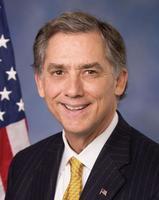
French Hill
“As a former community banker, I know and have seen firsthand the important role they serve to drive the economic engine of America and help Main Street grow and thrive,” Hill said in a statement announcing the bill. Barr echoed that view, calling community banks “the heartbeat” of local economies and emphasizing the need for a regulatory framework that encourages growth.
Credit unions welcomed the committee’s focus on community-based financial institutions but said the package falls short of fully reflecting the role credit unions play in local lending markets. The Defense Credit Union Council stated that while it welcomes renewed attention on strengthening community financial institutions, it cautions that proposals focused solely on banks risk overlooking a critical part of the local finance ecosystem.
“We support the goal of strengthening community financial institutions and appreciate Chairman Hill’s focus on policies that help locally focused lenders serve families, small businesses, and local economies. Community finance is essential to Main Street, and that ecosystem includes both banks and credit unions," said DCUC Chief Advocacy Officer Jason Stverak. "However, credit unions must be explicitly included and supported—not excluded. Credit unions serve more than 144 million Americans through a not-for-profit, member-owned model that exists solely to serve people and communities."

Jason Stverak
Stverak pointed out that mission was on full display during recent federal government shutdowns.
"When paychecks stopped, credit unions across the country stepped in immediately with emergency and zero-interest loans, fee waivers, payment deferrals, and one-on-one financial counseling for federal employees, service members, veterans, and their families. In many cases, credit unions were the first—and sometimes the only—financial institutions providing relief," Stverak said. "That real-world performance is exactly why credit unions must be part of any serious effort to strengthen community financial institutions. If policymakers want resilient local finance, consumer stability during disruptions, and institutions that act as financial first responders in times of crisis, credit unions are not optional—they are essential. Supporting community finance means recognizing and supporting credit unions by design, not by omission.”
While acknowledging that some provisions could benefit the broader financial system, America’s Credit Unions said the legislation leaves key credit union priorities unaddressed.

Scott Simpson
"We appreciate Chairman Hill and Subcommittee Chairman Barr’s focus on supporting community-based financial institutions and improving access to capital on Main Street,” stated Simpson. “Efforts to modernize outdated regulations are an important part of strengthening local economies. While the package includes provisions that could benefit the broader financial system, it leaves room for key credit union priorities to be addressed. Credit unions serve more than 145 million Americans, and any comprehensive community finance package should reflect the full range of lenders serving local communities. We look forward to continuing to work with the Committee to ensure reforms are inclusive and recognize the credit union difference."
The legislation adds to a growing list of House Financial Services Committee efforts this Congress to reshape bank and financial-services regulation.