

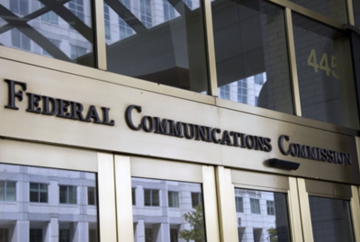
WASHINGTON–A federal appellate court has set aside some of the Federal Communications Commission’s rules on when and how businesses can contact consumers by phone, in a ruling that has been welcomed by credit unions.
Both NAFCU and CUNA have been meeting with the FCC and Congress over the agency’s interpretations of the Telephone Consumer Protection Act, which has created compliance challenges for credit unions seeking to contact their members regarding their accounts.
A three-judge panel of the D.C. Circuit Court of Appeals ruled that the FCC’s definition of an autodialer was “unreasonably expansive,” since it would appear to cover ordinary smartphones, not just equipment designed to make robocalls. The court also vacated the FCC’s policy on calls made to numbers belonging to people who had consented to receive calls, but that had since been reassigned to non-consenting persons. In addition, the court said the FCC’s safe harbor (which allowed only one call before incurring liability) was arbitrary and capricious.
The court upheld, however, the FCC’s approach to handling how call recipients can revoke previously granted consent to calls, although it concluded that a caller and call recipient may contractually agree to specific revocation mechanisms.
The court’s ruling was largely in line with a friend of the court brief filed CUNA, the American Bankers Association and the Independent Community Bankers of America in December 2015. In that brief, the groups stated that financial institutions must communicate with consumers quickly and efficiently in order to prevent and mitigate fraud and identity theft, to help consumers avoid unnecessary fees and provide consumer service — and that the FCC’s overbroad constraints under TCPA would hinder those communications.
In response to lawsuit brought against the Telephone Consumer Protection Act (TCPA), CUNA President/CEO Jim Nussle said, “Today the D.C. Court of Appeals recognized some of the important concerns CUNA has been raising in our legal advocacy efforts participating in this litigation, as well as in our petition before the FCC. We appreciate that the court has recognized the arbitrary and capricious nature of FCC interpretations of the TCPA that have been so problematic for credit unions by overturning the definition of an autodialer and vacating the FCC’s reassigned number approach. We have continuously been seeking clarification on both of these issues and will continue to fight for complete clarity for credit unions who are communicating with their members using modern technology.”