

PEWAUKEE, Wis.–Credit union leaders gathered here were told by one economist there is no need for the Fed to raise rates anymore, which could tip the country into recession, and that he believes there is a “one-in-four chance they will blow it.”
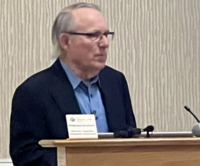
Clare Zempel addresses the meeting.
Speaking to Corporate Central’s Economic Outlook Conference here, Clare Zempel, an economist and investment strategist who now leads Zempel Strategic, noted discussion remains abundant among economists and analysts over the potential for a recession, and the same remains true within credit unions. He reminded that “if we go into a recession, bankruptcies will soar, and, as you may remember, interest rates will fall like a rock.” But he doesn’t believe that’s what the future holds.
“If we don’t have that kind of development in the economy, there will be some changes perhaps in the same direction, but nowhere near that dramatic,” Zempel said.
Agreeing With Consensus
Zempel said he agrees with the current consensus opinion among economists that the U.S. economy is in the process of the so-called soft-landing, “and I think we can get away with that. But the risk of something worse is not zero. I wish it were. There are things that still make me concerned that could turn a soft landing into something much harder.”
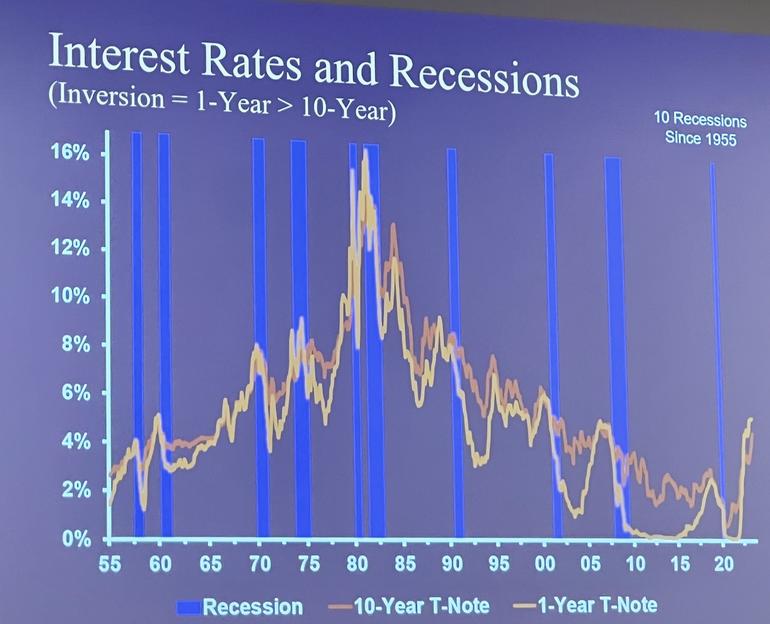
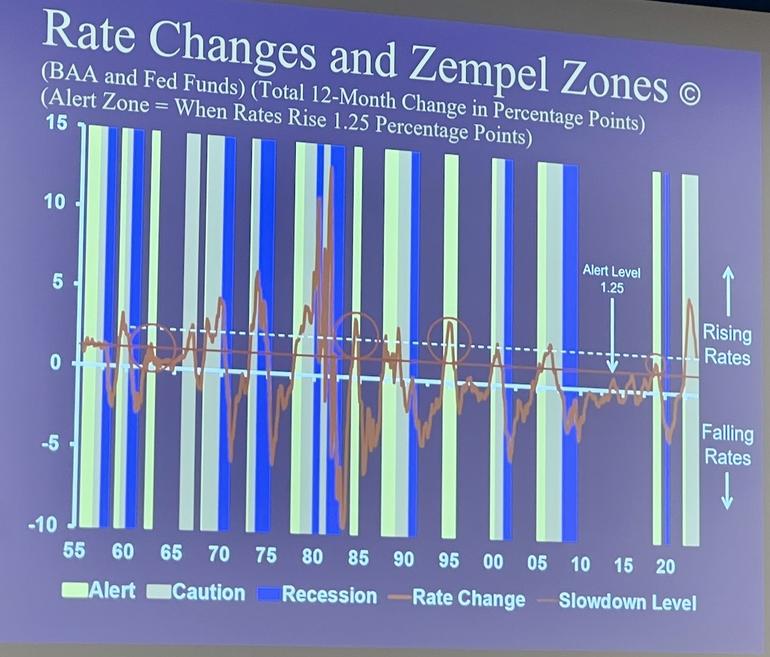
Given that he’s an economist, Zempel presented a number of graphs and charts to his audience, including a review of interest rates and periods of recession and a look at the yield spread as an economic indicator (Zempel favors the one-year and 10-year spread).
What About the Inverted Yield Curve?
While the inverted yield curve is often cited as an indicator of recessions, Zempel noted it’s not a causal factor, but a reflection of what is taking place.
Since 1955, Zempel said recessions have been “fairly common things.”
“The fact no recession has occurred yet is not something that makes this indicator suspicious. The longest this warning (yield curve) has given is 24 months,” Zempel said. “We are still in a period where interest rates are rising sharply in historical terms. It’s enough to give us a warning about a potential slowdown.”
Fueling a Misunderstanding
Zempel said many people think spikes in oil prices cause recessions, but he disagrees, saying he believes the spikes occur inside recessions and then make “something bad even worse.”
“Oil prices are down, but what matters in terms of a threat to the economy is the change in oil prices,” he said. “A 60% rise year over year is a threat to the economy. That’s not what’s happening. The potential threat here is conspicuous by its absence.”
Zempel urged every credit union to play it safe and have a plan in place on what to do should a recession take place. “Slower growth is going to continue for the next year,” he told the Corporate Central audience.
Is a Recession Underway?
Has a recession started?
“My answer is no,” said Zempel. “Why not? Inflation has fallen sharply earlier than usual.”
Zempel said the weekly unemployment numbers are an indicator of the state of the economy. “When this number soars, something bad is happening in the economy. This number is not soaring,” he told the meeting.
Zempel further urged credit unions to watch numbers out of the National Bureau of Economic Research, which is not a government agency but is primarily comprised of university professors. The NBER watches four numbers:
- Real manufacturing and trade sales
- Industrial production
- Nonfarm jobs
- Real personal income less transfers
None of those ratios is falling, Zempel said.
‘What’s Different This Time?’
Calling the following words the “most dangerous in economics,” Zempel then said, “What is different this time” is that “CPI inflation ratio has fallen by six percentage points” (see related story).
“That’s a near record decline in the rate of inflation,” Zempel said, clarifying he isn’t talking about retail prices.
“Real disposable income has continued to increase,” he said. “Real purchasing power is above where it was before COVID hit. Our living standards are higher than they were several years ago.”
Noting the Fed targets a 2% inflation rate based on what is known as the “personal consumption expenditure deflator” (and not PCI), it remains about the threshold.
Inflation has come down rapidly because the supply chain has been cleared, spending has come down as stimulus funds have been spent and the Fed has raised rates, he added.
Getting Close to Target
Zempel said he believes the Fed is much closer to its 2% inflation target that it may believe, and that “I don’t think the Fed needs to raise rates at all.”
He added he believes the Fed’s “hawkishness” does risk a recession in 2024.
He is basing his conclusions on the need to raise rates on four data points:
- Nominal GDP and the payroll Index growth has slowed
- Wage growth has slowed
- Pace of job growth has slowed, even as level continues to rise
Zempel noted that over the longer term, the consensus is interest rates are going to decline, a view with which he agrees.
Feds rate hawkishness does risk a recession in 2024.
Other Points Made
Zempel made a number of other points he said deserve attention, including:
- Consumer debt ratios have declined
- Some sectors are being hit harder than others, including autos, which “are in the period of correction. But still there is demand for new cars and capacity to spend.”
- The correction in housing is a fraction of what typically happens in a recession
- Business owners are at an all-time low in terms of views of the economy, with labor quality and inflation numbers their biggest concerns. Businesses continue to invest capital, Zempel said.
- Global economic data largely reflects that of the U.S. overall.
Will The Fed ‘Blow It’?
Asked by an audience member, “Given Fed’s track record, what are the odds they get it right this time?,” Zempel responded, “The cynic in me wants to say not very good. But because inflation is coming down, they may say it’s not at 2% yet but it’s coming down, That’s very helpful to them in not making a mistake. I will say it's one-in-four chance they will blow it.”
Just Because It’s Autumn Doesn’t Mean Falling for Schemes to Overcharge You for CU Industry News. Instead, Try This Crisp Offer
The biggest, best and freshest news reporting in credit unions remains free! Each morning CUToday.info delivers its daily Fresh Today news update offering the latest headlines and breaking news right to your email, with the easy-to-read headlines format allowing you to click on the stories that interest you most in order to learn more. So stop paying those bank-fee-like subscription prices from other so-called “news”” publications!
If you haven’t yet signed up for the new email solution on which CUToday.info has partnered with ResponseGenius, you can do so here. Signing up requires less than one minute of your time—and it’s free!
Please note that after signing up you may need to go to your Spam/Junk folder and mark the morning headlines email as safe. CUToday.info does not provide its list of readers and emails to outside parties, and we will not be contacting you to sell you an extended warranty or sending you any links so you may cash in on an inheritance you didn’t know was coming.
And did we mention it’s free?