

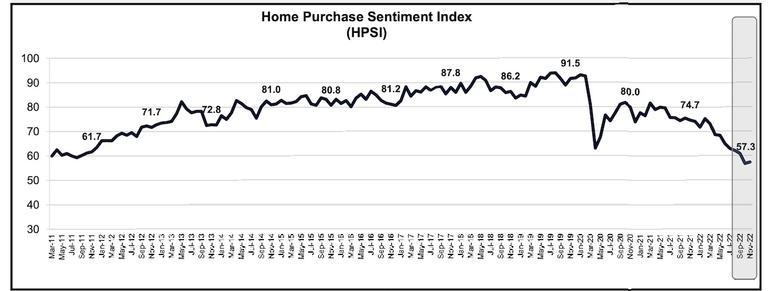
WASHINGTON—The Fannie Mae Home Purchase Sentiment Index (HPSI) increased 0.6 points in November to 57.3, its first increase in nine months—though it remains just above the all-time low set last month and significantly lower than its level at this time last year.
According to Fannie Mae, four of the index’s six components increased modestly month over month, including those associated with homebuying and home-selling conditions. However, both remain well below year-ago levels, having declined on net 28 and 38 points, respectively, Fannie Mae said.
Fannie Mae added that elevated mortgage rates continue to constrain affordability, and 62% of respondents expect mortgage rates to rise even further over the next year, compared to only 10% who expect rates to decline.
Year over year, the full index is down 17.4 points, Fannie Mae said.
‘Not Surprising’
“Both consumer homebuying and home-selling sentiment are significantly lower than they were last year, which, in our view, is unsurprising considering mortgage rates have more than doubled and home prices remain elevated,” said Doug Duncan, Fannie Mae senior vice president and chief economist. “Following eight months of consecutive declines, the HPSI did tick up slightly in November but is essentially unchanged since hitting its all-time low last month. Consumers continue to expect mortgage rates to rise but home prices to decline, a situation that we believe will contribute to a further slowing of home sales in the coming months, as both homebuyers and home-sellers have reason for apprehension.
“We expect mortgage demand to continue to be curtailed by affordability constraints, while homeowners with significantly lower-than-current mortgage rates may be discouraged from listing their property and potentially taking on a new, much higher mortgage rate,” Duncan continued.
Report Highlights
According to Fannie Mae, highlights from the most recent report include:
- Good/Bad Time to Buy: The percentage of respondents who say it is a good time to buy a home remained unchanged at 16%, while the percentage who say it is a bad time to buy decreased from 80% to 79%. As a result, the net share of those who say it is a good time to buy increased one percentage point month over month.
- Good/Bad Time to Sell. The percentage of respondents who say it is a good time to sell a home increased from 51% to 54%, while the percentage who say it’s a bad time to sell decreased from 42% to 39%. As a result, the net share of those who say it is a good time to sell increased six percentage points month over month.
- Home Price Expectations. The percentage of respondents who say home prices will go up in the next 12 months remained unchanged at 30%, while the percentage who say home prices will go down decreased from 37% to 34%. The share who think home prices will stay the same increased from 26% to 30%. As a result, the net share of those who say home prices will go up increased three percentage points month over month, Fannie Mae said.
- Mortgage Rate Expectations: The percentage of respondents who say mortgage rates will go down in the next 12 months increased from 6% to 10%, while the percentage who expect mortgage rates to go up decreased from 65% to 62%. The share who think mortgage rates will stay the same remained unchanged at 24%. As a result, the net share of those who say mortgage rates will go down over the next 12 months increased seven percentage points month over month, according to Fannie Mae.
- Job Loss Concern: The percentage of respondents who say they are not concerned about losing their job in the next 12 months decreased from 85% to 78%, while the percentage who say they are concerned increased from 15% to 21%. As a result, the net share of those who say they are not concerned about losing their job decreased 13 percentage points month over month.
- Household Income: The percentage of respondents who say their household income is significantly higher than it was 12 months ago increased from 25% to 27%, while the percentage who say their household income is significantly lower increased from 15% to 17%, Fannie Mae reported.
The percentage who say their household income is about the same decreased from 60% to 55%. As a result, the net share of those who say their household income is significantly higher than it was 12 months ago remained unchanged month over month.
Just in Time for the Holidays, CUToday’s Free Morning Headline Email is Now Double-Free!
Don’t forget to check your Spam/Junk email folder if you haven’t been receiving your free, popular and daily CUToday.info news headlines.
And if you haven’t yet signed up for the new email solution on which CUToday.info has partnered with ResponseGenius, you can do so here. Signing up requires less than one minute of your time.
CUToday.info has received very positive response from readers following the move to an improved provider of the daily headlines, but many also noted they did need to go to their Spam/Junk folder and mark it as safe.
The new email solution has not only improved every reader’s delivery experience, but it also features a fresh, new format that is easy to read, especially on mobile devices.
Please note and/or make your IT department or email administrator aware the emails will be coming from the domains CUTodayinfo.com and CUTodayinfoReply.com.