ATLANTA–Consumers are increasingly ranking security ahead of ease of use and speed when it comes to how they perceive online account openings, according to a new study.
The Consumer Digital Identity Study, released by IDology, a provider of multi-layered identity verification, measures the impact of major data breaches and related headlines on consumer perceptions and preferences.
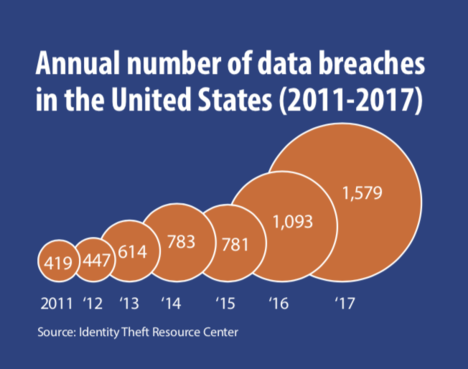
“The study’s findings further demonstrate the need for businesses and financial institutions to understand changing consumer behaviors and shifts in cybercrime and the need for stronger, yet frictionless identity verification to enable the overall growth of digital business,” the company said in its analysis.
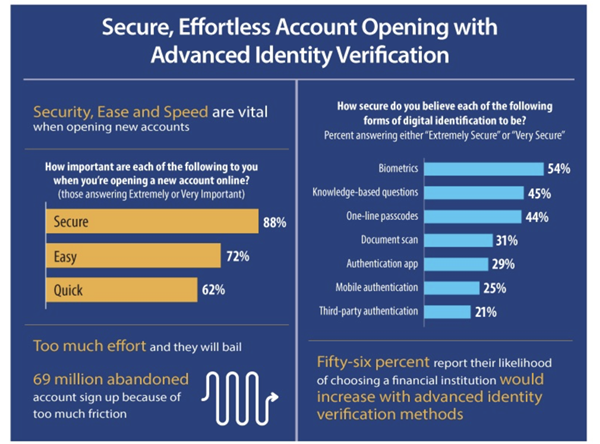
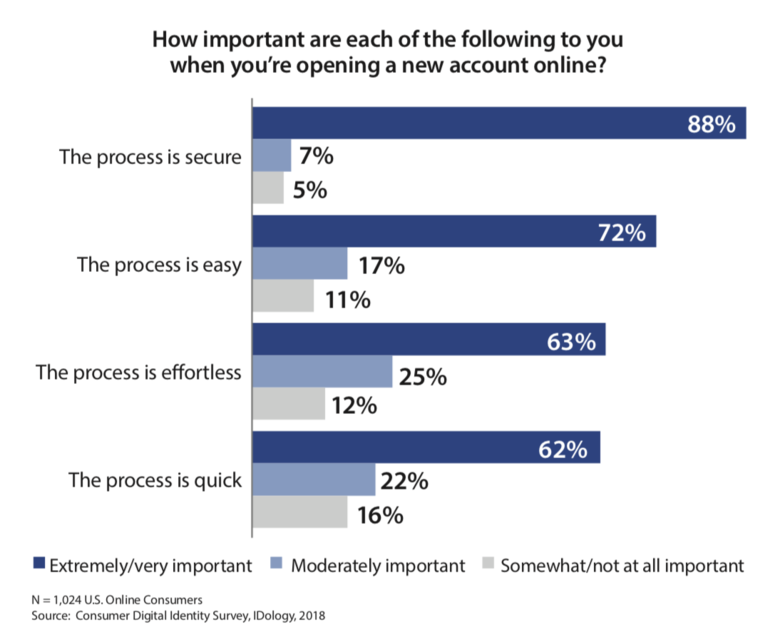
For credit unions, which have placed an increasing emphasis on remote deposit account opening–and then faced growing related risk–the IDology study found that what’s most important to American consumers during the account opening process is first security (88%) followed by ease (72%), low effort (63%), and speed (62%).
Challenge to Conventional Wisdom
“Up until now, conventional wisdom suggested consumers placed ease and speed over security; recently, this may have shifted,” the company said in its analysis. “Even across generations, perceptions on security, ease, effort, and speed are consistent. The only difference was how strongly they felt about security; 98% of Baby Boomers felt it was ‘extremely’ or ‘very’ important, while 77% of Generation Z felt the same way. Even so, security was consistently ranked highest in importance across generational divides, indicating that both younger and older Americans have similar concerns on this macro issue.”
IDology reported it found 56% of respondents said they would be more likely to choose a financial institution if it used highly advanced identity verification methods to keep account origination secure.
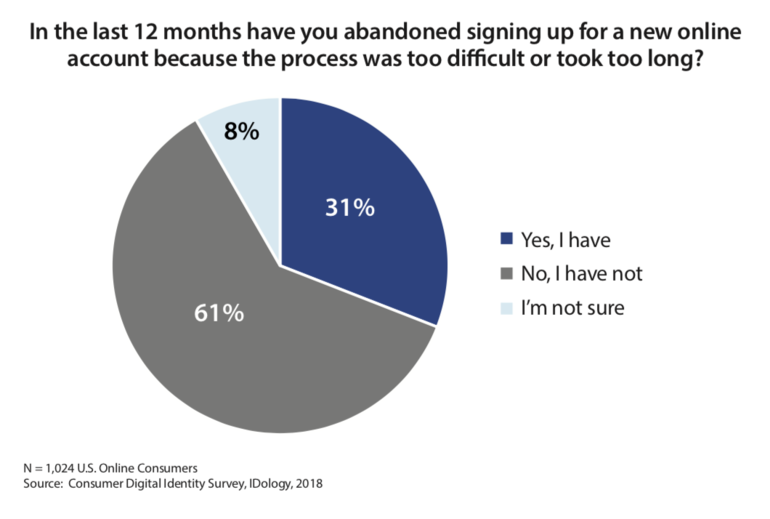
Although effort and speed ranked lower in importance when compared to security—with most consumers assigning them slightly less importance—the majority of consumers still considered them essential, IDology reported. Additionally, one in three adults said they have abandoned the process of opening a new account because it was too difficult or took too long.
“We’ve reached a turning point in how consumers view and value identity verification,” said John Dancu, CEO at IDology. “With consumer demand for smooth and secure interactions, and the high expectation for businesses to protect consumer identities, the way businesses authenticate and verify customers has become a true competitive differentiator.”
Among the Findings
- Fraud concerns are impacting consumer choices online, with 83% surveyed having extreme to moderate concern that their identities will be used to fraudulently open accounts.
- Consumers view biometrics, knowledge-based authentication and one-time passcodes as the most secure methods of authentication. Overall, 90% of consumers are comfortable answering knowledge-based authentication questions to verify their identities but prefer demographic-based questions over credit-based questions two to one.
- Fifty-six percent of consumers report that they are more likely to choose a financial institution if they know it offers advanced identity verification methods.
- When opening an account online, consumers place a premium on security (88%) and ease (72%), with 31% reporting they have abandoned signing up because it was too difficult or took too long. “This reveals that more than ever, consumers are looking to do business with companies and financial institutions that have minimal friction as part of their overall service experience, along with assurance that their transactions and identities are secure,” IDology said.
Other Findings
- 45% of those surveyed write passwords down while 73% seldom change them, heightening the need for businesses to take extra measures and evaluate multiple and diverse consumer attributes to safely verify customer identities.
“The good news is that many consumers are open to using more secure authentication methods for online accounts. Forty-five percent are extremely or very willing, with 92% saying they have some willingness to do so,” IDology reported.
- 67% said they strongly agree that it is a company’s responsibility to protect consumer data, compared to 59% who strongly agree that it’s a consumer’s personal responsibility. “Further, the gap between consumer expectation and perception is prevalent, with half of the respondents being somewhat or not at all confident that businesses and government agencies can protect consumer identities,” the company said.
The IDology Consumer Digital Identity Study reflects survey responses from 1,024 consumers, collected between March 7, 2018, and March 23, 2018. To access the IDology Consumer Digital Identity Study 2018 click here.