

TROY, Mich.–As U.S. bank customers start to resign themselves to another year of persistently high inflation, many have grown increasingly aware of their own “lack of financial literacy,” according to a new survey by J.D. Power.
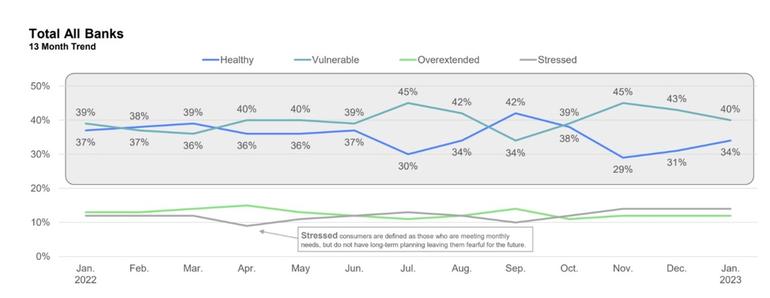
J.D. Power reported that the overall health of bank customers in America has slightly improved in February, with 34% of bank customers overall saying they are healthy, which is up three percentage points from January’s reading.
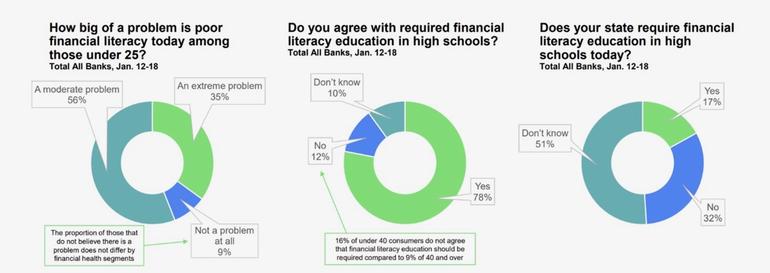
“That said, there is plenty of room for improvement,” J.D. Power said. “Bank customers seem to grasp that too, and they seem to have found a culprit: poor financial literacy. Virtually all (91%) bank customers say that poor financial literacy is a problem for those under age 25, and 78% believe that financial literacy should be taught in high school. Moreover, 42% of bank customers say they have significant doubts in their own levels of financial knowledge.”
Overall Economic Outlook Improves Slightly
Meanwhile, as the first quarter begins to settle in and bank customers say they are starting to feel slightly better about their economic situations, the survey found the percentage who say they feel financially vulnerable has declined to 40% from 43%.
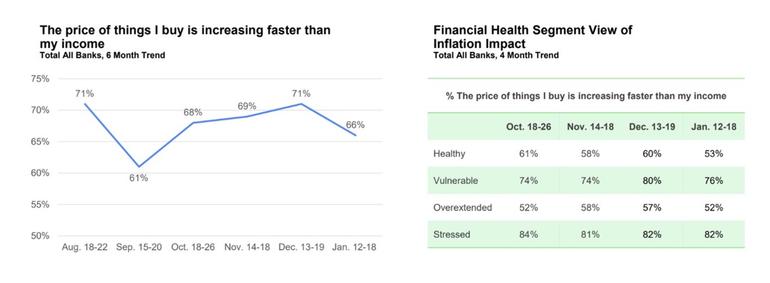
“Still, despite those modest improvements, almost two-thirds (66%) of customers said that the price of goods is increasing faster than their income,” J.D. Power said. “While that is the lowest level of inflation recognition since the fall of 2022, the significant financial influence that inflation is having on consumers cannot be overstated.”
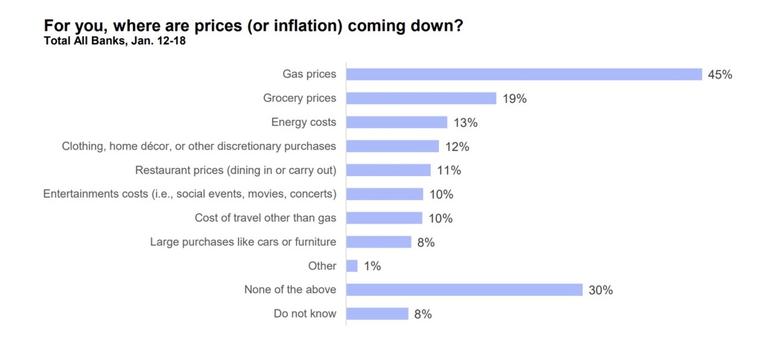
Nearly half (45%) of customers say they have felt relief at the gas pump and another 19% are noticing grocery prices declining. Almost one-third (30%) say that they have not experienced prices declining.
“Unsurprisingly, that is largely concentrated in customers that are stressed or vulnerable, but even 27% of healthy customers say they have yet to feel relief,” J.D. Power reported.
Education is the Answer
According to the J.D. Power analysis, “perhaps the most encouraging indicator this month is that bank customers seem to understand that simply waiting around for inflation to subside isn’t the only way they can navigate toward financial security. Customers want to be financially literate, and many say that has not been an easy goal to achieve. Overall, 91% believe financial literacy is at least a moderate problem today among those under age 25, with 35% viewing it as an extreme problem.”
More than three-fourths (78%) believe in teaching financial literacy in high school, yet 32% say their state does not require financial literacy today, while 51% are unsure.
Banks to the Rescue
In releasing its findings, J.D. Power said it’s clear from this latest data that many banking customers’ attitudes toward financial conditions will naturally ebb and flow. To steady customers through that natural volatility, banks can play a key role in educating their customers to be better prepared, the company stated.
“Our data finds that only 58% of banking customers think of themselves as financially knowledgeable, and those that are less knowledgeable are more critical of their banks. This does not only equate to lower satisfaction, customers with lower levels of understanding are less likely to open second accounts with the bank and are more likely to require customer support services,” J.D. Power said.
Actions to Take
The company said banks must:
- Be proactive. “That means more than just creating a library of educational articles and resources that customers will never see.”
- Help encourage hands on learning among their customer base. “They need to find better ways to encourage customers to engage with advice, then prompt them to move from it to using a tool to achieve better financial outcomes (perhaps even offering incentives to increase tool adoption), whether that is figuring out their current spending plan, directing them to check their credit score, or giving them a tool to list all their debts and prioritize which ones they are paying off first.”
It’s Called Fresh for a Reason. And We Offer Home Delivery. For Free!
The biggest, best and freshest news reporting in credit unions remains free in ’23! Each morning CUToday.info delivers its daily Fresh Today news update offering the latest headlines and breaking news right to your email, with the easy-to-read headlines format allowing you to click on the stories that interest you most in order to learn more.
If you haven’t yet signed up for the new email solution on which CUToday.info has partnered with ResponseGenius, you can do so here. Signing up requires less than one minute of your time—and it’s free!
Please note that after signing up you may need to go to your Spam/Junk folder and mark the morning headlines email as safe. CUToday.info does not provide its list of readers and emails to outside parties, and we will not be contacting you to sell you an extended warranty or sending you any links so you may cash in on an inheritance you didn’t know was coming.
And did we mention it’s free?
Please note and/or make your IT department or email administrator aware the emails will be coming from the domains CUTodayinfo.com and CUTodayinfoReply.com