

WASHINGTON—The Fannie Mae Home Purchase Sentiment Index (HPSI) decreased by 2.1 points to 73.2 in March, as consumers continue to express pessimism regarding the trajectory of mortgage rates and homebuying conditions general.

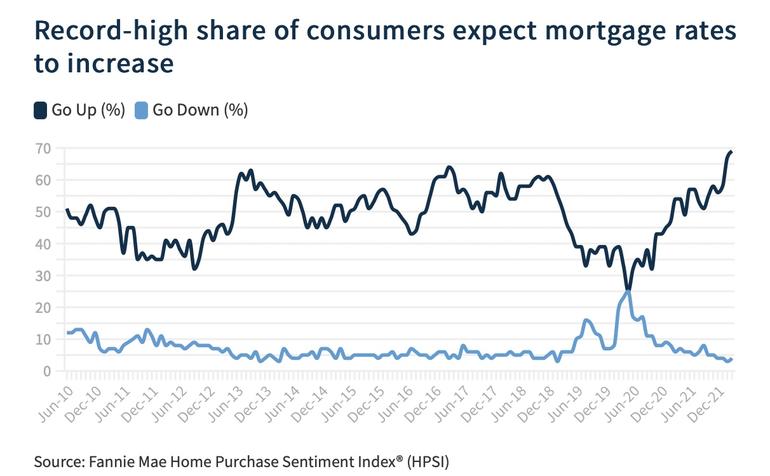
Overall, four of the index’s six components decreased month over month, including the components asking consumers whether they expect mortgage rates to go up and whether they believe it’s a good time to buy a home, Fannie Mae reported. In March, a survey-high 69% of respondents indicated that they expect mortgage rates to continue their upward ascent. On net, the “Good Time to Buy” component set a new survey low, with 73% of respondents reporting that it’s a bad time to buy a home.
Year over year, the full index is down 8.5 points, according to Fannie Mae.
“The ‘Good Time to Buy’ component of the index reached yet another record low, with high home prices, rising mortgage rates, and macroeconomic uncertainty serving as consumers’ chief concerns,” said Mark Palim, Fannie Mae vice president and deputy chief economist. “Only 24% of consumers believe it’s a good time to buy a home, with similar levels of pessimism expressed by nearly all of the demographic groups surveyed.
“This month, we also saw a survey-high share of consumers expecting their financial situations to worsen over the next year; this was especially true among current homeowners,” Palim continued. “These concerns, together with the run-up in mortgage rates since the end of 2021, will likely diminish mortgage demand from move-up buyers – and fewer move-up buyers mean fewer available entry-level homes, adding to the rising-rate challenges for potential first-time homebuyers. If consumer pessimism toward homebuying conditions continues and the recent mortgage rate increases are sustained, then we expect to see an even greater cooling of the housing market than previously forecast.”
HPSI Component Highlights
- Good/Bad Time to Buy: The percentage of respondents who say it is a good time to buy a home decreased from 29% to 24%, while the percentage who say it is a bad time to buy increased from 67% to 73%. As a result, the net share of those who say it is a good time to buy decreased 11 percentage points month over month.
- Good/Bad Time to Sell: The percentage of respondents who say it is a good time to sell a home increased from 72% to 74%, while the percentage who say it’s a bad time to sell decreased from 22% to 21%. As a result, the net share of those who say it is a good time to sell increased 3 percentage points month over month, Fannie Mae said.
- Home Price Expectations: The percentage of respondents who say home prices will go up in the next 12 months increased from 46% to 48%, while the percentage who say home prices will go down increased from 16% to 20%. The share who think home prices will stay the same decreased from 32% to 28%. As a result, the net share of Americans who say home prices will go up decreased 2 percentage points month over month.
- Mortgage Rate Expectations: The percentage of respondents who say mortgage rates will go down in the next 12 months increased from 3% to 4%, while the percentage who expect mortgage rates to go up increased from 67% to 69%. The share who think mortgage rates will stay the same increased from 22% to 23%. As a result, the net share of Americans who say mortgage rates will go down over the next 12 months decreased one percentage point month over month, according to Fannie Mae.
- Job Concerns: The percentage of respondents who say they are not concerned about losing their job in the next 12 months decreased from 87% to 86%, while the percentage who say they are concerned increased from 9% to 11%. As a result, the net share of Americans who say they are not concerned about losing their job decreased 3 percentage points month over month.
- Household Income: The percentage of respondents who say their household income is significantly higher than it was 12 months ago increased from 27% to 29%, while the percentage who say their household income is significantly lower increased from 12% to 13%. The percentage who say their household income is about the same decreased from 56% to 53%. As a result, the net share of those who say their household income is significantly higher than it was 12 months ago increased one percentage point month over month.
Don’t Forget to Check the Spam Folder!
Don’t forget to check your Spam/Junk email folder if you haven’t been receiving your free, popular and daily CUToday.info news headlines email.
And if you haven’t yet signed up for the new email solution on which CUToday.info has partnered with ResponseGenius, you can do so here. Signing up requires less than one minute of your time.
CUToday.info has received very positive response from readers following the move to an improved provider of the daily headlines, but many also noted they did need to go to their Spam/Junk folder and mark it as safe.
The new email solution has not only improved every reader’s delivery experience, but it also features a fresh, new format that is easy to read, especially on mobile devices.
Please note and/or make your IT department or email administrator aware the emails will be coming from the domains CUTodayinfo.com and CUTodayinfoReply.com.