

SAN FRANCISCO – Another new survey has found nearly half (45%) of all consumers polled say they will use more online services post-pandemic than they did before it started, but also say their ‘tolerance is thin’ when it comes to certain hurdles.
The survey, “The New Normal – Living Life Online,” conducted by ForgeRock, a provider of digital identity, polled 5,000 consumers throughout the U.S., U.K., Germany, Australia and Singapore to understand how consumer behaviour and preferences have evolved since the start of COVID-19 restrictions and how they plan to purchase and engage with the world in the future.
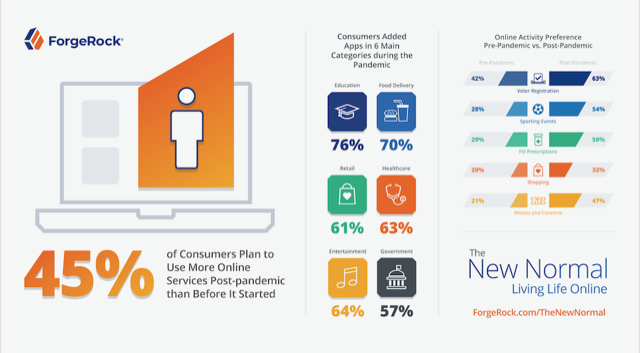
The Findings
Among the findings:
- Nearly half (45%) of all consumers polled say they will use more online services post-pandemic than they did before it started
- More than one-third (35%) warn that a difficult log-in process would cause them to cancel their account, while 32% said they would look to another service
- Consumers 65 and older have “embraced their new digital lifestyles,” with 31% reporting they plan to only shop online after stay-at-home restrictions are lifted, the company said
- One-third of consumers ages 18-24 won’t be returning to stadiums or theaters; instead they plan to keep watching sports, concerts and movies online post-pandemic
‘Tolerance is Thin’
“The COVID-19 pandemic forced consumers to change how they engaged in everyday activities traditionally handled in-person, such as grocery shopping, doctor check-ups and going to the movies,” said Ben Goodman, SVP of global business and corporate development, ForgeRock. “While the survey found consumers plan to keep up many of their new digital habits even after stay-at-home restrictions lift, it’s clear their tolerance for poor digital experiences is thin and many won’t hesitate to switch apps for something that’s easier to use and delivers a better overall user experience.”
According to the ForgeRock survey, consumers will continue to engage online for entertainment, retail and banking after the pandemic. However, for at least two-thirds of consumers, healthcare visits and grocery shopping will revert back to in-person activities, likely due to the personal nature and quality of the experience. Other activities, such as education, might best be served in a hybrid model, the company suggested.
Differences by Region
The survey found global regions varied in their response to the pandemic. While Singapore and the U.S. led in registering for new apps and online services, German respondents favored in-person activities more than any other region surveyed. Britons and Australians reported they were likely to continue using their new entertainment apps and online services after the pandemic restrictions lift.
The full findings of the report can be found here.