

NEW YORK—Despite consumers struggling with inflation, a new study shows the average debt-to-income (DTI) ratio in America actually dropped between 2013 and 2023.
The study, conducted by crypto onramp platform Instaxchange.com, looked at data from the Federal Reserve regarding DTI ratios in each state for 2013 and 2023. DTI ratio is a measure of personal debt compared to income, indicating how much debt residents have for every dollar earned. Consumers’ DTI dropped by $0.07 over the last ten years.
The chart below shows the top ten states where DTI has decreased the most over the last decade.
Changes in debt-to-income ratios across America, Top Ten
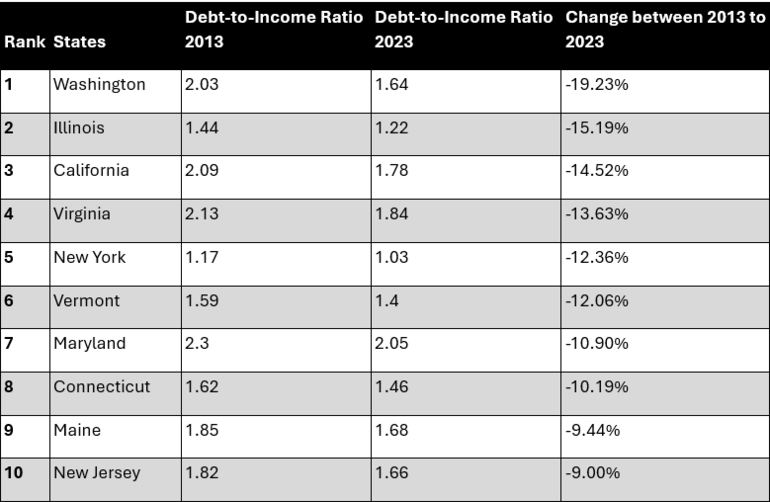
Washington saw the largest decrease in their DTI ratio, with a fall of 19.23% between 2013 to 2023. In 2013, for every $1 earned, residents here had $2.03 dollars in debt, but this has fallen 39 cents to $1.64 debt per $1.
“This still stands 5.8% above the national average, $1.55 for every $1 earned, but is still a huge improvement for residents,” Instaxchange said.
On the opposite end, North Dakota experienced the largest, with a 41.32% jump. In 2013, for every $1 earned, residents had $0.82 in debt. By 2023, this had risen to $1.16. Although this is a significant increase, North Dakota still maintains the second-lowest DTI ratio in the country, behind New York. The average consumer debt currently stands at $91,074, according to data from Experian. North Dakota's rate still stands over a quarter (25%) lower than the national average.
“While it is encouraging to see the debt-to-income ratio fall in most states, the study highlights areas where consumer debt has outpaced income growth, particularly in places like North Dakota and Texas,” said Gabriele Asaro, head of SEO and research at Instaxchange. “This trend could be due to several factors. For instance, the soaring cost-of-living and house prices post-pandemic leading to increased borrowing. Additionally, wages may not have risen as much as expected, causing the debt-to-income ratio to inflate, even if people aren’t necessarily borrowing significantly more.”
Despite these concerns, most states recorded an overall decrease—38 states experienced a decline in their ratio, with the national average falling by 4%.