

ARLINGTON, Va.–Federal regulators need to continue to reject the “cockeyed worldview” of big banks, especially when it comes to allowing those banks to take on even more risk.
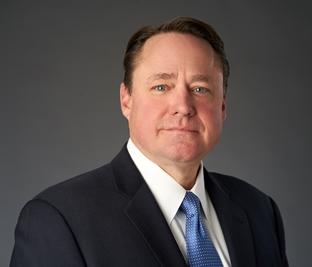
Dan Berger
In the op-ed published on FoxBusiness.com, NAFCU President/CEO Dan Berger noted that from 2008-2018, 5,056 banks and credit unions merged; or approximately 459 per year, 38 per month and more than one per day over an 11-year period.
As lawmakers on Capitol Hill this week examine the proposed merger between SunTrust Bank and BB&T, Berger wrote it is not an institution’s size alone that should give lawmakers pause, “as there is nothing inherently wrong with mergers, but rather the risks a particular institution and its business practices may pose to the U.S. economy.”
Instead, said Berger, what lawmakers should be discussing are the potential benefits of a modern Glass-Steagall Act and the economic impact of “excessive, unbridled risk-taking” by Wall Street banks.
“Without Glass-Steagall, American taxpayers are responsible for losses, as big banks count on the Federal Deposit Insurance Corporation's insurance fund to back up their risky trading activities,” wrote Berger. “Yet, all profits from these gambles head straight into the coffers of bank shareholders.”
‘Important Answers’ Needed
Presidential candidate and Sen. Elizabeth Warren (D-MA) has suggested portions of the Glass-Stegall Act, which puts up a wall between investment banking and other commercial banking functions, be resurrected.
“While its important Congress discuss the merits of a modern Glass-Steagall, it is also important lawmakers get important answers as to why the largest and most complex banks are actively pushing for the removal of common sense restrictions that prevent improper, speculative trading under the Volcker Rule, A.K.A Glass-Steagall light,” wrote Berger. “It is also worth asking whether an industry that has amassed over $243 billion in fines since the financial crisis is deserving of less oversight.”
Don’t Ignore ‘Moral Hazard’
Berger went on to write that “certain banks are hoping Congress will ignore the moral hazard of using taxpayers as a backstop for their speculative bets and want regulators to reinterpret the law to loosen requirements, thereby reviving the same risky trading practices that contributed to the financial crisis and fundamentally degraded the stability and liquidity of our capital markets.
“Thankfully,” he added, “federal regulators recently rejected this cockeyed worldview.”
The full piece can be found here.