

NEW YORK–Many of the companies that had set timelines for announcing policies on when workers should return to the workplace, if they were to return at all, are now announcing “we’ll get back to you on that.”
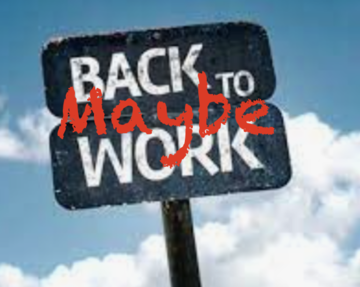
In other words, the New York Times reported, many companies that had said workers would be returning to their respective workplaces are now rethinking just about everything.
“Return-to-office dates used to be like talismans; the chief executives who set them seemed to wield some power over the shape of the months to come,” the Times reported. “Then the dates were postponed, and postponed again. At some point the spell was broken. For many companies, office reopening plans have lost their fear factor, coming to seem like wishful thinking rather than a sign of futures filled with alarm clocks, commutes and pants that actually button. The R.T.O. date is gone. It’s been replaced with ‘we’ll get back to you.’”
You Can’t ‘Hide’ Stuff
Nicholas Bloom, a Stanford professor who advises companies, told the Times, “The only companies being dishonest are the ones giving employees certainty. As a parent you can hide stuff from your kids, but as a CEO you can’t do that to adult employees who read the news.”
The Times noted occupancy rates across the United States have risen from 33% in August to 40% in December 2021, according to data from Kastle Systems, a building security firm.
“But the visions of full-scale reopenings and mandatory returns, which formed as vaccines rolled out last spring, have remained nebulous,” the report added.
‘It’s a Dialogue’
The Times pointed to a late August survey of 238 executives, conducted by Gartner, found that two-thirds of organizations had delayed their return to office plans because of news about coronavirus variants. Apple, Ford, CNN and Google are just a handful of the employers that announced postponements, along with Lyft, which said the earliest that workers would be required to return to the office is 2023, the Times reported.
“Folks have hedged appropriately this time around and they understand that it’s a dialogue with their employees, not a mandate,” Zach Dunn, co-founder of the office space management platform Robin, told the Times. “If that sounds a little kumbaya, maybe. But the reality is, folks are learning that sharing the intention of their return plan is more important than sharing the plan itself.”